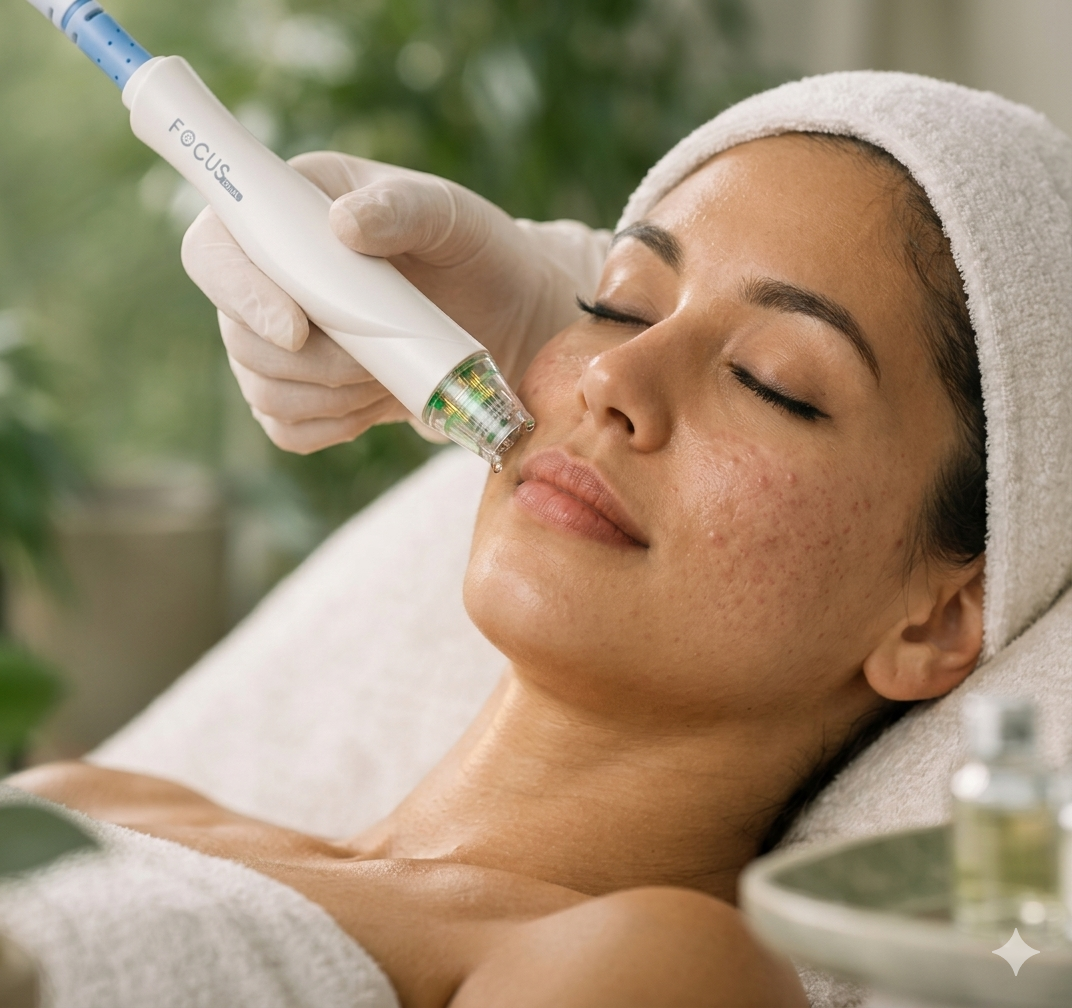
Acne scars can be especially frustrating because they linger long after breakouts have settled. For many clients, microneedling for acne scars offers a reassuring middle ground – a treatment that is results-focused, minimally invasive, and designed to support smoother, clearer-looking skin over time.
Unlike treatments that simply polish the surface, microneedling works by encouraging the skin to repair itself. Tiny controlled micro-injuries are created in the skin using fine needles, which stimulates collagen and elastin production. That matters because acne scarring often forms where the skin’s structure has been disrupted, leaving behind uneven texture, shallow depressions, and a loss of smoothness.
“It is the quiet, steady shift towards skin that feels smoother, healthier, and easier to feel at home in.”
How microneedling for acne scars works
When skin produces fresh collagen, it gradually becomes firmer and more refined. In acne-scarred skin, that can help soften the appearance of rolling scars and certain boxcar scars by improving texture and encouraging a more even surface. The treatment is not about an overnight fix. It is about creating the right conditions for long-term skin renewal.
This is one reason microneedling is so popular with clients who want visible improvement without stepping straight into more aggressive procedures. It can be an excellent option when you want a treatment plan that feels clinical and effective, but still supports comfort, recovery, and skin health.
That said, not all acne scars respond in the same way. Deeper ice pick scars can be more resistant and may need a broader treatment approach. Skin quality, scar type, active breakouts, sensitivity levels, and your general skincare routine all affect the result. A thoughtful consultation is what turns a good treatment into the right one.
Who is a good candidate?
Microneedling can suit many people who are left with textural scarring after acne, particularly if the skin is otherwise healthy and breakouts are largely under control. It is often well suited to clients who feel self-conscious about uneven cheeks, pitted areas, or skin that never quite looks smooth even with makeup.
The best candidates tend to have realistic expectations. Microneedling can improve the appearance of scars, sometimes very noticeably, but it does not erase them completely. If your goal is softer texture, fresher-looking skin, and a more refined finish, it can be a beautifully effective option.
It may not be suitable if you have active inflamed acne, certain skin infections, impaired wound healing, or are using medications or skincare that leave the skin too sensitised. In some cases, a practitioner may advise calming the skin first, strengthening the skin barrier, or spacing treatment around other aesthetic procedures.
What happens during treatment?
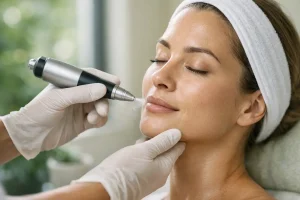
A professional microneedling appointment should feel calm, hygienic, and tailored from the start. Your skin is first cleansed thoroughly, and the practitioner will assess the treatment areas carefully. A numbing cream may be applied to keep you comfortable, especially when treating cheeks, temples, or areas with more noticeable scarring.
The microneedling device is then passed methodically across the skin at a depth chosen for your skin concerns and tolerance. For acne scars, treatment depth is usually more targeted than it would be for a simple glow-boosting facial. You may feel warmth, vibration, or a scratchy sensation, but most clients find it very manageable.
Afterwards, the skin often looks pink to red, rather like mild sun exposure. There can be some heat, tightness, and sensitivity for a day or two. For some, recovery is quick enough to return to normal routines the next day with a little care and the right skincare support.
How many sessions will you need?
This is where expectations matter. Acne scarring develops over time, and improving it takes consistency. Most clients need a course of sessions rather than a single treatment, often spaced several weeks apart to allow the skin to heal and rebuild collagen properly.
A very mild level of scarring may respond well within three sessions, while more established or widespread scarring may need six or more. Results are gradual. You may notice an early improvement in brightness and texture, but the more meaningful change usually develops as collagen remodels over the following weeks and months.
This gradual process is not a drawback – it is part of why the result can look so natural. The skin is not being forced into a dramatic short-term effect. It is being encouraged to function better and look smoother in a way that still feels like your own skin, just healthier and more refined.
What kind of acne scars respond best?
Microneedling tends to work best for atrophic acne scars, which are the indented types caused by tissue loss. Rolling scars often respond particularly well because the treatment helps improve overall texture and skin density. Boxcar scars can also improve, especially when they are not too deep.
Ice pick scars are usually the most difficult to treat with microneedling alone because they are narrow and extend deeper into the skin. That does not mean there is no benefit, but it does mean expectations should be handled carefully. In some cases, combination treatments may be more appropriate.
Microneedling is also not designed to treat raised keloid scars in the same way, and these need professional assessment before any skin-stimulating treatment is considered.
Downtime and aftercare
One of the reasons clients love microneedling is that it offers a sensible balance between efficacy and downtime. You can expect some redness, sensitivity, and a slightly tight feeling after treatment. For a short period, the skin may feel dry or appear a little rough as it begins to recover.
Aftercare is a key part of the result. Skin should be treated gently, with nourishing and barrier-supportive products rather than anything harsh or overly active. This is not the time for exfoliating acids, retinoids, or strong fragranced products. Sun protection is essential, as freshly treated skin is more vulnerable.
It is also worth timing your treatment wisely. If you have a wedding, holiday, work event, or special occasion coming up, give your skin enough space to settle. While downtime is usually manageable, you do want to allow for a few days where your skin can recover beautifully without pressure.
Is microneedling painful?
This is one of the first questions most people ask, and understandably so. The honest answer is that it is not completely sensation-free, but it is usually far more comfortable than clients expect. Professional numbing and good technique make a real difference.
Areas with more scarring can feel more intense than smoother parts of the face, and deeper treatment for acne scars is naturally more noticeable than a light rejuvenation session. Even so, most clients describe it as tolerable rather than painful. The temporary discomfort is balanced by the fact that the treatment is relatively quick and recovery is straightforward.
When will you see results?
Some improvement in glow and skin freshness can appear within the first week or two, once initial redness has settled. The more significant change in acne scars takes longer because collagen remodelling is gradual. Most clients begin to see clearer texture changes after a series of treatments rather than after one appointment.
Patience is part of the process, but so is consistency. The clients who are happiest with their results are usually the ones who commit to a proper treatment plan and follow aftercare carefully. Healthy skin habits at home can support what happens in the treatment room.
Why professional treatment matters
Microneedling may sound simple, but results depend heavily on skin assessment, technique, treatment depth, hygiene, and aftercare guidance. Acne-scarred skin needs a personalised approach. Treat too lightly and the result may disappoint. Treat without care and you risk unnecessary irritation.
In a professional setting, the experience should feel both elevated and reassuring – expert-led, carefully tailored, and grounded in skin health rather than shortcuts. For clients in Pangbourne, Reading, and Tilehurst who want that balance of comfort and visible results, a trusted clinic or salon environment makes all the difference.
If acne scarring has affected your confidence, microneedling can be a very worthwhile conversation to have. The real appeal is not perfection. It is the quiet, steady shift towards skin that feels smoother, healthier, and easier to feel at home in.