A raised skin tag catching on a necklace, a stubborn age spot that makes you reach for concealer, or a tiny cherry angioma that seems to draw your eye in every mirror can feel surprisingly bothersome. A Cryopen review for skin lesions often starts with one question: can this be removed safely, neatly and without the downtime of a surgical procedure? For many suitable benign concerns, precision cryotherapy offers an elegant answer – but proper assessment always comes first.
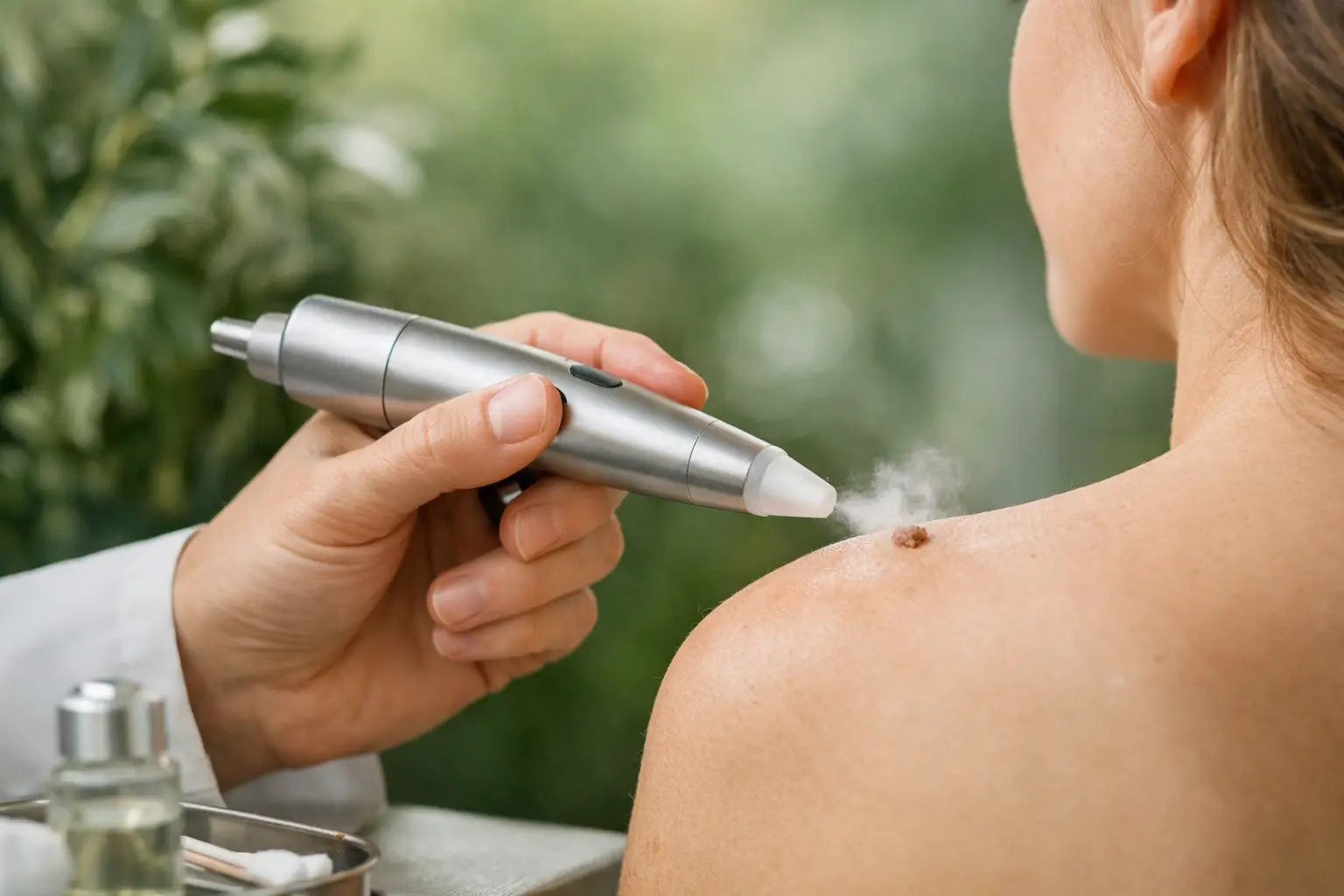
Cryopen treatment uses a controlled jet of nitrous oxide to freeze targeted superficial lesions. The aim is to destroy the unwanted cells while treating as little surrounding skin as possible. It is a quick, focused treatment that can fit comfortably into a well-planned self-care routine, provided the lesion is appropriate for aesthetic removal.
“For many suitable benign concerns, precision cryotherapy offers an elegant answer – but proper assessment always comes first.”
What Cryopen treatment is designed to treat
Cryopen is commonly used for small, clearly benign skin concerns such as skin tags, cherry angiomas, seborrhoeic keratoses, milia and certain sun spots or pigmentation marks. These are the little lesions that may be harmless medically but still affect how polished and comfortable you feel in your skin.
The key word is benign. Cryotherapy is not a diagnostic tool, and an aesthetic practitioner should never freeze a lesion that looks suspicious or has not been appropriately assessed. A changing mole, an unevenly coloured mark, a lesion with an irregular border, or anything that bleeds, crusts, becomes painful or grows rapidly needs medical advice first. Your GP or dermatologist is the right starting point in those circumstances.
A good consultation should feel unhurried and considered. Your practitioner will look at the area, discuss your medical history, ask how long the lesion has been present and explain whether Cryopen is likely to be suitable. If there is any doubt, the safest and most professional answer is to pause treatment and seek a medical opinion.
Cryopen review for skin lesions: what happens in the appointment
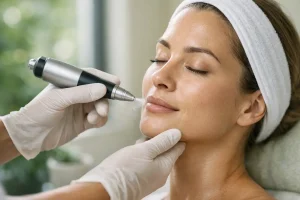
Once suitability has been confirmed, the treatment itself is usually very straightforward. The area is cleansed and the Cryopen applicator is held close to the lesion. A fine jet of extremely cold nitrous oxide is applied in short, controlled bursts.
Most clients describe an intense cold or sharp stinging sensation rather than pain. It can feel a little like a brief pinprick or an ice burn, particularly on delicate areas such as the face, neck or décolletage. The sensation fades quickly once the application stops. Larger, thicker or more resilient lesions may need a longer freeze cycle, so comfort can vary according to the concern being treated.
Immediately afterwards, the area may look white or frosted, followed by redness and slight swelling. This is an expected response to the freezing process. Depending on the lesion, your appointment may last only a few minutes, although consultation, preparation and aftercare guidance deserve more time than the treatment itself.
For clients who value discretion, this is one of Cryopen’s strongest advantages. There are no incisions, stitches or dressings in most cases, and it can be an appealing option before a special occasion if enough healing time is allowed. It is not, however, a last-minute treatment. The area needs time to settle and shed naturally.
Healing: the part worth planning for
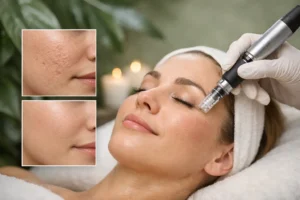
After Cryopen, the treated lesion usually darkens, dries or forms a small crust. A skin tag may shrink, turn darker and detach. A cherry angioma can look deeper red or almost black before it clears. Pigmented lesions often become temporarily darker before flaking away.
This visible stage is normal, but it requires patience. Healing commonly takes around one to three weeks, depending on the lesion, the treatment area and your own skin response. Areas subject to friction, such as the bra line, waistline or underarm, may take longer to feel fully settled. Some concerns need more than one session, especially if they are larger, thickened or deeply pigmented.
It is tempting to pick at a crust or try to speed the process along. Resist that urge. Letting the area come away in its own time gives the skin its best chance of healing cleanly. Picking can increase irritation and may raise the risk of scarring or post-inflammatory pigmentation.
Your practitioner may tailor aftercare to the site and type of lesion, but the essentials are simple: keep the area clean, avoid scratching, protect healing skin from direct sun exposure and use a broad-spectrum SPF once the skin is intact. Avoid exfoliating acids, retinoids, fragranced products and heat treatments on the treated area until it has settled. If you are booking a facial, peel, waxing appointment or other active treatment, mention your recent Cryopen session so the area can be protected.
Results, trade-offs and realistic expectations
The appeal of Cryopen is clear: it is precise, relatively quick and generally requires little disruption to everyday life. For the right benign lesion, it can produce a very satisfying cosmetic improvement without a surgical procedure.
Yet no responsible Cryopen review for skin lesions should promise perfection. Skin can react differently from person to person. Temporary redness, tenderness, swelling, blistering or a small crust are possible. In some cases, especially on deeper skin tones or after treatment of pigmentation, temporary lightening or darkening of the skin can occur. There is also a small risk of scarring, particularly if aftercare is ignored or the area becomes infected.
Results depend on the lesion rather than the device alone. A delicate skin tag may respond beautifully after one treatment. A larger seborrhoeic keratosis may need a second session. Not every mark that appears to be a sun spot is suitable for cosmetic cryotherapy, and not every pigmented lesion should be treated in a salon setting. Expertise lies not only in carrying out the treatment well, but also in knowing when not to treat.
For that reason, the lowest price is not always the best value. An experienced practitioner, careful hygiene, clear consent and tailored aftercare all matter. You should feel comfortable asking what the lesion is believed to be, what response to expect, whether repeat treatment may be needed and what signs would warrant follow-up.
Who may need to postpone or avoid treatment
Cryopen is not suitable for every client or every area of skin. Treatment may need to be postponed if the skin is broken, infected, sunburnt or actively inflamed. A history of poor healing, keloid scarring, cold sensitivity or certain circulatory conditions should be discussed during consultation.
Pregnancy, breastfeeding, medication and medical conditions do not automatically rule out every treatment, but they may alter whether it is advisable. This is why honest consultation matters. Share your health history and any prescription skincare or medicines you use, even if they seem unrelated.
A professional practitioner will also advise against treating lesions close to the eye, on mucosal areas or anywhere their appearance creates uncertainty. That caution is a mark of care, not a lack of confidence.
Choosing a treatment experience you can trust
At a premium salon, Cryopen should feel clinical in standards and personal in delivery. You want a clean, calm treatment space, a practitioner who takes time to assess rather than rush, and aftercare that is as thoughtful as the appointment itself.
At The Beauty Box Pangbourne, the focus is on helping clients feel cared for as well as confident in their results. For suitable benign skin concerns, Cryopen can be a discreet, effective addition to a wider skin-maintenance plan, alongside treatments chosen for your individual goals.
If a small lesion has become a daily irritation, arrange a consultation rather than relying on guesswork. The right next step may be a precise Cryopen treatment, or it may be reassurance that a medical check should come first. Either way, your skin deserves that level of attention.