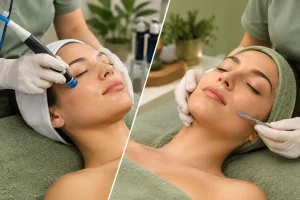
A photograph, a big event, or simply a moment in the mirror can make one concern feel suddenly more noticeable: lost cheek volume, a softer jawline, tired-looking skin or a complexion that no amount of make-up quite revives. The question behind fillers vs HIFU vs HydraFacial: is not which treatment is “best” overall. It is which approach respects your skin, suits your concerns and delivers the kind of confidence you are hoping to feel.
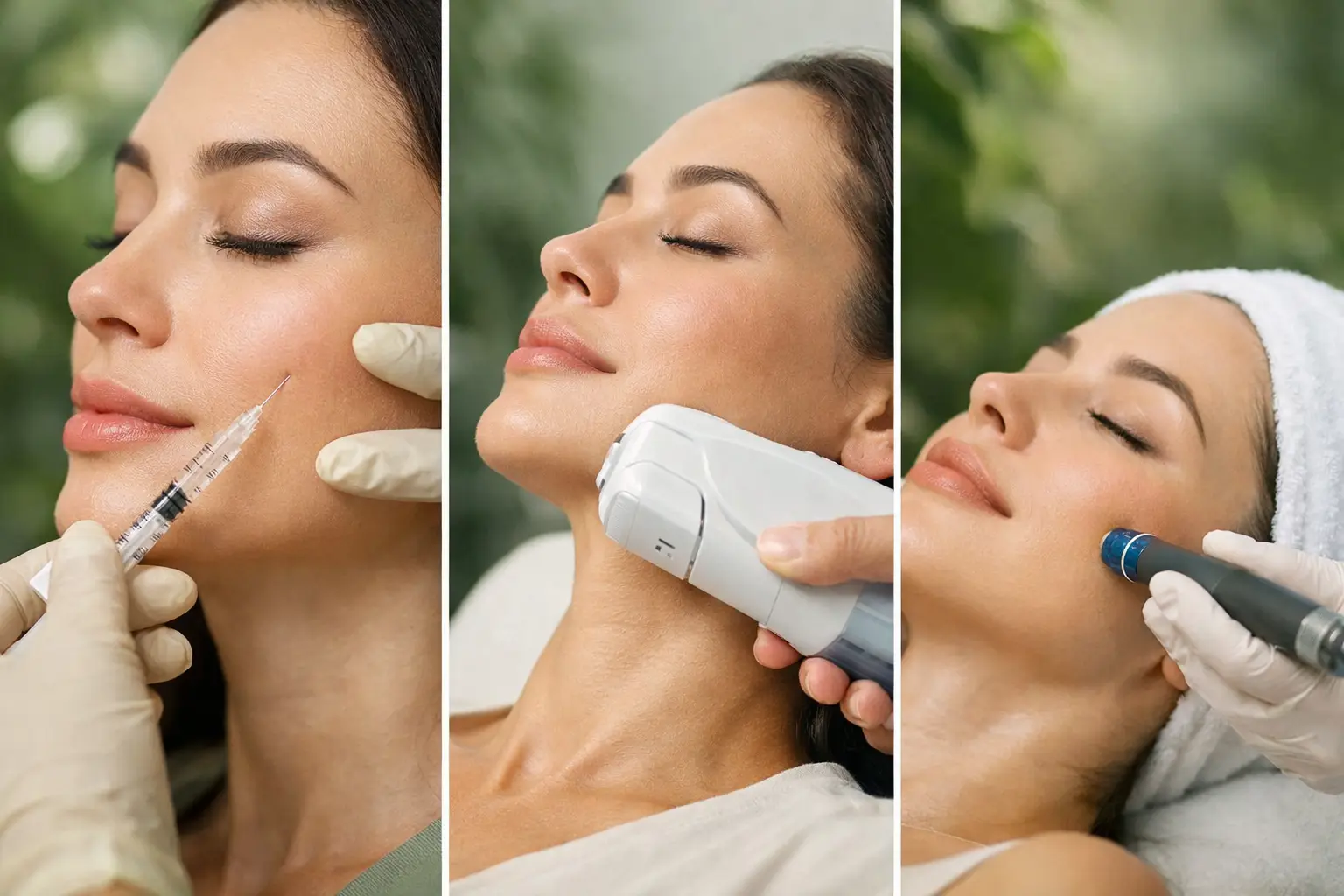
These treatments work in very different ways. Dermal fillers replace or refine volume beneath the skin. HIFU uses focused ultrasound energy to support firmer, more lifted-looking contours over time. HydraFacial is a complexion-led treatment, designed to deeply cleanse, resurface and hydrate for fresh, luminous skin. Understanding that difference makes choosing feel far less overwhelming.
“The most beautiful result is not necessarily the most noticeable one.”
Fillers vs HIFU vs HydraFacial: the essential difference
Think of the face in layers. Volume, structure and hydration all influence how rested and youthful the skin appears, but they cannot be addressed by one treatment alone.
Fillers are injectable gels, most commonly based on hyaluronic acid, placed by a suitably qualified medical aesthetics practitioner. They can restore volume in areas such as the cheeks, lips and temples, soften selected lines, or create more definition around the chin and jaw. Results are usually visible straight away, although minor swelling can mean the final look takes a little time to settle.
HIFU, short for high-intensity focused ultrasound, is non-invasive. It directs ultrasound energy to targeted depths below the surface to stimulate the skin’s natural collagen response. Rather than adding volume, it is intended to improve the appearance of laxity and support a subtly firmer, lifted look. Its results develop gradually, typically over the weeks and months after treatment.
HydraFacial works at the skin’s surface. The treatment combines cleansing, exfoliation, painless extraction, hydration and antioxidant-rich nourishment in a carefully sequenced facial. It is particularly loved for its instant glow, smoother texture and clean, refreshed feeling. It will not replace lost facial volume or tighten deeper tissue, but beautifully hydrated skin can make the whole face look more awake.
When fillers may be the right choice
Fillers are most relevant when the concern is a change in facial shape or support. Perhaps your cheeks look flatter than they once did, your lips have lost definition, or shadows around the lower face make you look more tired than you feel. In these cases, improving hydration at the surface alone may not give the change you want.
The appeal is precision. A skilled practitioner can tailor placement and quantity to your own features, with the aim of a balanced, natural-looking result rather than an overfilled appearance. The best injectable work should still look like you – polished, rested and confident, not altered beyond recognition.
There are trade-offs. Fillers involve needles, carry risks such as bruising and swelling, and must only be carried out following a proper consultation with an appropriately trained, insured and experienced practitioner. Your medical history, previous aesthetic treatments and expectations all matter. Although hyaluronic acid fillers can often be dissolved if necessary, they should never be treated as a casual beauty appointment.
Fillers also need maintenance. Longevity varies according to the product, area treated and individual metabolism, so a tailored plan is more valuable than chasing a fixed timetable.
When HIFU makes more sense
HIFU is often a lovely option for clients who want to care for early or moderate signs of skin laxity without injections. You may notice that the lower face has become less defined, the brow area feels a little heavier, or the neck and décolletage no longer appear as taut as they once did. HIFU is designed for these structural, collagen-focused concerns.
The treatment is not about instant drama. Some people see a subtle freshening effect early on, but collagen remodelling takes patience. The more meaningful change tends to emerge gradually, which can feel wonderfully discreet. Friends may simply say that you look well.
HIFU cannot create the fullness that has been lost from the cheeks or lips, and it is not a substitute for surgical lifting where significant laxity is present. It also needs thoughtful assessment: very thin skin, certain medical conditions, active skin concerns and the presence of some implants or previous treatments may affect suitability. During a consultation, the focus should be on what HIFU can realistically achieve for your face, not on promising a surgical result from a non-surgical treatment.
Comfort is individual. HIFU can create a sensation of warmth, tingling or brief deep pulses as energy is delivered. There is usually little to no downtime, though temporary tenderness or redness can occur. For many busy clients, that balance between a results-driven treatment and minimal disruption is a significant benefit.
When a HydraFacial is the better answer
If your main concern is dullness, dehydration, congestion, uneven texture or an upcoming occasion, HydraFacial can be the most immediately rewarding choice. It gives the complexion attention where it needs it: lifting away build-up, clearing congestion gently and replenishing the skin with moisture.
This is why HydraFacial is often chosen before weddings, holidays, celebrations or professional events. Skin can look clearer, plumper and more luminous soon after treatment, with make-up sitting more smoothly over the surface. It also offers a welcome pause – the rare combination of visible skin benefits and genuine time to relax.
Yet it is worth setting expectations clearly. A HydraFacial does not lift sagging tissue, sculpt the jawline or replace volume. Its strength is skin quality. For someone whose face looks tired because it is dehydrated and congested, that may be exactly what is needed. For someone troubled by jowls or hollow cheeks, it may be a beautiful supporting treatment rather than the central solution.
Regular sessions can be especially helpful as part of a considered skincare routine, with the frequency tailored to your skin type, sensitivity, lifestyle and goals. Sensitive or actively irritated skin may need a more cautious approach, so honest consultation remains essential.
Can you combine HIFU, fillers and HydraFacial?
Often, yes – but not all at once, and never from a one-size-fits-all plan. These treatments can complement one another because they address different needs. HIFU may support facial firmness, carefully placed fillers may restore proportion or contour, and HydraFacial can maintain the radiant surface quality that brings the overall result together.
The order and timing matter. A practitioner may recommend treating skin quality first, allowing the complexion to settle after a HydraFacial before a significant occasion. If HIFU and fillers are being considered, the sequence should be guided by a qualified aesthetics professional who understands the treatment areas, your existing filler and your desired outcome. This protects both your comfort and your investment.
At The Beauty Box Pangbourne, a personalised conversation is always the most luxurious place to begin. It gives you space to describe what you see in the mirror, ask candid questions and consider a plan that feels right for your lifestyle, not just for this month’s trend.
How to choose with confidence
Start by naming the concern rather than the treatment. If you want more volume or sharper definition, ask about fillers with a medical aesthetics practitioner. If your priority is mild to moderate laxity and a gradual lift, explore HIFU. If your skin needs radiance, hydration and a clearer-looking finish, HydraFacial is likely to be the natural fit.
Then consider your timeline. HydraFacial is the treatment most likely to give a same-week glow for an occasion. Fillers can show an immediate improvement but should be planned ahead to allow for settling. HIFU rewards patience, making it better suited to someone happy to invest in gradual collagen support rather than a quick transformation.
Finally, choose expertise over pressure. You should feel listened to, fully informed about likely outcomes and aftercare, and never hurried into a treatment that does not match your goals. The most beautiful result is not necessarily the most noticeable one. It is the one that leaves you feeling refreshed, cared for and comfortably yourself.