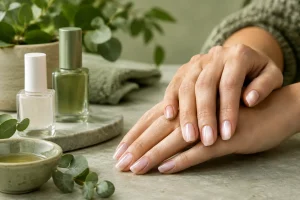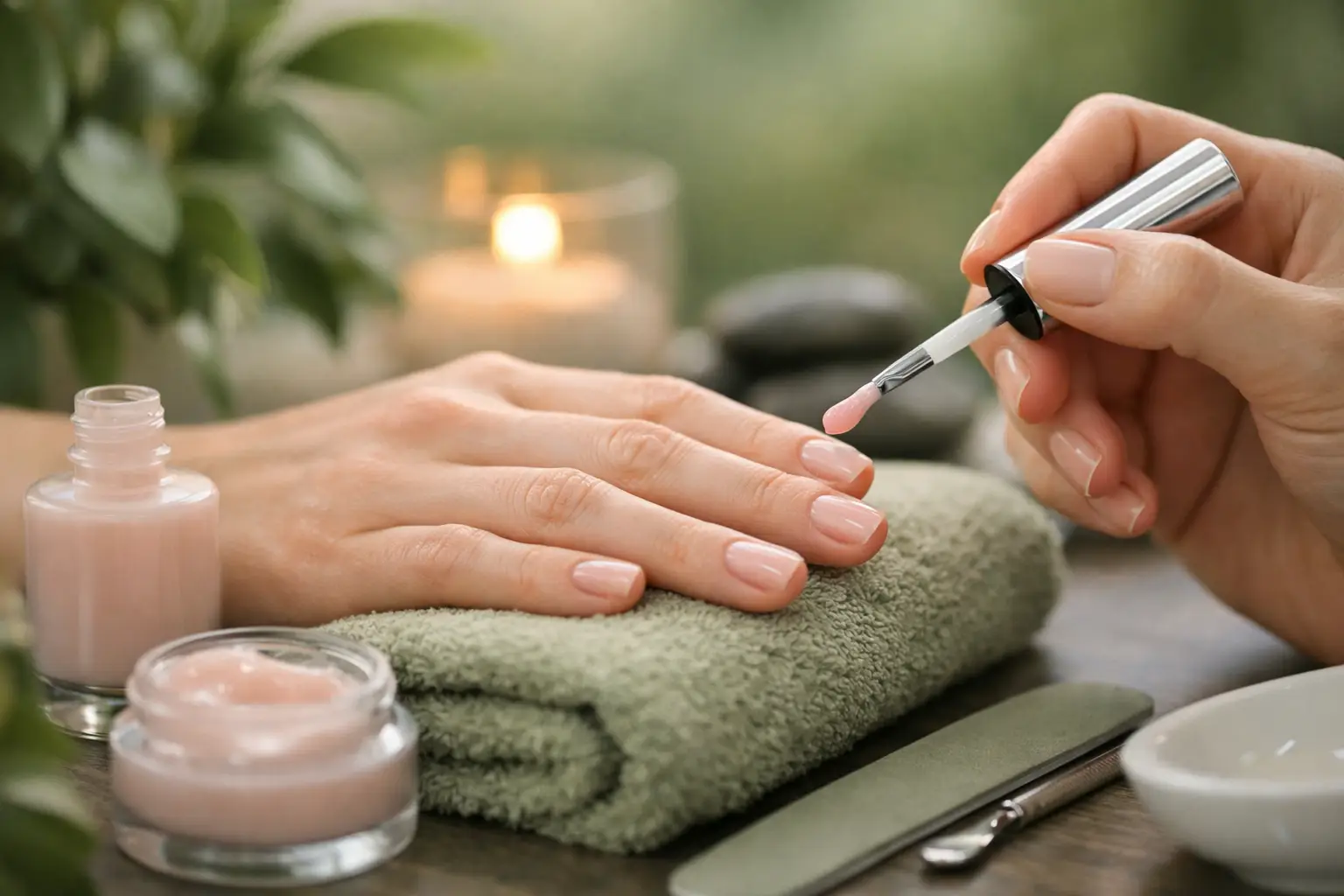
If your nails bend when you reach for your keys, split at the corners or seem unable to grow beyond the fingertip, a beautiful manicure can feel out of reach. So, is BIAB good for weak nails? For many people, yes: when it is expertly applied, maintained and removed, BIAB can provide the protective structure fragile natural nails often need while they grow.
BIAB is not a cure for underlying nail concerns, and it is not the right choice for every nail at every moment. Its value lies in support rather than miracle claims. Think of it as a refined, durable layer that helps reduce day-to-day breakage, giving you the chance to enjoy polished hands without asking your natural nails to do all the hard work alone.
“Its value lies in support rather than miracle claims.”
What BIAB does for fragile nails
BIAB stands for Builder In A Bottle. It is a builder gel with a thicker, more structured formula than standard gel polish. Applied over the natural nail and cured under a professional lamp, it creates a smooth, strengthening overlay that can be worn alone for a clean, natural finish or finished with gel colour.
Weak nails often struggle with flexibility. They catch on clothing, bend during everyday tasks and develop peeling layers at the free edge. A BIAB overlay adds gentle rigidity, helping the nail hold its shape and making it less likely to snap at the first knock. This is especially helpful if you are trying to grow out short, uneven nails after months of biting, peeling or repeated breakages.
The result should still look and feel elegant, not bulky. A skilled nail technician will tailor the amount of product to your nail length, shape and lifestyle, building a balanced apex where needed so the nail has support in the places that take the most pressure.
Is BIAB good for weak nails in every case?
BIAB can be an excellent choice for weak, bendy or peeling nails, but the reason behind the weakness matters. If your nails are simply naturally fine, have been affected by frequent hand washing, or have been worn down by picking at previous products, a regular BIAB manicure may help you protect them as they grow.
However, a nail that is painful, significantly discoloured, lifting away from the nail bed or suddenly changing in texture deserves attention beyond a manicure appointment. Skin conditions, infection, medication, nutritional factors and trauma can all affect the nails. In these cases, it is sensible to speak with a pharmacist, GP or dermatologist before covering the area with any enhancement.
It is also worth being realistic about water exposure and your routine. If your hands spend a great deal of time in water, cleaning products or gardening soil, no nail treatment is completely invincible. BIAB provides meaningful support, but gloves and thoughtful aftercare are what help that support last.
BIAB supports growth – it does not make nails grow faster
Nails grow from the matrix at the base of the nail, and BIAB does not alter that natural growth rate. What it can do is reduce the breakages that make growth feel impossible. When the free edge is less likely to split or snap, you are more likely to retain length over time.
That distinction matters. Healthy-looking, longer nails after a few appointments are usually the result of protection, consistency and less damage, rather than a product somehow changing the biology of the nail.
The application and removal matter as much as the product
For weak nails, the quality of the manicure is never an afterthought. Over-filing before application can leave the nail plate thinner and more sensitive. Equally, peeling, biting or forcefully scraping off BIAB at home can take layers of natural nail with it, undoing the progress you were hoping to make.
A careful appointment begins with clean preparation and minimal, purposeful filing. The product is then applied in controlled layers and cured correctly. At your maintenance appointment, the technician can assess how your nails are responding, infill the existing structure where appropriate, or remove the product gently if a fresh start is best.
This is why a professional approach is particularly valuable for clients with delicate nails. Premium products, meticulous hygiene and a personalised assessment create a far more reassuring experience than treating your nails as a one-size-fits-all canvas.
Avoid turning BIAB into a cycle of damage
BIAB itself is not automatically damaging. Problems tend to arise when the product is applied over compromised nails without care, worn for too long after lifting begins, or removed aggressively. Lifting allows water and debris to sit between product and nail, so it should never be glued down or ignored until your next appointment.
Try not to use your nails as tools either. Opening cans, scratching labels, prising off packaging and picking at an edge all place concentrated force on the enhancement and the natural nail beneath it. A little care at home protects both your manicure and your progress.
How to get the best results from BIAB
The most successful BIAB journey is usually a series of considered appointments, not one quick fix. Begin with a practical length. If your nails are very short or damaged, a neat, softly rounded shape is often easier to maintain than an ambitious long almond or square shape.
Cuticle oil is equally valuable. Massaging it into the cuticle area and nail plate daily helps keep the surrounding skin conditioned and can improve the flexibility of the nail as it grows out. Follow with hand cream, especially after washing your hands. For cleaning, washing up or gardening, wear gloves where possible.
Book maintenance before your nails have grown too far out or the product starts to lift. For most people, this is around every two to three weeks, although timing should reflect your nail growth, lifestyle and the condition of your manicure. A technician can recommend the rhythm that will keep your nails looking polished without unnecessary stress.
At The Beauty Box Pangbourne, a BIAB manicure should feel like more than a practical nail appointment. It is a chance to slow down, enjoy a calm moment of care and leave with hands that look considered, feel comfortable and suit your individual style.
When another option may be better
If you want a very subtle finish but do not need added structure, a nourishing manicure and regular polish may be enough. If you have longer nails that need more dramatic length or a major shape correction, another enhancement system may be more suitable. Your nail technician should explain the trade-offs clearly rather than automatically recommending the same treatment for everyone.
Some clients also benefit from an occasional break from colour while continuing with gentle nail and cuticle care. This does not mean nails need to ‘breathe’ – nails are made of keratin and do not breathe in the way skin does – but it can be useful to see the natural nail clearly, assess its condition and reset your routine.
A more confident way to care for weak nails
Weak nails need kindness, not harsh treatments or endless product changes. BIAB can offer the composed, beautifully finished support that makes everyday life easier, provided it is chosen for the right reasons and looked after well. Let your nail condition, lifestyle and comfort guide the decision, and give your nails the consistent professional care they deserve.