A smooth, low-maintenance routine can feel wonderfully freeing, whether you are tired of weekly shaving, planning a holiday or simply want to feel more confident in your skin. Yet the choice between laser hair removal vs IPL is not simply a matter of picking the treatment with the most appealing price or promise. The technology, your skin tone, hair colour and the expertise behind your treatment all matter.
Both options aim to reduce unwanted hair over time, but they work differently and can deliver very different experiences. A considered consultation is the best place to begin, especially if you want results that feel as polished and personal as the rest of your beauty routine.
“The technology, your skin tone, hair colour and the expertise behind your treatment all matter.”
Laser hair removal vs IPL: the key difference
Laser hair removal uses one concentrated wavelength of light to target pigment, known as melanin, within the hair follicle. The light converts to heat, helping to disrupt the follicle’s ability to produce new hair. Because the energy is focused, professional laser treatments can be highly precise and powerful when the technology and settings are selected for the individual.
IPL stands for Intense Pulsed Light. Despite often being referred to as a laser, it is not the same thing. IPL releases a broad spectrum of light, filtered to target hair pigment across a wider area of skin. It can be an effective option for suitable skin and hair combinations, but its broader light delivery means it is generally less targeted than a true laser.
This distinction explains why treatment plans should never be one-size-fits-all. A device that performs beautifully on fair skin with dark hair may not be appropriate for a deeper skin tone, fine hair or a recently tanned complexion.
Which treatment gives better hair reduction?
For many clients, a professionally delivered laser course offers more consistent long-term hair reduction than IPL. Its focused energy can reach the follicle more directly, and it can be calibrated with greater precision. That does not mean IPL has no place in a well-considered beauty plan. IPL may suit clients with fair to medium skin tones and dark, coarse hair, particularly when delivered by a trained practitioner using quality equipment.
Neither treatment guarantees that every hair will disappear forever. Hair grows in cycles, and light-based treatments are most effective when a hair is in its active growth phase. This is why a course of sessions, spaced over several weeks, is needed. You may also choose occasional maintenance appointments later, especially in areas influenced by hormones, such as the face, underarms or bikini line.
The realistic goal is a lasting reduction in hair growth: hair that returns can become finer, lighter and much easier to manage. For clients who have spent years planning outfits around shaving, booking regular waxing or dealing with ingrown hairs, that change can be significant.
Hair colour makes a real difference
Both laser and IPL rely on contrast between the pigment in the hair and the surrounding skin. Dark, coarse hair usually responds best because there is more melanin for the light to target. Blonde, grey, white and red hairs contain less of the pigment these treatments depend on, so results can be limited.
Very fine, fluffy hair may also be less responsive, even if it is dark. An honest assessment should always take priority over an unrealistic promise. Your practitioner should explain what is likely to respond, how many sessions may be appropriate and whether another hair-removal method would be more suitable for particular areas.
Skin tone and safety: where expertise matters most
When comparing laser hair removal vs IPL, skin tone is one of the most important considerations. Skin also contains melanin, and treatment must be selected and adjusted carefully to avoid heating the surrounding skin unnecessarily. Using unsuitable technology or settings can increase the risk of irritation, blistering or changes in pigmentation.
Some professional lasers are designed to treat a wider range of skin tones safely, including deeper complexions, when used by an experienced, properly trained practitioner. IPL can be a good fit for some clients, but it is not automatically suitable for every skin tone. This is precisely why an in-person consultation, thorough medical history and patch test are essential rather than optional extras.
At The Beauty Box Pangbourne, a thoughtful treatment journey begins with understanding your skin, hair and goals, rather than assuming one device suits everyone. The aim is for you to feel reassured, comfortable and cared for at every appointment.
What does each treatment feel like?
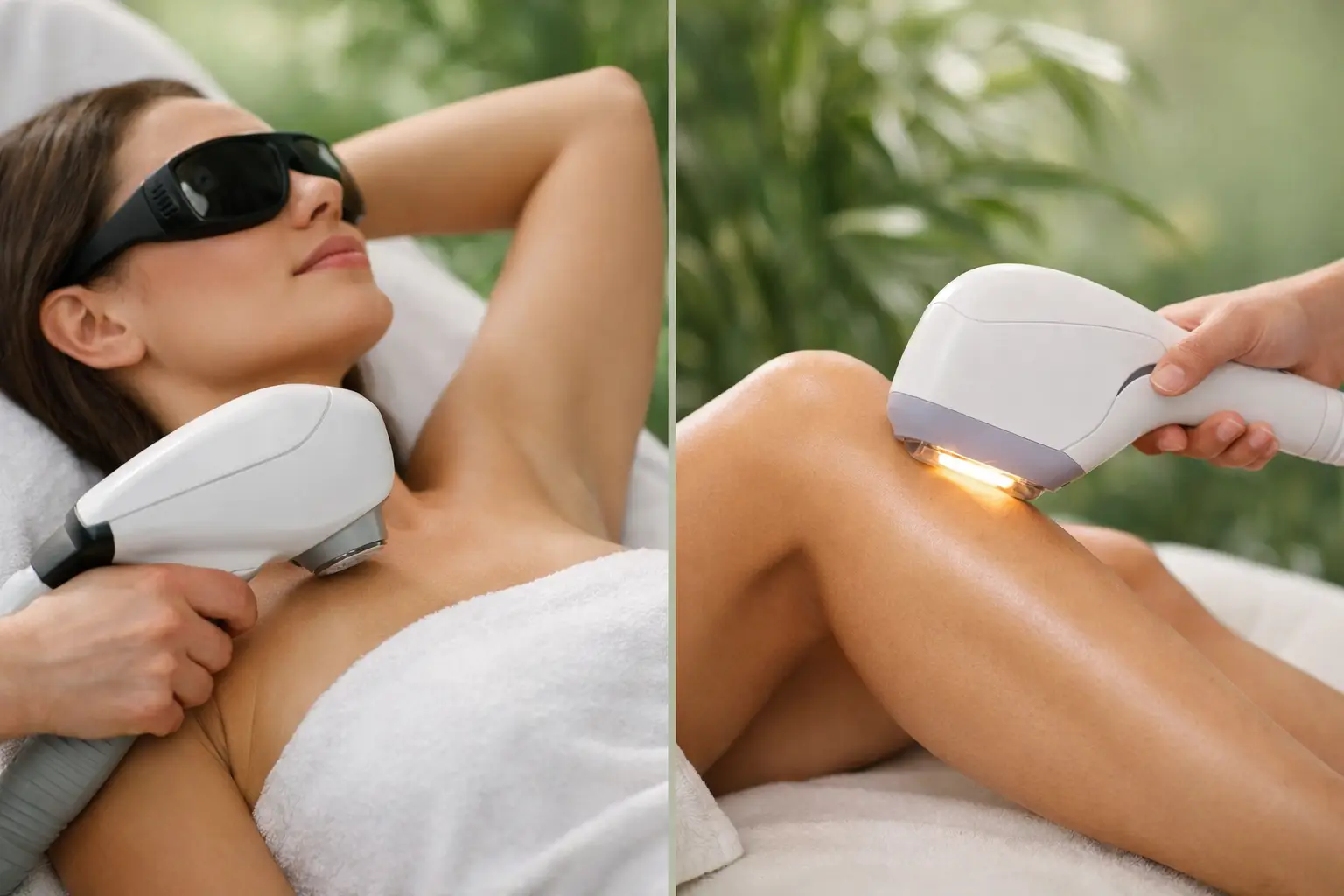
Most people describe professional laser or IPL treatment as a quick flick or warm snap against the skin. Sensation varies by area: the upper lip, bikini line and lower legs can feel more noticeable than the arms, for example. Modern professional systems often include cooling to make treatment more comfortable and to protect the skin.
The good news is that sessions are usually quick. Small areas can take only minutes, while larger areas such as full legs take longer. As hair density reduces through a course, many clients find the process increasingly manageable.
After treatment, temporary warmth, redness or slight swelling around the follicles can occur. This commonly settles within hours, although individual responses vary. Your practitioner should provide clear aftercare tailored to the area treated and your skin’s response.
Home IPL devices versus clinic treatment
Home IPL devices have made light-based hair reduction more accessible, but they are not a direct substitute for professional treatment. For safety, at-home devices use lower energy levels than clinic equipment. That can make them useful for some people who are prepared to commit to frequent top-ups, but it may also mean slower or more modest results.
A professional setting brings more than a stronger device. You receive a skin assessment, a patch test, carefully selected settings and someone qualified to monitor how your skin responds between sessions. That level of oversight is particularly valuable if you have sensitive skin, deeper skin tones, a history of pigmentation concerns or a treatment area affected by hormonal hair growth.
Preparing for a course of laser or IPL
Good preparation protects your skin and helps your treatment work as intended. Avoid tanning, sunbeds and fake tan before your appointment, as tanned skin can alter the way light energy is absorbed. Keep the area free from active irritation and let your practitioner know about any medication, skincare or health changes.
In most cases, you will be asked to shave the area before a session rather than wax, pluck or use an epilator. Shaving leaves the follicle beneath the skin available for the light to target, while removing the hair from the root can make the session less effective. Your practitioner will advise on the timing for your particular treatment plan.
Afterwards, be kind to freshly treated skin. Avoid heat, friction and strong active skincare on the treated area for the recommended period, and protect exposed skin from sunlight with a high-factor SPF. Following aftercare is part of achieving beautiful results, not an afterthought.
So, should you choose laser or IPL?
Choose based on suitability, not a label. Laser is often the more precise, powerful choice for clients seeking long-term hair reduction, particularly where the right wavelength can be matched to their skin tone and hair type. IPL can still be effective for the right candidate and may suit a more modest treatment goal or maintenance routine.
The best choice depends on the area you want to treat, the colour and texture of your hair, your skin tone, your budget and the level of commitment you can make to a course. A quality consultation should leave you with a clear plan, realistic expectations and no pressure to proceed.
Beautifully smooth skin is never about chasing a quick fix. It is about choosing a treatment that respects your skin, fits your life and lets you feel confidently yourself long after the appointment.