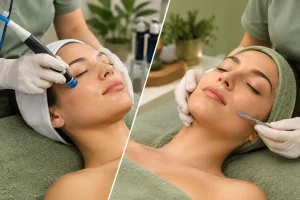
That faint patch of brown pigment beside the cheekbone, make-up settling into fine lines, a complexion that no longer looks as even or luminous as it once did – sun damage often arrives gradually. It is also one of the most common reasons skin can feel older than you feel. The good news is that the top sun damage treatments can improve brightness, texture and firmness when they are chosen around your skin’s needs rather than a one-size-fits-all promise.
Sun damage is not only about visible sun spots. Years of UV exposure can contribute to uneven tone, dehydration, rougher texture, broken capillaries and the gradual loss of collagen that gives skin its smooth, supported appearance. The right approach depends on which of these concerns is most noticeable, as well as your skin sensitivity, lifestyle and commitment to aftercare.
“Beautiful skin does not need to look filtered or untouched by life.”
What can sun damage treatments improve?
Professional treatment can help soften the visible effects of previous UV exposure, but it cannot make skin forget every sunny holiday, school run or afternoon in the garden. Results are usually most beautiful when treatments are paired with consistent daily protection and a considered home routine.
Pigmentation may look more even, dullness can lift, and fine surface lines may become less noticeable as hydration and collagen support improve. Deeper lines, marked pigmentation or significant laxity need a more measured plan, often with a course of treatments rather than one appointment.
There is another important distinction. Any new, changing, bleeding, crusting or irregular mark should be checked by a GP or dermatologist before booking an aesthetic treatment. A beauty or aesthetic appointment should never replace a medical skin examination.
Top sun damage treatments, matched to your skin
HydraFacial for dullness, congestion and surface dehydration
When sun-exposed skin looks tired rather than deeply lined, a HydraFacial can be a wonderful place to begin. This treatment cleanses, exfoliates and hydrates the skin while helping to clear surface congestion. The immediate finish is often smoother, fresher and more radiant – ideal before an event, or as part of a regular skin-maintenance plan.
It is particularly useful where dehydration makes fine lines look more pronounced and where a lacklustre surface is hiding otherwise healthy skin. It will not remove established pigmentation or tighten loose skin in the way that collagen-stimulating treatments can, but it can make the complexion look noticeably more polished and receptive to targeted skincare.
For clients who want a calm, pampering treatment with visible glow and no significant downtime, this is often the most comfortable first step.
Microneedling for texture, fine lines and collagen support
Microneedling is one of the most effective options for sun-related texture changes and fine lines. Controlled microchannels are created in the skin to encourage its natural repair response, supporting new collagen and elastin over time. Rather than producing an instant, dramatic change, the improvement develops gradually as the skin remodels itself.
This makes microneedling especially valuable for skin that feels less firm, has a slightly crepey quality or shows uneven texture around the cheeks, forehead or mouth. It can also support a more refined overall appearance when old sun exposure has left the complexion looking less smooth.
A course is often recommended because collagen renewal is a process, not an overnight event. Mild redness is normal afterwards, and your practitioner will advise on gentle aftercare, avoiding heat, active skincare and direct sun while the skin settles. Diligent SPF is non-negotiable: exposing newly treated skin to strong sunlight can work against the result you are investing in.
Radio frequency for a firmer-looking complexion
Radio frequency treatments use carefully controlled heat to support collagen production in the deeper layers of the skin. They are a considered option where sun damage has contributed to a loss of bounce, softer facial contours or fine lines that are more about skin quality than surface dryness.
The appeal is that radio frequency works beneath the surface, with little interruption to everyday life. Results tend to build over a course, and they are usually subtle, elegant and natural-looking rather than a sudden change in expression. It can be an excellent complement to treatments focused on surface radiance, such as facials or HydraFacial.
Radio frequency is not designed to erase dark sun spots on its own. If uneven pigment is your chief concern, a practitioner may suggest beginning with a different strategy and using radio frequency to address firmness as part of a broader plan.
HIFU for more advanced loss of firmness
For clients noticing a more pronounced loss of definition through the lower face, jawline or neck, HIFU may be considered. High-intensity focused ultrasound targets deeper structural layers to stimulate collagen, making it a more advanced choice for lifting and tightening concerns.
HIFU is not a treatment for pigmentation, and it is not intended to replace surgery. Its strength lies in supporting gradual, natural-looking firmness for the right candidate. A thorough consultation matters because facial anatomy, skin laxity and your desired outcome all affect whether it is the most suitable route.
Those looking for a refreshed, rested look rather than a dramatic transformation often appreciate the subtlety of this treatment. Patience is part of the process, with collagen changes appearing over the following weeks and months.
Targeted treatment for benign raised lesions
Not every mark associated with sun exposure is pigment. Some clients are concerned by small raised benign lesions that catch the light, disrupt make-up application or make skin look less even. Cryopen may be suitable for selected benign skin concerns following an appropriate assessment.
This is not a cosmetic shortcut for an unidentified mole or suspicious lesion. Safety comes first, and any mark that has changed in size, shape, colour or sensation needs medical assessment. Where a lesion is confirmed as appropriate for treatment, precise removal can help restore a smoother, clearer-looking finish.
Why treatment plans work better than single appointments
Sun damage rarely presents as one isolated concern. It is common to have surface dehydration alongside pigmentation, or fine lines alongside loss of firmness. That is why the most satisfying results often come from layering treatments thoughtfully rather than repeatedly booking the latest trend.
For example, a client preparing for a wedding may choose HydraFacial treatments for polished, hydrated radiance in the weeks beforehand. Someone focused on long-term texture and fine lines may benefit more from a microneedling course, supported by hydrating facials between appointments. Where laxity is the central concern, radio frequency or HIFU may be better suited to the plan.
At The Beauty Box Pangbourne, consultation is the moment to be candid about what you see in the mirror, what has or has not worked before, and how much downtime feels realistic. A tailored plan should feel reassuring, not pressured. It should also include honest expectations about how many sessions are likely to be needed and when you may begin to notice change.
The treatment that protects every result: daily SPF
No professional treatment can compete with continued unprotected UV exposure. Broad-spectrum SPF 30 or higher, applied generously every morning, is the foundation of any plan for sun-damaged skin. In warmer months, on holiday, or when sitting near bright windows for long periods, reapplication matters too.
This is not about chasing perfection or avoiding every moment outdoors. It is about allowing your investment in your skin to last. A wide-brimmed hat, sunglasses and shade during the strongest part of the day add another layer of care, particularly after collagen-stimulating treatments.
If pigmentation is a concern, consistency matters more than occasional use. UV exposure can encourage dark marks to return or deepen, even after the complexion has started to look clearer.
Choosing the right starting point
Start with the concern that bothers you most. Choose HydraFacial when glow, hydration and surface smoothness are the priority. Consider microneedling for texture and fine lines, radio frequency for gradual firmness, and HIFU where deeper lifting support is appropriate. If a distinct lesion concerns you, seek medical advice first unless it has already been assessed as benign.
Beautiful skin does not need to look filtered or untouched by life. With expert guidance, realistic expectations and consistent protection, it can look clearer, stronger and wonderfully cared for – a confidence that shows long after you leave the treatment room.