You can usually tell within the first few minutes of a consultation what someone really wants from a facial. Some clients want that soft, pampered, freshly-rested feeling before an event. Others want visible change – clearer pores, smoother texture, brighter tone, and skin that behaves better long after they leave the treatment room. That is where the hydrafacial vs regular facial question becomes genuinely useful, because the right choice depends on what you want your treatment to do.
Both have a place in a luxury skin routine. Both can leave you glowing. But they work in very different ways, and understanding that difference helps you invest in your skin more wisely.
“But they work in very different ways, and understanding that difference helps you invest in your skin more wisely.”
HydraFacial vs regular facial: the core difference
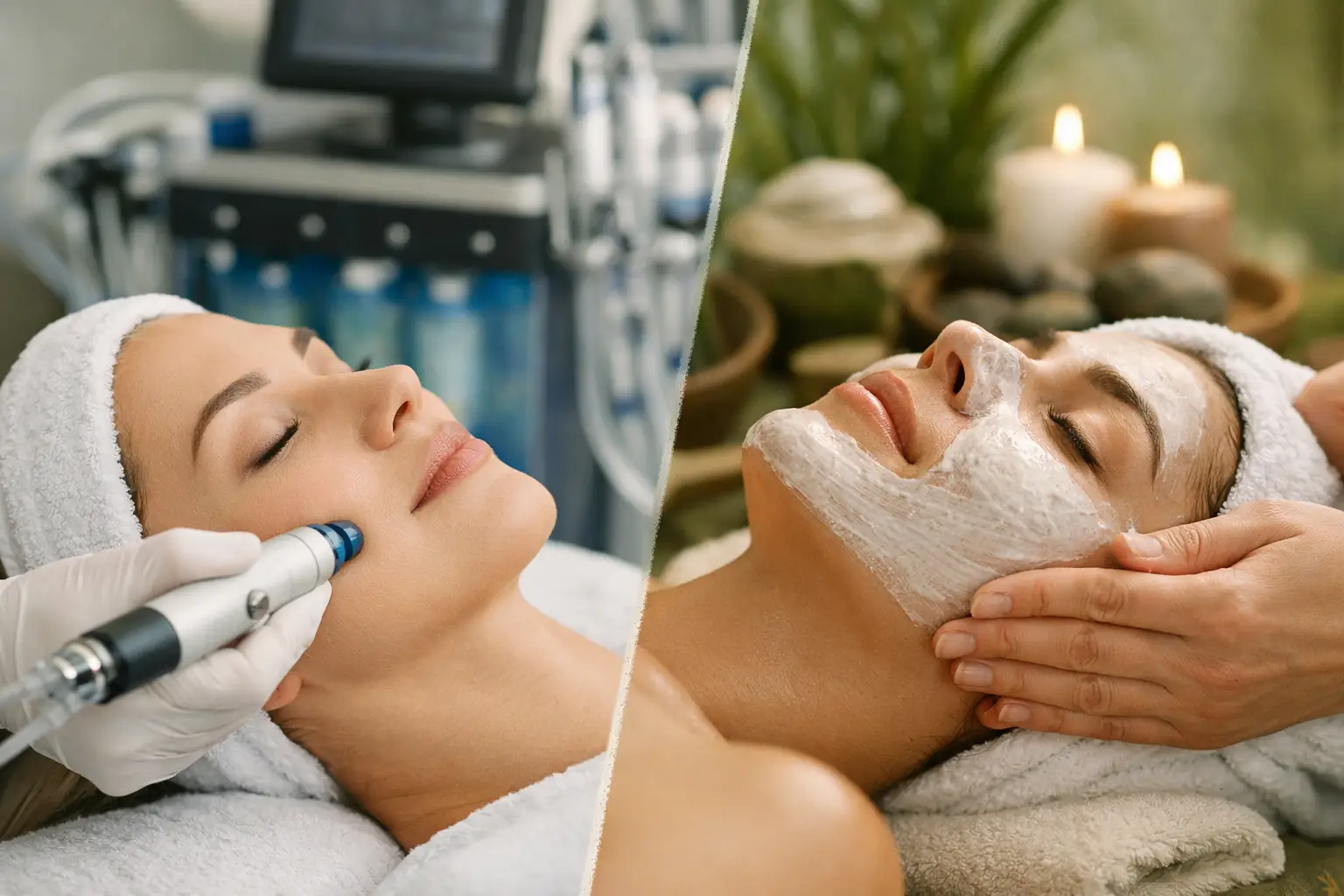
A regular facial is usually a hands-on treatment tailored by your therapist using cleansing, exfoliation, steam, masks, massage, and targeted skincare products. It can be deeply relaxing and very bespoke, especially when your skin changes with stress, hormones, weather, or the season.
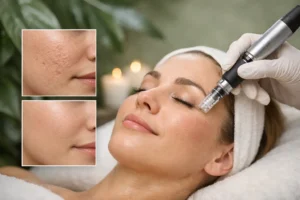
A HydraFacial is a technology-led treatment designed to cleanse, exfoliate, extract, and infuse the skin with hydrating, active-rich serums in a more controlled and consistent way. Rather than relying primarily on manual techniques, it uses a specialist device to deliver a multi-step treatment that focuses on both immediate radiance and skin performance.
In simple terms, a regular facial leans more towards personalised ritual and therapist-led care. HydraFacial leans more towards measurable skin refinement with a polished, high-performance feel. Neither is automatically better. It depends on your skin, your goals, and how you like your treatments to feel.
What a regular facial does best
A well-delivered regular facial can be wonderfully intuitive. Your therapist can adjust pressure, products, massage style, and treatment focus in real time. If your skin is feeling dry and dull, the facial can centre on nourishment. If you are tense and tired, more time can be spent on massage and calming the skin. If you are preparing for a wedding, holiday, or special event, it can be designed around comfort, glow, and a beautifully fresh finish.
This is often why traditional facials remain so loved. They offer skin benefits, but they also create a sense of pause. For many women balancing work, family life, and a very full diary, that matters just as much as the skincare itself.
Regular facials can also suit clients who prefer a gentler, more familiar approach. If you are newer to professional skin treatments, or simply enjoy the ritual of warm towels, massage, and masks, a classic facial can feel more indulgent and less clinical.
That said, results can vary more depending on the products used, the techniques chosen, and the specific condition of your skin on the day. A regular facial can absolutely improve hydration, brightness, and overall skin comfort, but if your priority is more intensive congestion management or a stronger resurfacing effect, it may not always go as far as you want in a single session.
Where HydraFacial stands apart
HydraFacial has earned its reputation because it combines efficiency with visible results. The treatment is designed to thoroughly cleanse the skin, loosen dead skin cells, clear congestion, and deliver hydrating ingredients without the harsher feel some people expect from deeper exfoliation.
For clients dealing with dullness, blocked pores, dehydration, uneven texture, or that tired-looking skin that does not seem to respond to home products, HydraFacial can feel like a reset button. Skin often looks clearer, fresher, and more refined almost immediately.
Another strength is consistency. Because the treatment follows a structured protocol with advanced delivery technology, the experience is less variable than some traditional facials. That can be especially appealing if you are results-focused and want a treatment you can return to regularly with confidence.
HydraFacial is also popular ahead of important occasions because it tends to leave skin looking polished rather than aggravated. Many clients like that they can have a high-performance facial without the uncertainty of significant downtime.
Still, it is not purely about instant glow. When carried out as part of a considered skin plan, HydraFacial can support clearer, healthier-looking skin over time. It works particularly well for clients who want a treatment that feels luxurious but also purposeful.
Which treatment is better for your skin concerns?
If your skin is mainly dry, sensitive, or stressed, either option could work beautifully, but the right choice depends on how reactive your skin is and what level of treatment it can comfortably tolerate. A regular facial may be better if your skin barrier feels compromised and you want a soothing, restorative experience. A HydraFacial may be the stronger option if dehydration is paired with dullness and congestion, and your skin can handle a more active approach.
If blocked pores and blackheads are your main frustration, HydraFacial often has the edge. Its extraction and exfoliation steps are one of the reasons clients find it so satisfying. Traditional facials can include extractions too, of course, but the overall approach is usually less device-led and may not deliver the same all-over pore-clearing finish.
If your concern is ageing skin, fine lines, or loss of radiance, both treatments can help in different ways. A regular facial can improve circulation, comfort, and hydration, all of which support healthy-looking skin. HydraFacial can give a more noticeable boost in smoothness and brightness, especially if your complexion has started to look flat or uneven.
For acne-prone skin, the answer is often more nuanced. Some clients do extremely well with HydraFacial because it clears debris and supports hydration without heavy, occlusive products. Others need a more carefully paced treatment plan depending on inflammation, sensitivity, and any active breakouts. This is one area where a professional consultation matters most.
What does the treatment feel like?
This is often overlooked, but it matters. How a treatment feels can shape whether you will actually keep it up.
A regular facial usually feels more spa-like. There is often more massage, more tactile comfort, and a stronger sense of being cocooned. If your ideal appointment is equal parts skin improvement and emotional switch-off, this can be a very appealing choice.
HydraFacial feels more modern and treatment-led. It is still comfortable, and many clients find it surprisingly relaxing, but the emphasis is on precision rather than ritual. You are there for the experience, certainly, but also for the outcome.
At a salon where luxury meets expertise, the best approach is never to force one style of treatment onto every client. It is to understand whether you need a sanctuary moment, a skin-correcting treatment, or a little of both.
Downtime, maintenance, and value
One reason the hydrafacial vs regular facial comparison comes up so often is practical: clients want to know what they are getting for their time and money.
A regular facial can be excellent value if your goals are maintenance, hydration, relaxation, and seasonal skin support. It fits beautifully into a self-care routine and can help keep the skin balanced when chosen consistently.
HydraFacial is often the stronger investment if you want more visible treatment-led results and a clearer sense of progress over a course of sessions. The upfront cost is typically higher, but many clients feel the finish and performance justify it.
Downtime is usually low with both, provided the treatment is appropriate for your skin. But this is where professional standards matter. Cleanliness, technique, and careful product selection make a real difference to how your skin responds afterwards.
So, which should you book?
Choose a regular facial if you want a tailored, nurturing treatment that supports your skin while giving you time to unwind. It is ideal for ongoing maintenance, pre-event freshness, or those moments when your skin and nervous system both need a little care.
Choose HydraFacial if you want a more advanced, results-driven treatment with noticeable improvements in clarity, hydration, and overall skin polish. It is especially appealing if you are serious about skin health and want something that bridges luxury and performance.
For many women, this is not really an either-or decision. A regular facial and HydraFacial can complement each other beautifully at different times of year, around different life events, and at different stages of your skin journey. At The Beauty Box Pangbourne, that is often the most elegant approach of all – treating your skin as individual, not fixed.
The best facial is the one that suits your skin today, your lifestyle, and the way you want to feel when you look in the mirror tomorrow.