Smooth skin should not have to mean planning your week around shaving, booking frequent waxing appointments or feeling self-conscious between treatments. This guide to laser hair removal explains what the treatment can realistically achieve, how to prepare, and why a thoughtful, personalised approach makes all the difference.
Laser hair removal is a long-term hair reduction treatment that can make everyday grooming feel simpler and more comfortable. For many clients, it is as much about confidence and convenience as it is about appearance: fewer ingrown hairs, less irritation from shaving, and more freedom to wear what they love without last-minute preparation.
“One of the pleasures of laser is that it can fit beautifully into a regular self-care routine: a focused treatment with a longer-term payoff.”
What laser hair removal actually does
Laser hair removal works by directing controlled light energy into the pigment, or melanin, within the hair. The heat travels down the hair shaft to the follicle, disrupting its ability to grow new hair. The surrounding skin is protected through carefully selected settings and cooling measures, but the treatment must always be carried out by a trained professional who understands how to tailor it safely.
It is often described as permanent hair removal, but “permanent hair reduction” is more accurate. Hair grows in cycles, and laser treatment is most effective when a hair is in its active growth stage. Because only a proportion of hairs are in that stage at any one time, a course of treatments is needed to target the area effectively over time.
Most clients enjoy a visible reduction in hair growth, with regrowth becoming finer, lighter or more sparse. Some areas may need occasional maintenance sessions, particularly where hormones can influence hair growth, such as the face, underarms and bikini line.
Is laser hair removal right for you?
Suitability depends on far more than the area you would like to treat. Your skin tone, hair colour, hair texture, medical history, current medication, recent sun exposure and skincare routine all matter. This is why a proper consultation is not simply a formality. It is the foundation for a treatment plan that respects both your results and your skin health.
Traditionally, laser has responded best to dark, coarse hair because it contains more pigment for the laser to recognise. Very light blonde, grey, white and red hair may not respond as effectively. However, modern technologies and professional assessment can broaden the options for many skin tones. The correct device, wavelength and settings are essential, particularly for deeper skin tones, where inappropriate treatment can increase the risk of irritation or pigmentation changes.
A patch test is usually carried out before your first session. This gives your therapist the opportunity to observe how your skin responds and confirm suitable treatment settings. It is a reassuring, sensible step that should never be rushed.
Areas commonly treated
Laser hair removal can be used on many parts of the body, including the upper lip, chin, jawline, underarms, arms, legs, bikini line, Hollywood area, back, chest and abdomen. The right choice is personal. Some clients begin with underarms and bikini because these areas offer a noticeable reduction in daily maintenance; others choose legs for the ease of feeling polished throughout holidays, gym sessions and busy working weeks.
For facial hair, a careful consultation is particularly valuable. Hormonal changes can affect patterns of growth, and certain areas may require a more considered treatment schedule. The aim is never a one-size-fits-all promise, but a plan that feels honest, comfortable and achievable.
Preparing for your laser hair removal appointment
Preparation helps your treatment work efficiently and keeps your skin calm. Your therapist will give you instructions specific to your treatment area and skin, but there are several principles that apply to most clients.
Avoid waxing, threading, plucking or epilating for several weeks before treatment. These methods remove the hair from the root, while laser needs the follicle and hair pigment in place to do its work. Shaving is normally preferred before your appointment because it removes surface hair without disturbing the root.
You should also avoid tanning, sunbeds and prolonged sun exposure before treatment. Tanned or sun-sensitised skin can be more reactive and may mean your appointment needs to be postponed for safety. Use high-factor SPF on exposed areas and be open with your therapist about any recent sunshine, holidays or changes to your skincare.
Some active skincare ingredients and medications can affect sensitivity. Retinoids, exfoliating acids and certain prescriptions may mean a treatment is unsuitable for the moment or that extra caution is needed. Bring this up at your consultation, even if it seems unrelated. A premium treatment experience should always feel considered rather than hurried.
What happens during a session?
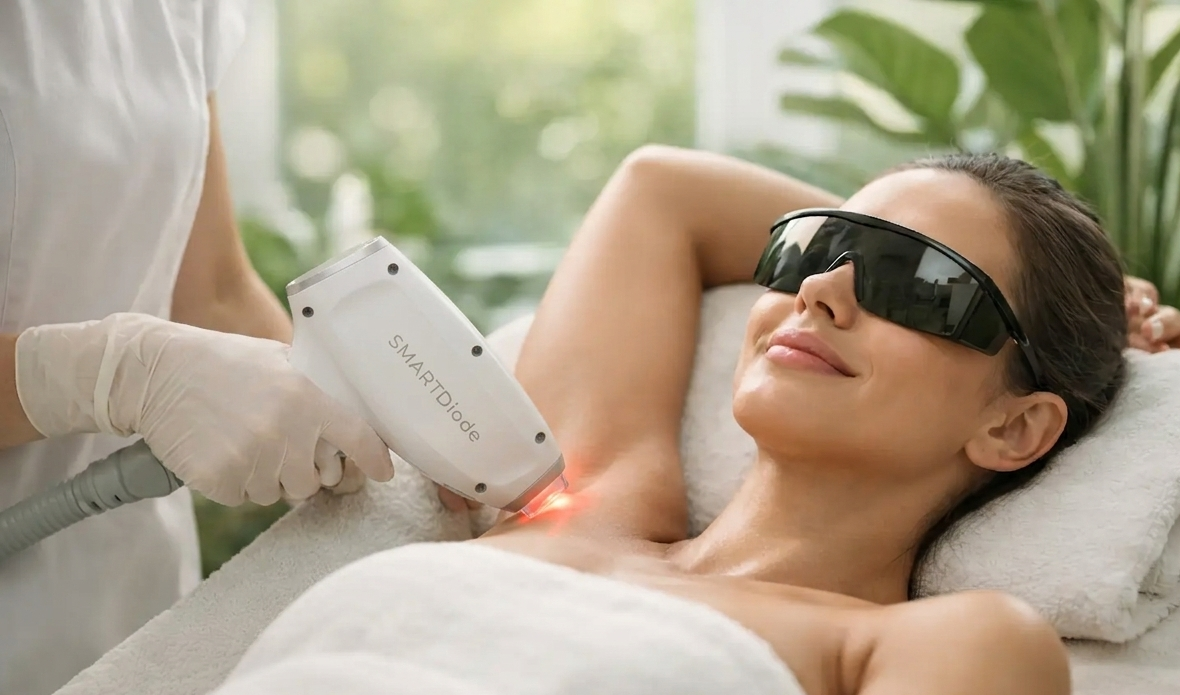
At your appointment, the treatment area will be assessed and cleansed. Protective eyewear is worn by both you and your therapist, and the laser settings are selected according to your agreed treatment plan. A cooling gel or cooling mechanism may be used depending on the technology and area being treated.
The sensation is often compared to a quick flick of an elastic band, followed by warmth. Sensitive areas, such as the bikini line or upper lip, can feel sharper than the legs or arms, but each pulse is brief. Most sessions are surprisingly manageable, and your therapist can work at a pace that supports your comfort.
Treatment time varies widely. Underarms may take only a few minutes, while full legs naturally take longer. One of the pleasures of laser is that it can fit beautifully into a regular self-care routine: a focused treatment with a longer-term payoff.
How many sessions will you need?
A course commonly involves around six to eight sessions, spaced several weeks apart, although your individual plan may differ. Hair growth cycles are not identical across every body area, and progress can be influenced by hormones, genetics, medication and previous hair removal habits.
You may notice hairs appearing to grow after a session. In many cases, this is part of the shedding process rather than fresh growth. Treated hairs can gradually push out of the follicle over the following days or weeks. Resist the temptation to pluck them; gentle exfoliation, when your therapist advises it is safe, can support the natural shedding process.
Results build gradually. After the first few appointments, many clients notice slower regrowth and softer hair. Consistency is key. Skipping long periods between sessions can make it harder to target hair at the most responsive stage of its cycle.
Laser hair removal aftercare: keeping skin comfortable
Your skin may look slightly pink or feel warm after treatment, much like mild sun exposure. This usually settles quickly, but aftercare deserves the same attention as preparation. Keep the area cool, clean and protected from heat for the first day or two.
Avoid hot baths, saunas, steam rooms, strenuous exercise, fragranced body products and exfoliation immediately after your appointment. Choose loose clothing where possible, particularly after bikini or body treatments, to reduce friction. If the area is exposed, apply a high SPF diligently and avoid direct sun.
Do not wax, thread or pluck between sessions. Shaving is generally suitable if needed, provided the skin has settled and your therapist has not advised otherwise. If you experience prolonged redness, blistering, swelling or anything that concerns you, contact your treatment provider promptly rather than trying to treat the reaction yourself.
Choosing a clinic you can trust
The technology matters, but so does the person using it. A trusted clinic will discuss your expectations without overpromising, ask detailed questions about your health and skin, complete a patch test, and make space for you to ask questions. Hygiene, clear aftercare and a calm environment are not extras. They are part of responsible, high-quality care.
At The Beauty Box Pangbourne, laser hair removal is approached as a tailored journey rather than a quick fix. The goal is for every client to feel listened to, well cared for and confident in the choices they make for their skin.
If you are ready to spend less time managing unwanted hair and more time feeling effortlessly polished, begin with a professional consultation. The most beautiful results are built with patience, expertise and a plan designed around you.