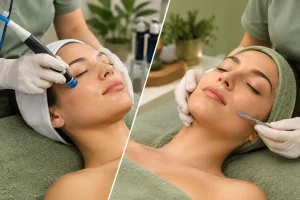
That beautifully clean, soft feeling after a facial is not just a moment of luxury. Your skin has been thoroughly cleansed, treated and supported with professional products, and the next 24 to 72 hours can make a real difference to how comfortably it settles and how long your glow lasts. This facial aftercare guide UK clients can rely on is designed to help you care for your complexion with the same considered attention you receive in the treatment room.
A facial should leave skin looking refreshed, luminous and balanced, but it can also make it temporarily more responsive. Gentle care is the most elegant approach. Rather than introducing new products or trying to accelerate results, give your skin time to absorb the benefits of your treatment.
“That beautifully clean, soft feeling after a facial is not just a moment of luxury.”
The first 24 hours after your facial
For most classic facials, the best plan is pleasantly simple: leave your skin alone where possible. Avoid cleansing again that evening unless your therapist has advised otherwise, and resist the temptation to apply extra serums, exfoliants or a rich layer of products over the professional skincare already used.
Your skin may have had a deep cleanse, exfoliation, extractions, massage or a mask. It is therefore normal for it to look a little flushed immediately afterwards, particularly if you have fair, sensitive or reactive skin. This should settle naturally. Keep your hands away from your face, especially after a treatment involving extractions, as touching can transfer bacteria and irritate freshly treated areas.
Make-up is best avoided until the following day, if your diary allows. Giving the complexion a make-up-free evening is one of the simplest ways to preserve that fresh, clear finish. If you need to wear make-up for an occasion, choose clean brushes and light, non-comedogenic products rather than a full, heavy base.
Heat is another consideration. Skip the sauna, steam room, hot yoga, vigorous gym session and very hot shower for the rest of the day. Heat can increase redness and may leave skin feeling more sensitised. A calm evening, plenty of water and a clean pillowcase are far more beneficial.
Your facial aftercare guide UK routine for days two and three
The morning after your facial, return to a gentle version of your normal routine. Cleanse with a mild product, apply hydration and finish with broad-spectrum SPF. Even on a grey Berkshire morning, daily sun protection matters. Freshly exfoliated skin is more vulnerable to UV exposure, which can contribute to uneven tone and undermine the brightening benefits you have just invested in.
Hydration is your priority. Look for familiar, comforting products that support the skin barrier rather than products designed to tingle, peel or dramatically resurface. A simple hydrating serum and moisturiser are usually enough. If your therapist has recommended particular homecare, follow that advice over generic rules, as it will reflect your skin type and the facial you received.
For 48 to 72 hours, pause active ingredients unless specifically instructed otherwise. This commonly includes retinol, retinal, prescription retinoids, AHAs, BHAs, PHAs, benzoyl peroxide and strong vitamin C formulas. These products can be excellent in a well-planned routine, but used too soon after exfoliation or extractions they may cause unnecessary dryness, stinging or flaking.
Also avoid facial scrubs, cleansing brushes, dermaplaning at home, waxing and hair-removal creams around the face during this period. Your complexion does not need more polishing. It needs a little space to recover and reveal the results of the treatment.
What to do if your skin looks red or feels sensitive
A little warmth, pinkness or tenderness can be entirely expected after a facial, especially where congestion has been treated. Keep your routine cool and uncomplicated. A clean, cool compress held lightly against the skin can feel soothing, but avoid ice directly on the face.
Do not pick at any areas that look temporarily raised after extractions. Spots and blackheads may look more noticeable for a short time as the skin settles, yet squeezing can prolong inflammation and increase the risk of marks. Allow your skin to do its work.
If redness, swelling, itching, blistering or discomfort feels severe, persists beyond a reasonable settling period or concerns you in any way, contact your treating therapist or seek medical advice. A professional consultation before treatment is there to reduce risk, but skin can be unpredictable and thoughtful aftercare includes knowing when to ask for guidance.
Aftercare differs by facial treatment
Not every facial has the same recovery profile. A relaxing, hydrating facial may require little more than gentle skincare and SPF, while a HydraFacial, peel, microneedling, radio frequency or other advanced skin treatment can come with more specific instructions. The principle remains the same, but the details matter.
After a HydraFacial or deep-cleansing facial
HydraFacial and deep-cleansing treatments can leave the skin exceptionally smooth and hydrated. Avoid make-up, intense heat and active ingredients for at least 24 hours, or longer if advised. If your skin is prone to congestion, do not mistake a temporary purge or slight sensitivity for a reason to over-cleanse. Gentle, consistent care will serve you better.
After a chemical peel
Peels are designed to encourage renewal, so mild tightness, dryness or visible peeling can occur. Do not exfoliate flakes away, scrub the skin or pull at peeling patches. Use the prescribed or recommended barrier-supporting products, avoid direct sun exposure and be meticulous with SPF. The temptation to speed up the process is understandable, but patience produces a more even-looking result.
After microneedling or advanced treatments
Microneedling and some device-led treatments require a more cautious approach because the skin barrier has been intentionally stimulated. You may be asked to avoid make-up, exercise, swimming, heat, fragranced products and active skincare for a longer period. Follow your personalised treatment plan precisely, including guidance on cleansing and sun protection.
This is one area where online advice should never replace your therapist’s instructions. Your treatment depth, skin condition, medical history and goals all shape the right recovery plan. At The Beauty Box Pangbourne, personalised aftercare is part of creating results that feel as good as they look.
Small habits that protect your results
Fresh pillowcases and clean phone screens are often overlooked. Both sit close to the face and can transfer oil, make-up residue and bacteria to newly treated skin. It is also wise to clean make-up brushes before using them again, particularly if you are managing breakouts or sensitivity.
Try to keep your skincare routine stable for a few days. A facial is not the moment to trial a friend’s favourite acid toner or an unfamiliar overnight mask. If you have an event coming up, book your facial with enough breathing room rather than the night before, especially if it is your first time having that particular treatment.
Longer term, the most visible results tend to come from continuity. Occasional facials are a wonderful reset, but regular professional treatments combined with a tailored home routine can support concerns such as dehydration, dullness, congestion, fine lines and uneven texture more effectively. The right frequency depends on your complexion, lifestyle, budget and treatment goals. For some, monthly appointments are ideal; for others, a seasonal facial alongside excellent homecare is the more realistic choice.
Let your skin lead the way
Great aftercare is not about following the longest routine. It is about noticing what your skin needs: calm when it feels sensitive, hydration when it feels tight and protection whenever it is exposed to daylight. Treat the hours after your facial as part of the appointment itself, and your complexion has every chance to stay soft, clear and confidently glowing.