A beautifully structured BIAB manicure should feel quietly effortless: glossy, elegant and strong enough to support everyday life without demanding constant attention. Knowing how to maintain BIAB nails is what keeps that fresh-from-the-salon finish looking polished for longer, while protecting the natural nail beneath.
BIAB, short for Builder in a Bottle, is loved for its strengthening qualities and beautifully natural appearance. Yet even the most expertly applied manicure needs thoughtful aftercare. Your hands are exposed to water, cleaning products, keyboards, gym equipment and the occasional rush to open a parcel. A few small habits can make a meaningful difference to the longevity of your manicure and the condition of your nails at your next appointment.
“The simplest rule is to treat your BIAB nails as jewellery, not tools.”
How to maintain BIAB nails day to day
The simplest rule is to treat your BIAB nails as jewellery, not tools. They are designed to add strength and structure, but they are not intended for opening cans, scraping labels, prising open lids or lifting tight tabs. Repeated pressure at the free edge can cause lifting, cracking or a broken corner, particularly as the natural nail grows out.
Use the pads of your fingers where possible, rather than the tips of your nails. This is particularly helpful when typing, fastening jewellery, using zips or reaching into a handbag. It can feel like a small adjustment at first, but it protects the structure of your manicure and avoids putting pressure on the weakest point: the growing edge.
Water is another consideration. Long, frequent exposure to water can encourage the natural nail to expand and contract, which may affect how well any enhancement adheres over time. Wear gloves for washing up, household cleaning and gardening. Choose gloves that fit comfortably, and remove them once the task is finished so your hands do not become overly warm or sweaty inside.
Keep cuticles nourished for stronger-looking nails
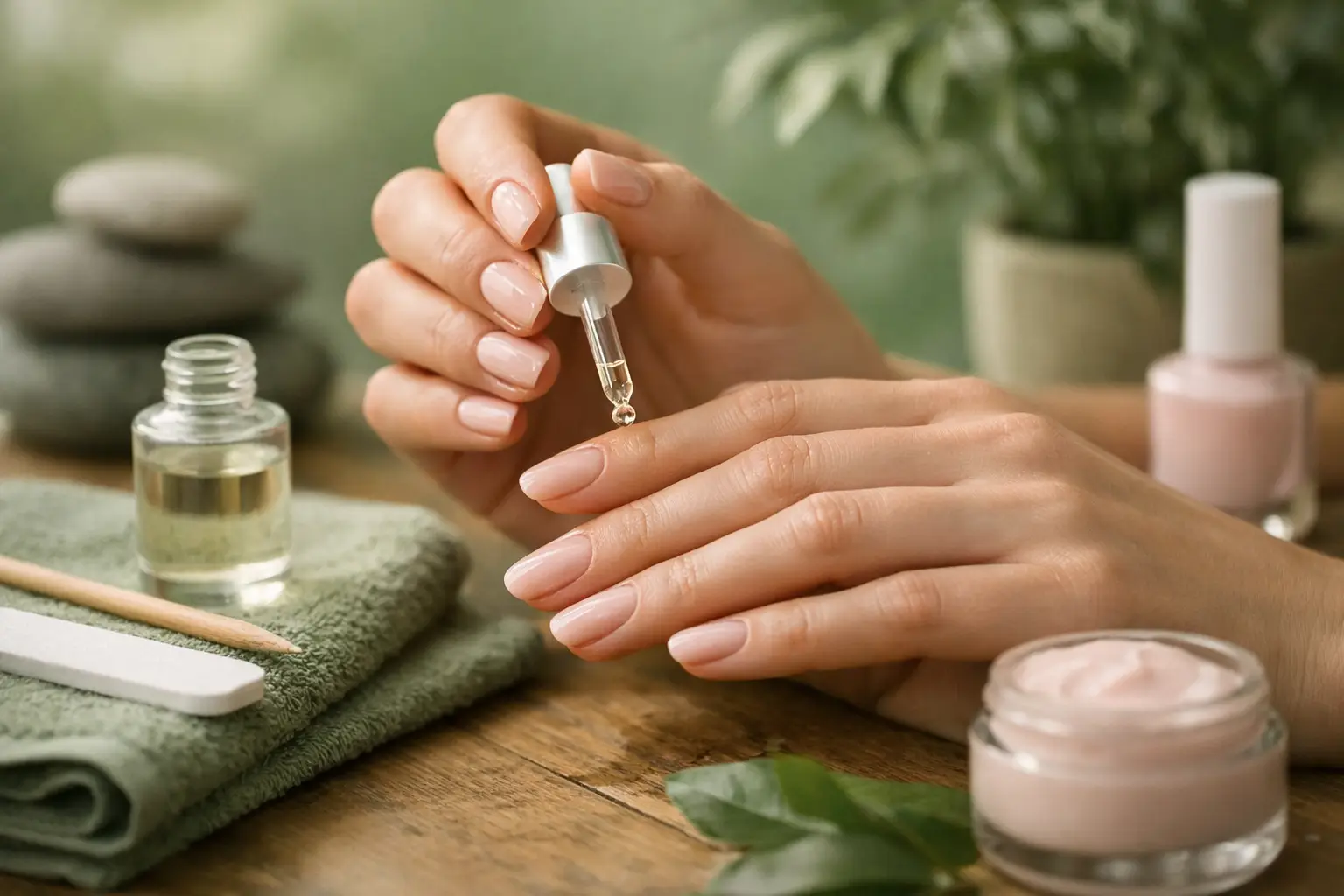
Cuticle oil is one of the most worthwhile additions to your home beauty routine. Applied once or twice daily, it helps keep the skin around the nail soft, supple and comfortable. It also supports the flexibility of the natural nail beneath your BIAB, which is especially useful during colder weather, after hand sanitiser use or if your hands are prone to dryness.
Massage a small drop of oil into each cuticle and along the sidewalls of the nail. This takes less than a minute and creates a lovely pause in a busy day. Evening is ideal, as the product has time to settle without repeated handwashing, but consistency matters more than timing.
Follow with a quality hand cream, paying attention to knuckles, cuticles and the backs of the hands. A luxury manicure looks even more refined when the surrounding skin is cared for. If you have very dry hands, keep a small hand cream beside your bed and another in your handbag or desk drawer.
Protect your BIAB manicure from avoidable damage
Household chemicals can be harsh on both the skin and the surface of your manicure. Bleach-based cleaners, degreasers, stain removers and strong detergents are best handled with gloves. The same applies to gardening, painting, DIY and any activity involving soil, solvents or prolonged friction.
Be mindful with alcohol-based hand sanitiser too. It is essential for hygiene, but frequent use can leave cuticles dehydrated. There is no need to avoid it, simply balance it with regular oil and hand cream. This is one of the most common reasons hands begin to look dry even when the manicure itself remains intact.
If you enjoy swimming, rinse your hands with fresh water afterwards and apply cuticle oil when dry. Chlorine and repeated soaking do not automatically ruin BIAB nails, but they can contribute to dryness and may shorten wear for some people. How your nails respond depends on your lifestyle, nail type and how often you are in the water.
What to do if a nail chips, lifts or breaks
A small chip at the edge is not always an emergency, but it should not be ignored. Avoid picking at it or trying to peel away product, as this can remove layers from your natural nail and create more damage than the original chip.
If the free edge is catching, you may gently smooth it with a fine nail file in one direction. Do not file aggressively across the surface of the BIAB or attempt to reshape a significant break at home. Filing too much can alter the balance of the nail and leave it more vulnerable.
Lifting needs professional attention. It can begin as a small gap near the sidewall or cuticle area and may be tempting to pull. Please resist. Moisture and everyday debris can become trapped beneath lifted product, so it is best to arrange a repair or removal with a trained nail technician as soon as practical. Keep the area clean, dry and protected until then.
If a nail breaks below the free edge, feels sore, or the surrounding skin is injured, avoid applying glue or a home repair kit over it. A calm, professional assessment is the kindest option for both comfort and nail health.
Never peel or pick off BIAB
The urge to peel can be strongest when your nails have grown out, or when one corner has started to lift. Unfortunately, peeling BIAB away can take the upper layers of your natural nail plate with it. The result may be thin, rough or sensitive nails that need time and careful treatment to recover.
BIAB should be professionally infilled, rebalanced or removed according to the system used and the condition of your nails. Not every manicure needs a full removal. If the product is still well adhered and your natural nails are healthy, an infill is often the most appropriate way to refresh the structure and colour while maintaining the integrity of the natural nail.
This is where a tailored salon approach matters. Your technician can assess growth, length, wear patterns and any changes in your lifestyle, then recommend whether an infill, a shorter shape, a repair or a fresh application will give you the best result.
Time your maintenance appointments well
For most clients, BIAB nails look and feel their best when maintained every two to three weeks. The right timing depends on how quickly your nails grow, how long you prefer them and how much your hands do each day. Someone who types, cleans, cooks and cares for children may notice more wear than someone whose nails are exposed to less water and friction.
Leaving appointments too long can put extra stress on the nail as the balance shifts towards the grown-out free edge. This does not mean a four-week gap is always harmful, but it can increase the chance of breakage or lifting, particularly with longer nails. Booking ahead gives you the reassurance of regular care and means your manicure remains part of your self-care routine rather than a last-minute repair.
At The Beauty Box Pangbourne, a maintenance appointment is also an opportunity to reset. Your nails can be reshaped, your cuticles tidied and your colour refreshed in a calm, polished setting, with your natural nail health always considered alongside the finished look.
Choose length and shape for your real life
The most flattering BIAB nails are not necessarily the longest. A shorter almond, soft square or squoval shape can look beautifully elegant while being practical for work, family life, sport and everyday tasks. If you are experiencing repeated breaks, reducing the length slightly may be more effective than adding extra product.
Your chosen shape should work with your natural nail, not against it. For example, a client with nails that catch at the corners may find a soft oval more durable than a sharp square. Equally, if you are growing out damage or adjusting to BIAB for the first time, a modest length gives your natural nails time to build confidence and strength.
Mention any changes at your appointment: a new exercise routine, an upcoming holiday, increased handwashing, a house move or a role that is more hands-on. These details help your nail technician tailor the service to you.
A gentle routine makes all the difference
Healthy-looking BIAB nails are built on regular, unhurried care. Keep them clean, moisturised and protected from unnecessary pressure. File only a small snag when needed, never pick at lifting, and book professional maintenance before a minor issue becomes a break.
Your manicure should feel like a small, dependable luxury in your week: a polished detail that lets you move through work, plans and everyday moments with confidence. Give your nails the same thoughtful care you give the rest of your beauty routine, and they will continue to look beautifully considered between every appointment.