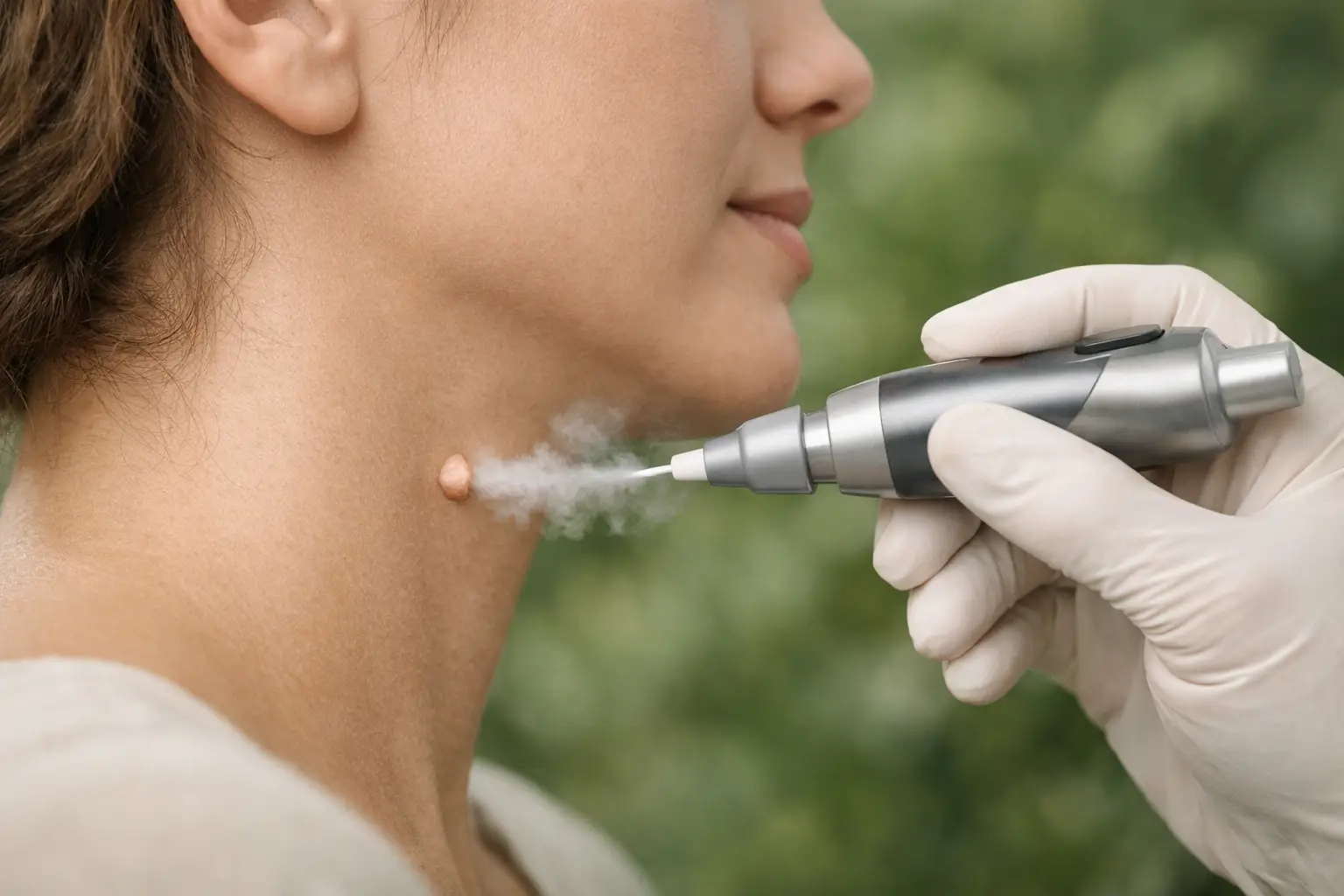
A small skin tag can feel surprisingly distracting. It may catch on a necklace, rub against a bra strap or simply make you feel less comfortable in your own skin. So, can CryoPen remove skin tags? In many suitable cases, yes. CryoPen treatment uses highly controlled cryotherapy to target the tag precisely, offering a swift, non-surgical way to address these common benign growths.
For anyone who values polished results alongside thoughtful, professional care, the key is not simply freezing a skin tag. It is making sure the area is appropriate to treat, choosing the right technique and allowing the skin to heal beautifully afterwards.
“For something as small as a skin tag, that reassurance is often what turns a worrying nuisance into a straightforward experience.”
What are skin tags?
Skin tags are small, soft growths that often appear where skin folds or experiences repeated friction. Common areas include the neck, underarms, eyelids, groin and beneath the breasts. They can be flesh-coloured or slightly darker, and may sit close to the skin or hang from a small stalk.
They are usually harmless, but that does not mean they are always welcome. Skin tags can catch when dressing, become irritated by jewellery or shaving, and affect confidence when they appear in a visible area. They also become more common with age, hormonal changes, pregnancy, genetics and friction between areas of skin.
It is worth remembering that not every raised mark is a skin tag. Moles, warts and other skin changes can look similar at first glance, which is why a professional consultation matters before any removal treatment.
Can CryoPen remove skin tags with precision?
CryoPen is a modern form of cryotherapy. Rather than using liquid nitrogen applied with a swab, the device delivers a focused jet of nitrous oxide to freeze the targeted tissue. The extreme cold creates controlled damage within the skin tag, allowing the body to naturally shed the treated tissue as the area heals.
For a confirmed, suitable skin tag, this precision is one of CryoPen’s greatest advantages. The practitioner can concentrate on the lesion itself while aiming to minimise contact with the surrounding skin. This can be particularly valuable for small skin tags in delicate or visible areas, although suitability will always depend on the exact location, size and appearance of the tag.
CryoPen is not a one-size-fits-all answer. Larger, more stubborn skin tags may need more than one treatment, while a tag in an especially sensitive area may require a different approach or medical advice. The right recommendation should feel individual, never rushed.
Why people choose CryoPen treatment
Many clients appreciate CryoPen because it is quick, requires no cutting and generally involves little disruption to the day. There are no stitches, and treatment appointments are often relatively short once a consultation has confirmed that cryotherapy is suitable.
During treatment, you may feel a sharp cold sensation, tingling or a brief sting. This is usually manageable, though sensitivity varies from person to person and by treatment area. A skilled practitioner will explain what is happening, work carefully and ensure you feel comfortable throughout.
The appeal is not only convenience. For those who are tired of a skin tag catching, rubbing or drawing attention, a professional treatment can be a simple step towards feeling more at ease in the skin you are in.
What happens during a CryoPen appointment?
A considered appointment begins with assessment. Your practitioner will examine the area, discuss your medical history where relevant and ask about any changes you have noticed. If the growth is not clearly suitable for cosmetic removal, or if there is any uncertainty about its nature, you should be advised to speak with your GP or a dermatologist before proceeding.
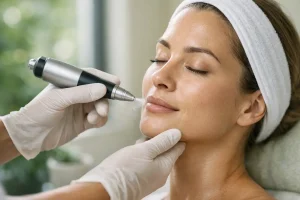
Once treatment is approved, the skin is cleansed and the CryoPen tip is positioned close to the skin tag. Nitrous oxide is applied in short, precise bursts. The area may turn white during the freezing process, then later become pink or red as it thaws.
The treatment itself can be very quick, but it should never feel impersonal. At The Beauty Box Pangbourne, the aim is to pair advanced skin treatment with the calm, attentive care you would expect from a luxury salon setting.
What to expect after skin tag freezing
Healing is part of the process, so it helps to know what is normal. Immediately afterwards, the area may feel tender, look red or appear slightly swollen. A small blister can form, particularly after treatment on certain areas of the body. This is a normal part of the freezing response and should be left alone.
Over the following days, the skin tag may darken, dry out and form a small crust before naturally falling away. This commonly takes around one to three weeks, although healing time varies according to the size of the tag, its location and your individual skin response.
The treated area should be kept clean and dry. Avoid picking, scratching or trying to pull the tag away early, as this can increase the risk of irritation, infection or unwanted marking. If the area is exposed, protect it from strong sun while it heals, as freshly treated skin can be more prone to pigmentation changes.
If you experience persistent pain, spreading redness, discharge, significant swelling or any concern about healing, seek professional medical advice promptly.
Is CryoPen suitable for every skin tag?
Not always. A reputable practitioner will be open about the limits of a cosmetic treatment. Cryotherapy may be unsuitable if a lesion has changed in colour, shape or size, bleeds without explanation, has an irregular border or cannot confidently be identified as a benign skin tag. In these situations, medical assessment comes first.
CryoPen may also be approached with extra caution for people with certain health conditions, impaired healing, circulation concerns, cold sensitivity or a history of problematic scarring. Pregnancy, medication and skin type can also affect treatment planning. These factors do not automatically rule treatment out, but they should be discussed honestly during your consultation.
Location matters too. Skin tags close to the eye, on the eyelid or in intimate areas require particular care and may need referral depending on their position. The safest treatment is always the one chosen with your wellbeing, not speed, in mind.
CryoPen versus removing a skin tag at home
It can be tempting to try an over-the-counter freezing kit, a ligation device or online home-removal advice. Yet this is where professional judgement makes a meaningful difference. At home, it is easy to mistake another type of lesion for a skin tag, apply treatment too broadly or irritate healthy skin.
Professional CryoPen treatment offers controlled application, hygienic practice and a proper assessment before treatment begins. It also gives you clear aftercare advice tailored to the area being treated. For something as small as a skin tag, that reassurance is often what turns a worrying nuisance into a straightforward experience.
Preparing for your consultation
Come to your appointment with clean, product-free skin around the treatment area where possible. Avoid shaving or waxing directly over an irritated skin tag beforehand, and let your practitioner know if it has recently been sore, inflamed or damaged.
Be ready to share any relevant health information, including medications and previous reactions to skin treatments. If you have photographs showing that a mark has changed over time, bring those observations into the conversation. A good consultation is collaborative: you should understand the proposed plan, likely healing period and whether more than one session may be needed before you decide.
A skin tag may be minor, but feeling confident about the skin you show every day is never a minor thing. Choose professional assessment first, give healing the patience it deserves, and let your treatment plan be as individual as you are.