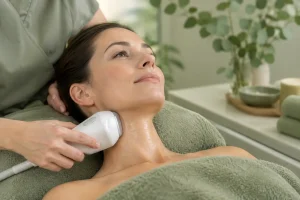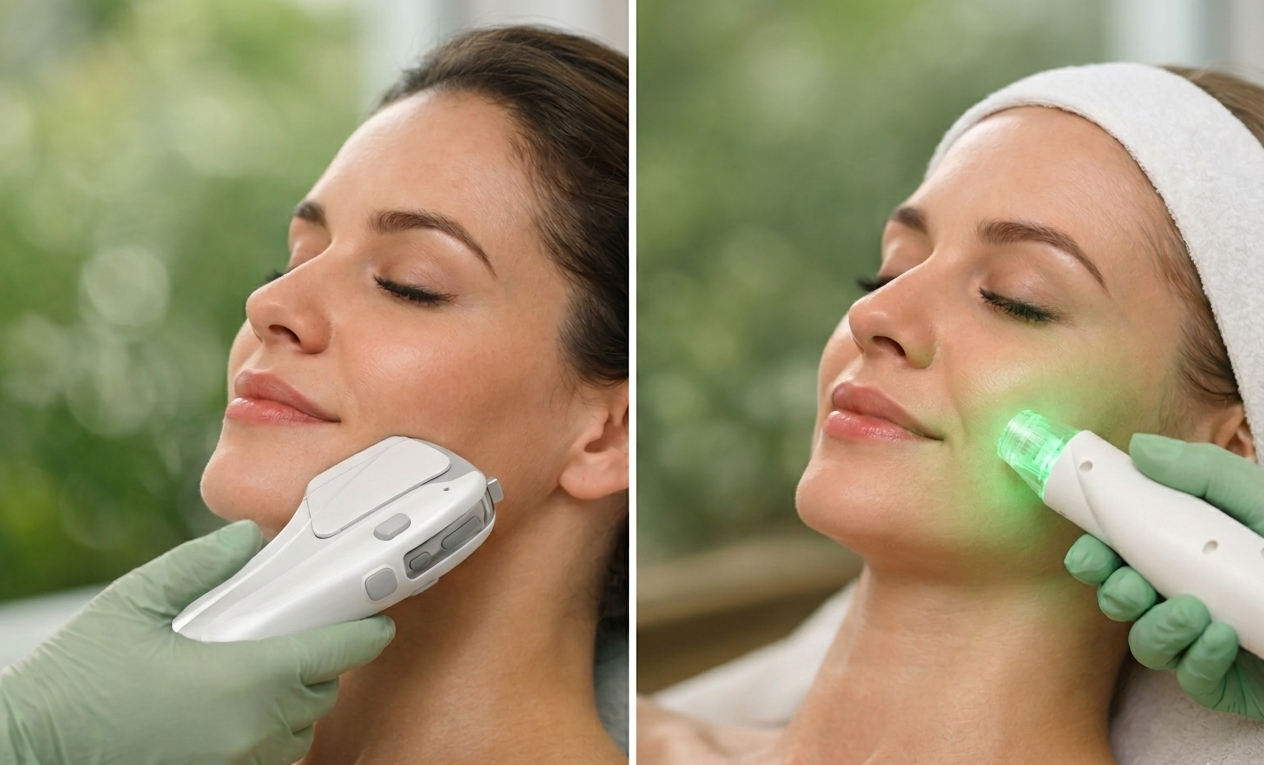
If you are weighing up HIFU vs radio frequency, you are probably not looking for vague promises. You want to know what will actually help with loose skin, softening definition, fine lines or that general sense that your skin no longer feels as firm as it once did. Both treatments sit in the non-surgical skin tightening category, but they work differently, feel different during treatment, and suit different goals.
For many clients, the confusion starts because both are often described as firming or lifting treatments. That is true, but only partly. The more useful question is not which one is better in a broad sense. It is which one is better for your skin, your comfort level, your budget and the result you are hoping to see in the mirror.
“There is no universal winner in HIFU vs radio frequency because they are not doing exactly the same job.”
HIFU vs radio frequency: the core difference
HIFU stands for high-intensity focused ultrasound. It uses focused ultrasound energy to target deeper structural layers beneath the skin, including the level often associated with surgical lifting. The aim is to trigger a healing response and fresh collagen production in those deeper tissues, which can gradually create a firmer, more lifted appearance.
Radio frequency, by contrast, uses heat energy to warm the skin and underlying tissue more superficially. It still stimulates collagen, but at different depths and in a different way. Rather than creating very targeted points of thermal injury at deeper levels, radio frequency generally delivers a broader heating effect that is often associated with skin tightening, smoothing and improving overall texture.
That distinction matters. HIFU is usually chosen when lifting and contouring are the priority. Radio frequency is often favoured when clients want firmer, smoother skin with a treatment experience that feels gentler and easier to build into a regular routine.
What HIFU is best for
HIFU tends to suit clients who are noticing early to moderate skin laxity and want a more sculpted look without surgery. It is often used around the lower face, jawline, cheeks and neck, where loss of definition becomes more noticeable over time. Some clients also choose it for body areas where mild skin laxity is a concern.
The appeal of HIFU is depth. Because it can reach deeper support structures, it is often the stronger option for someone whose main concern is sagging rather than surface texture. If your skin feels as though it has started to slip downward slightly, rather than simply looking crepey or dull, HIFU may be the more relevant conversation.
That said, it is not an instant-gratification treatment. Some people notice a subtle initial tightening effect, but the fuller result develops gradually as collagen remodels over the following weeks and months. Patience is part of the process.
What radio frequency is best for
Radio frequency is often beautifully suited to clients who want improvement in firmness, smoothness and skin quality with a more comfortable treatment journey. It can be especially appealing for finer lines, mild laxity and areas where the skin is beginning to lose bounce but does not necessarily need a deeper lifting approach.
Many people enjoy radio frequency because it feels more like a warming treatment than an intense one. There is often a lovely glow afterwards, and because it is commonly delivered as a course, it fits well for clients who enjoy regular appointments and like the idea of building results steadily.
It can also be a strong option for those who are not quite ready for HIFU, or who want maintenance after other advanced skin treatments. If your goals are refinement, firmness and overall rejuvenation rather than a stronger lifting focus, radio frequency may feel like the better match.
How the treatments feel
Comfort matters more than many people admit. A treatment may sound ideal on paper, but if it feels too intense for you, that matters.
HIFU is often described as sharp, prickly or momentarily zingy in certain areas, particularly where there is less padding over bone, such as the jawline. Not everyone finds it difficult, but it is usually the more intense of the two options. For some clients, that intensity is worth it because they are seeking deeper lifting and are happy with a more serious treatment experience.
Radio frequency is generally considered more comfortable. Most clients describe it as a controlled warmth on the skin. It can feel soothing, even relaxing, which suits those who want advanced results without the sense of bracing themselves through the appointment.
Neither experience is universally the same. Skin sensitivity, treatment area and machine settings all play a part. A proper consultation should always include an honest conversation about comfort as well as results.
Downtime and when you will see results
One reason both treatments are so popular is that neither usually involves the sort of recovery associated with surgery. Even so, the rhythm of results is different.
With HIFU, there may be some temporary tenderness, mild swelling or slight redness, but many clients return to normal activity very quickly. The key point is that results unfold slowly. Improvements can continue to develop over two to three months, and sometimes longer, depending on the area treated and the condition of the skin.
With radio frequency, downtime is typically minimal. Skin may look a little flushed immediately after treatment, but this tends to settle quickly. Some clients notice a fresher, tighter look fairly soon, although the best results usually come with a course of sessions. It is less about one dramatic shift and more about consistent, cumulative improvement.
If you have an event approaching, timing matters. HIFU is usually better viewed as a longer-term investment. Radio frequency can fit more easily into a pre-event skin plan, especially when glow and smoothness are part of the goal.
Which treatment gives better results?
This is where honesty matters. There is no universal winner in HIFU vs radio frequency because they are not doing exactly the same job.
If your main concern is lifting a softening jawline, improving mild jowling or addressing deeper structural laxity, HIFU often has the edge. It is designed for depth, and that is where it can shine.
If your concern is milder looseness, crepey texture, fine lines or maintaining firmness before sagging becomes more pronounced, radio frequency may be the better choice. It can also appeal to clients who prefer a gentler experience and are happy to commit to a course.
Age is only one factor. Skin thickness, collagen levels, facial anatomy and overall expectations all matter. A client in her thirties with early laxity may do beautifully with radio frequency, while another of the same age with a stronger concern around jawline definition may be better suited to HIFU. Equally, someone later in life may still choose radio frequency because comfort and skin refinement are the priority.
Cost, maintenance and value
HIFU is often priced higher per session because it is typically performed less often and works at deeper levels. In many cases, clients have one session and then review results over time, rather than attending frequently.
Radio frequency is often more affordable per appointment, but usually works best as a course followed by maintenance. That does not make it less valuable. It simply means the investment is structured differently.
For some clients, a single higher-investment HIFU treatment feels more manageable than multiple appointments. For others, radio frequency feels more natural because it becomes part of an ongoing skin plan. Value is not just about the price of a session. It is about whether the treatment approach fits your lifestyle and expectations.
Who may not be the right candidate
Neither treatment is for everyone, and this is exactly why consultation should never be rushed.
HIFU may be less rewarding for someone with very advanced skin laxity who is hoping for surgical-level change. It can create meaningful improvement, but it has limits. It may also be less suitable if you are very sensitive to discomfort or if your concern is more about surface texture than lift.
Radio frequency may feel underwhelming if your skin laxity is more pronounced and you are hoping for a strong contouring effect. It can improve firmness, but it may not give the level of lift you are imagining.
Medical history, skin condition and treatment timing also matter. A responsible practitioner will always check suitability properly rather than steering you towards a treatment simply because it is popular.
A more personalised way to choose
The most satisfying treatment plans are rarely built around trends. They are built around your face, your skin and the way you want to feel afterwards. At The Beauty Box Pangbourne, that often means looking beyond the treatment name and asking better questions. Are you hoping to look more lifted, more rested, more defined, or simply fresher and firmer? Are you comfortable waiting for collagen to rebuild slowly, or would you prefer a treatment you can return to regularly as part of your self-care routine?
For some clients, HIFU is the right choice because they want a deeper, more targeted lifting treatment. For others, radio frequency feels like the perfect balance of comfort, consistency and visible refinement. Sometimes the answer is not choosing the most powerful option. It is choosing the most appropriate one.
Beautiful results usually come from that kind of thoughtful decision-making. When your treatment is aligned with your real goals, your skin tends to look like itself on a very good day – firmer, fresher and more confident, without looking overdone.