A split nail just before an important dinner, a thumbnail that catches on knitwear, polish that seems to peel away with the top layer of your nail – brittle nails can make even the most polished manicure feel frustrating. The right nail treatments for brittle nails can make a visible difference, but lasting improvement comes from understanding what your nails are asking for rather than simply covering the problem.
At The Beauty Box Pangbourne, healthy-looking hands are never treated as an afterthought. A beautiful manicure should feel indulgent in the moment while supporting nails that are comfortable, cared for and confidently yours.
“A beautiful manicure should feel indulgent in the moment while supporting nails that are comfortable, cared for and confidently yours.”
Why nails become brittle
Brittle nails tend to fall into two familiar patterns. Some nails become dry and split into fine layers at the tips. Others feel hard but snap easily, often along the sides. Both can be affected by everyday exposure to water, cleaning products, cold weather, hand sanitiser and repeated polish removal.
Frequent manicures are not automatically the cause. A professional manicure carried out with thoughtful preparation and careful removal can protect nails from day-to-day wear. Problems are more likely when nails are over-buffed, enhancements are picked or peeled away, or strong solvents and harsh chemicals are used repeatedly without restorative care in between.
Your natural nail condition matters, too. Some people simply have finer, more flexible nails, while hormonal changes, stress, age and nutritional factors can alter growth and strength. If brittleness arrives suddenly, is severe, or sits alongside changes in nail colour, shape or the surrounding skin, it is sensible to speak with a GP. Salon care can support the appearance and comfort of the nail, but it is not a substitute for medical advice.
Nail treatments for brittle nails: what helps most
There is no single treatment that suits every brittle nail. The best approach depends on whether your nails are dehydrated, peeling, thin after removal, prone to breakage, or simply struggling to grow beyond a certain length. A nail professional can assess this during your appointment and tailor the service accordingly.
A restorative manicure is the essential starting point
A considered manicure begins with gentle shaping. Shorter nails with softly rounded corners are often less likely to snag or crack than long square edges. Your nail technician should avoid aggressive filing and excessive cuticle work, as both can leave already fragile nails feeling more vulnerable.
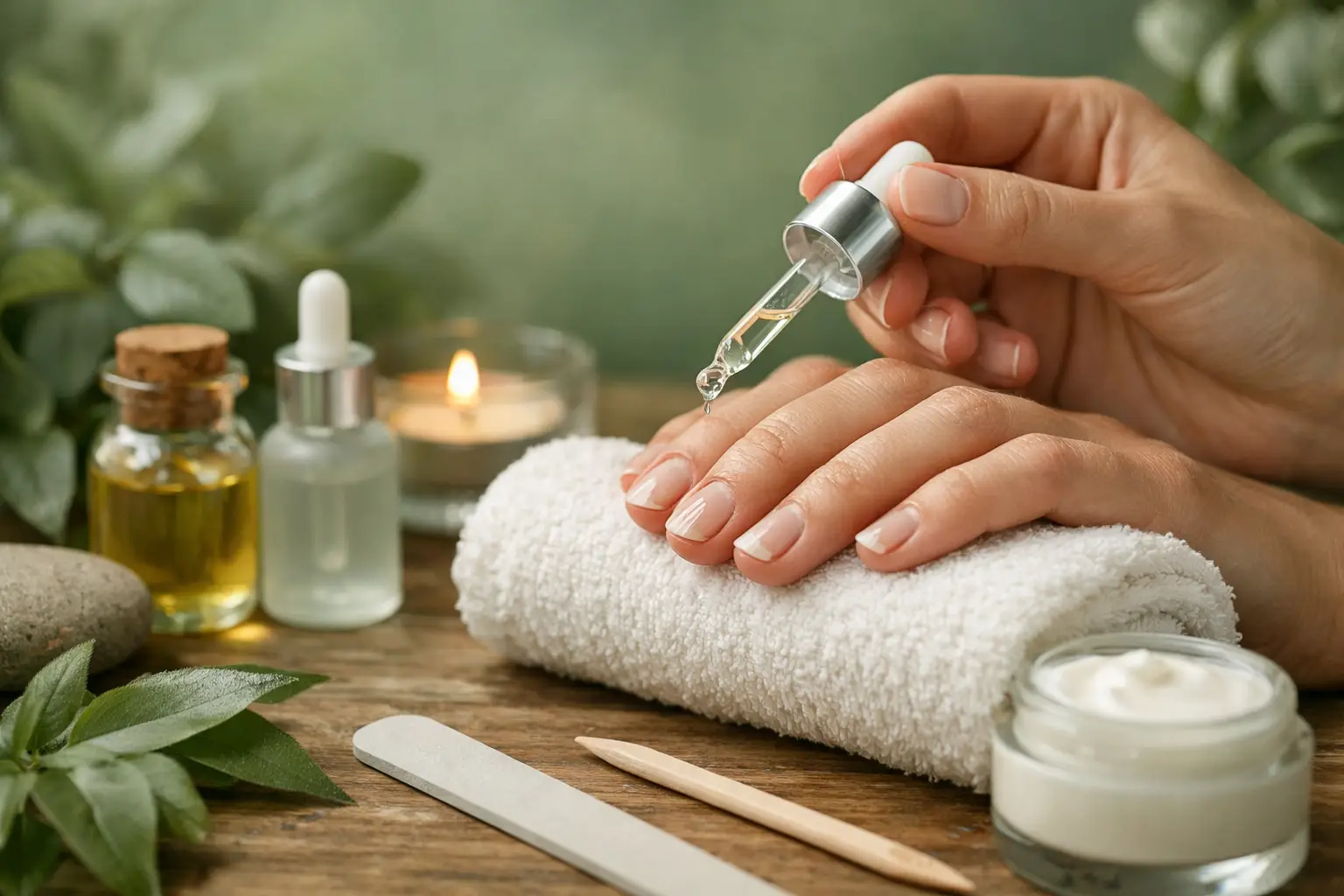
The nourishing part of the treatment matters just as much. Cuticle oils, conditioning masks and hand massage help replenish the skin around the nail plate, which is where healthy new growth begins. This is also an opportunity to enjoy the quiet, pampered side of nail care – a moment in the salon where expert attention and relaxation meet.
Strengthening treatments can offer useful support
A professional strengthening treatment or treatment polish can create a flexible protective layer over the natural nail. This may reduce splitting and give soft nails more resilience while they grow. It is especially helpful if you are taking a break from colour, recovering from a period of peeling or trying to stop nails catching and tearing.
The word ‘strengthening’ can be misleading, however. Nails do not need to feel rigid to be healthy. A coating that becomes too hard for your nail type may make it more likely to crack on impact. The ideal result is supported, smooth and flexible – not thick, tight or brittle underneath a glossy finish.
Gel polish can work, with careful application and removal
For clients who love a lasting, immaculate finish, gel polish can be a practical option for brittle nails. It adds a degree of protection from everyday knocks and can discourage picking. The key is careful preparation, an appropriate base layer and professional removal when it is time for a fresh set.
Gel polish is not necessarily right for nails that are currently very thin, tender or peeling in layers. In that case, a period of conditioning treatments and regular manicures may be more beneficial. Never peel gel away at home, even when a corner begins to lift. Peeling can remove layers of the natural nail and prolong the cycle you are trying to escape.
Builder gel is an option for added structure
A builder gel overlay can provide more structure than standard gel polish without the commitment of a long enhancement. For nails that bend, split at the sidewalls or cannot hold a shape, a finely applied overlay may offer the support needed to grow a little length without constant breakage.
It does require maintenance and must be removed or infilled correctly. Builder gel is a treatment choice, not a shortcut for damaged nails. If the natural nail underneath needs a rest, your technician should be comfortable advising a gentler route.
The habits between appointments that make the difference
Salon treatments create a strong foundation, but nails spend most of their time in your hands – quite literally. Small, consistent habits usually bring better results than an occasional intensive product.
Use cuticle oil daily, ideally before bed. Massage a small amount into the cuticle and nail plate, paying attention to the sides of each nail where splitting often starts. Follow with hand cream, particularly after washing your hands. This simple ritual helps counter the drying effects of water, weather and sanitiser.
Wear gloves for washing up, cleaning and gardening. Long exposure to water can cause nails to swell and contract, making peeling more likely over time. Gloves may not feel glamorous, but they are one of the most effective ways to protect a professional manicure and the natural nail beneath it.
Keep a file in your handbag rather than trimming or tearing a rough edge. File gently in one direction with a fine-grit file, and resist using nails as tools for opening cans, lifting labels or unfastening jewellery. A brittle nail often breaks not because it is weak in general, but because it meets one sharp moment of pressure at exactly the wrong angle.
What to avoid when nails are peeling or snapping
It can be tempting to throw every strengthening product at brittle nails, but more is not always better. Avoid hard buffing in an attempt to make the surface look smooth. The nail plate is naturally made of layers, and thinning it further can make peeling more noticeable.
Try not to change polish constantly, particularly if you use acetone-based remover each time. If you enjoy colour, a professionally applied longer-wear finish may reduce the amount of removal your nails experience. Equally, do not assume you must give up polish entirely. For many people, a well-maintained manicure is more protective than leaving nails exposed to daily knocks.
Picking is the habit worth addressing most gently but firmly. Whether it is lifting polish, a rough corner or a small split, picking creates an uneven edge that invites further damage. Ask your technician to keep your nails at a practical length and finish them smoothly, so there is less to tempt you between visits.
A realistic timeline for stronger nails
Nails grow slowly, so results ask for patience. You may notice fewer snags and a smoother finish after one nourishing manicure, but a full new nail takes months to grow from cuticle to tip. Consistent appointments, daily oil and thoughtful removal are what allow healthier growth to become visible over time.
If you have an occasion approaching, a tailored manicure can still give hands an elegant, polished look straight away. For longer-term change, think of your nail plan as regular maintenance rather than a one-off repair. The treatment should evolve as your nails improve: perhaps beginning with conditioning and protection, then moving towards your preferred colour or structured overlay when the nail plate is in better condition.
Beautiful nails do not have to be naturally thick or exceptionally long. They simply need the right level of care, shape and support for your lifestyle. Give fragile nails a little patience, choose professional treatment over quick fixes, and let each appointment become a calm investment in hands you are happy to show.