A beautifully smooth, luminous complexion can come from more than one route. When choosing a HydraFacial versus dermaplaning facial, the right answer depends less on which treatment is ‘better’ and more on what your skin needs right now: deep hydration and clarity, or an exceptionally soft, polished surface.
Both treatments are loved for their instant glow and make-up-ready finish. Yet they work in very different ways. Understanding those differences makes it easier to choose a facial that feels indulgent while delivering visible, considered results.
“If you are unsure, let the condition of your skin – not a trend or a diary date – guide the decision.”
HydraFacial versus dermaplaning facial: the key difference
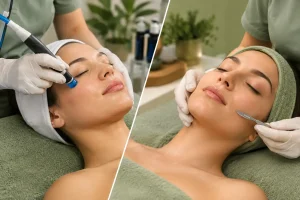
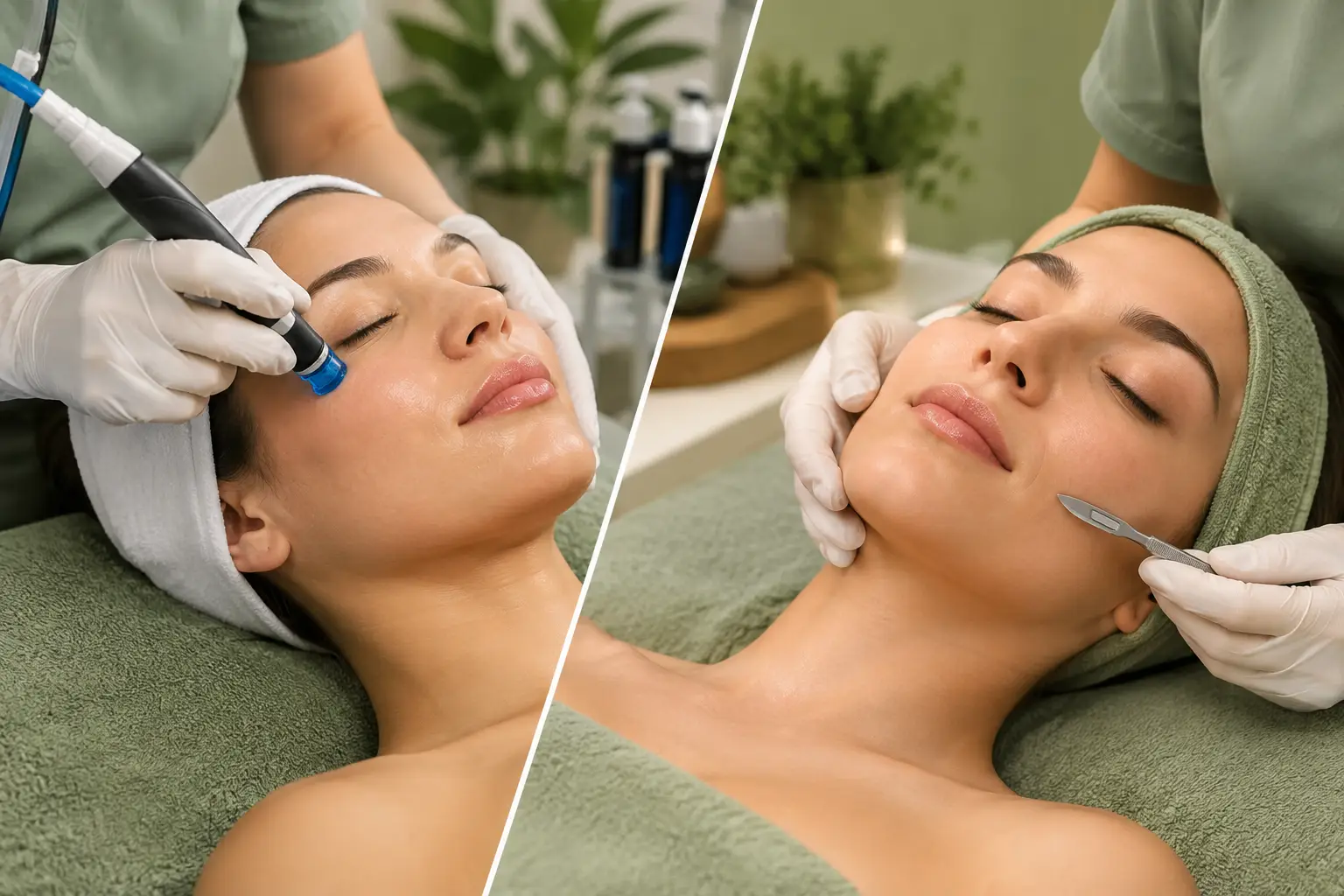
A HydraFacial is a multi-step, device-led treatment designed to cleanse, exfoliate, extract congestion and infuse the skin with hydration. It uses a gentle vortex technology to lift away impurities while delivering carefully selected serums. The result is skin that can look clearer, fresher and noticeably more hydrated, without the aggressive feel of some traditional extractions.
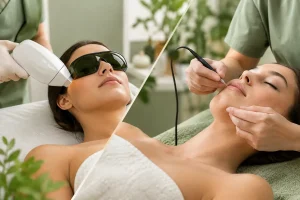
Dermaplaning is a precise manual exfoliation treatment. A trained therapist uses a sterile surgical blade, held at a careful angle, to remove the outer layer of dead skin cells and fine vellus hair, often called peach fuzz. It leaves the skin exceptionally smooth and can create that sought-after soft-focus radiance straight after your appointment.
In simple terms, HydraFacial works through the skin’s cleansing and hydration needs, while dermaplaning concentrates on refining its surface. Both can be wonderfully effective, but their strengths are different.
What to expect from a HydraFacial
A HydraFacial is particularly appealing when skin feels dull, dehydrated, congested or out of balance. The treatment begins with cleansing and exfoliation, followed by a gentle peel solution to loosen debris. The device then helps remove impurities from the pores before replenishing the complexion with hydrating, antioxidant-rich serums.
This is not about harshness. Many clients enjoy HydraFacial because it offers a thorough clean and an immediate dewy finish with little to no downtime. It can be an excellent choice before an occasion, but it also suits those looking for regular skin maintenance as part of a thoughtful skincare routine.
The treatment can be tailored according to your concerns. For example, someone experiencing dehydration may benefit from a focus on moisture and skin comfort, while a client with congestion around the nose, chin or jawline may value the cleansing and extraction stages most. A professional consultation matters here: skin can look oily while still being dehydrated, and treating it as though it only needs oil control can leave it feeling tight and unsettled.
HydraFacial tends to suit a wide range of skin types, including many sensitive complexions, although active flare-ups, significant irritation or certain skin conditions may mean postponing treatment or choosing a gentler alternative. Your therapist should always assess your skin on the day rather than working from a one-size-fits-all plan.
What to expect from dermaplaning
Dermaplaning delivers a different kind of satisfaction. There is something unmistakably luxurious about the feel of freshly dermaplaned skin: smooth, refined and beautifully receptive to skincare and make-up. By removing the build-up of dead surface cells, it can help restore radiance when the complexion appears lacklustre or textured.
The treatment is often a lovely option for clients who want a polished finish before a wedding, celebration or holiday. Foundation tends to sit more evenly afterwards, and skincare can be applied to a smoother canvas. It is also a popular choice for those who simply prefer the feel of a completely smooth complexion.
One common concern is whether removing facial hair makes it grow back darker or thicker. It does not. Dermaplaning does not alter the hair follicle, its colour or its growth pattern. As the fine hair grows back, the blunt tip can sometimes feel slightly different to the touch, but it is not becoming coarser.
Dermaplaning is not suitable for every skin moment. It may need to be avoided if you have active acne, inflamed breakouts, open skin, sunburn, eczema in the treatment area, cold sores or a compromised skin barrier. Passing a blade across irritated or actively blemished skin can aggravate it and may spread bacteria. In these circumstances, a tailored hydrating or calming facial is usually the kinder choice.
Which facial gives the best glow?
For hydration, clarity and that freshly replenished look, HydraFacial is usually the stronger choice. It does more than exfoliate: it addresses surface dullness while supporting moisture levels and helping to clear pore congestion. Clients often describe their skin as looking cleaner, plumper and more awake.
For velvety smoothness and a refined finish, dermaplaning is difficult to beat. It is especially effective when dry surface build-up and fine facial hair are making the complexion look less radiant than it feels. The glow is immediate, but its primary benefit is surface refinement rather than deep cleansing or serum infusion.
The best facial is therefore not always the one that creates the brightest post-treatment photograph. If your skin is thirsty and congested, dermaplaning alone may not address the issue beneath the surface. If your main concern is make-up catching on peach fuzz or flaky areas, HydraFacial may be more treatment than you need for that particular goal.
Can you have HydraFacial and dermaplaning together?
In some cases, yes. Dermaplaning and HydraFacial can complement one another beautifully when planned carefully. Dermaplaning first may remove the layer of surface debris that can make skin appear flat, while a hydration-focused facial afterwards can replenish the complexion and enhance the fresh, conditioned look.
However, combining treatments is not automatically the best choice. Both provide exfoliation, so doing too much too soon can leave sensitive or compromised skin feeling reactive. The skin’s tolerance, current condition, home skincare and any active ingredients you use all need consideration. Retinoids, exfoliating acids and other potent products may need to be paused for a period advised by your therapist before treatment.
A personalised approach is always more valuable than adding steps simply because they sound impressive. At The Beauty Box Pangbourne, treatment recommendations should feel considered, comfortable and aligned with your skin goals, whether you are preparing for an event or investing in healthier-looking skin over time.
Downtime, aftercare and how often to book
Neither treatment usually requires significant downtime. After a HydraFacial, you may see a little temporary redness, particularly if extractions were needed, but most people return to their day looking fresh. With dermaplaning, the skin may appear slightly pink for a short time and can feel more sensitive to heat and products immediately afterwards.
For both treatments, avoid strong exfoliants, retinoids, saunas, steam rooms and intense exercise on the day of your facial unless your therapist advises otherwise. Daily SPF is essential, particularly after dermaplaning, as fresh exfoliated skin is more vulnerable to sun exposure. Keep your routine gentle, hydrating and uncomplicated for the next few days.
HydraFacial can often work well as a monthly treatment, particularly for clients managing ongoing dehydration or congestion. Dermaplaning is commonly booked every four to six weeks, allowing the skin to complete its natural renewal cycle. Your ideal schedule may be different if you are using active skincare, having other aesthetic treatments or navigating seasonal sensitivity.
Making your choice with confidence
Choose HydraFacial when your skin is asking for hydration, a thorough cleanse and a clearer-looking complexion. Choose dermaplaning when you want to smooth texture, remove fine facial hair and create a flawless canvas for skincare or make-up. If you are unsure, let the condition of your skin – not a trend or a diary date – guide the decision.
The most rewarding facial is one that leaves you feeling cared for as well as glowing: comfortable in your skin, confident in the expertise behind the treatment, and quietly pampered long after you leave the salon.