A softened jawline can change the way the whole face feels, even when your skin is otherwise glowing and well cared for. If you are wondering, does HIFU treat jowls, the answer is often yes – for the right person, at the right stage of laxity. HIFU is designed to encourage firmer, more lifted-looking skin without surgery, downtime or a dramatic change to the features that make you look like you.
For many clients, it is an appealing middle ground: a results-led treatment that supports a more defined lower face while still fitting around work, family and everyday life. The key is having an honest consultation, because HIFU can improve mild to moderate skin looseness, but it cannot recreate the results of a surgical facelift.
“The most beautiful outcomes tend to be those that respect the face rather than chase perfection.”
Does HIFU Treat Jowls by Tightening Skin?
HIFU stands for High-Intensity Focused Ultrasound. It uses carefully targeted ultrasound energy beneath the surface of the skin to create precise points of heat at selected depths. This process stimulates the body’s natural healing response and, crucially, the production of fresh collagen and elastin over time.
Collagen is one of the structures that helps skin feel firm, supported and smooth. As we age, collagen production slows and the tissues around the cheeks, jawline and neck can gradually lose their lift. Jowls form when this loss of support, together with changes in facial fat and bone structure, creates a little fullness or sagging either side of the chin.
HIFU does not remove jowls in the way surgery removes excess skin. Instead, it aims to tighten and strengthen the skin’s underlying support, helping the lower face appear firmer and the jawline more defined. The effect is usually refined rather than radical – ideal for those seeking a rested, polished appearance rather than an obviously altered one.
What HIFU can improve
When jowls are caused largely by mild skin laxity, HIFU may improve the contour along the jaw and soften the appearance of early sagging. Some clients also notice that the area beneath the chin looks tighter, which can make the transition from face to neck appear cleaner.
The treatment can be particularly worthwhile if you have started to notice your jawline in photographs, feel your skin has become less springy, or would like a non-surgical option before considering more invasive treatments. It is also often chosen by clients who value treatments that work gradually and discreetly.
Who Is a Good Candidate for HIFU Jowl Treatment?
The best candidates generally have mild to moderate laxity and enough natural skin elasticity to respond to collagen stimulation. There is no single age at which HIFU becomes appropriate. Skin quality, facial anatomy, sun exposure, lifestyle and genetics all matter more than the number on your birthday card.
A consultation should look at the lower face as a whole, not just the jowls. A skilled practitioner will assess skin thickness, the degree of laxity, volume through the cheeks and chin, and whether the concern is mainly loose skin, lower-face fullness or loss of facial volume. These can look similar in the mirror but may need very different approaches.
For example, if the cheeks have lost significant volume, tightening the lower face alone may not give the balanced result you are hoping for. If there is a pronounced amount of loose skin, surgery may be the more effective option. And if fullness beneath the chin is the main concern, a different treatment plan may be better suited.
HIFU may not be appropriate during pregnancy or breastfeeding, or for people with certain medical conditions, implanted electronic devices, active skin infections, open wounds or significant inflammatory skin concerns in the treatment area. Your practitioner should take a full medical history before proceeding and advise clearly if treatment should be postponed or avoided.
What Happens During a HIFU Jawline Appointment?
A HIFU treatment begins with a thorough discussion of your goals and a close assessment of the area. Good aesthetic care should never feel rushed. Your comfort, suitability and expectations matter just as much as the treatment itself.
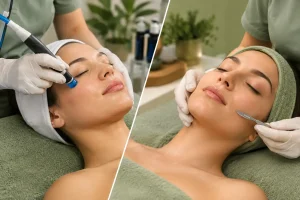
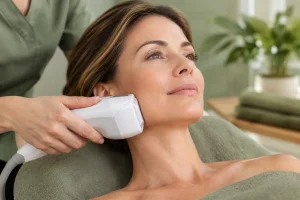
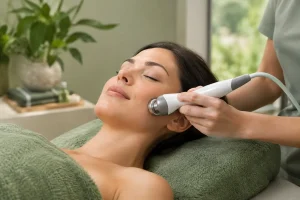
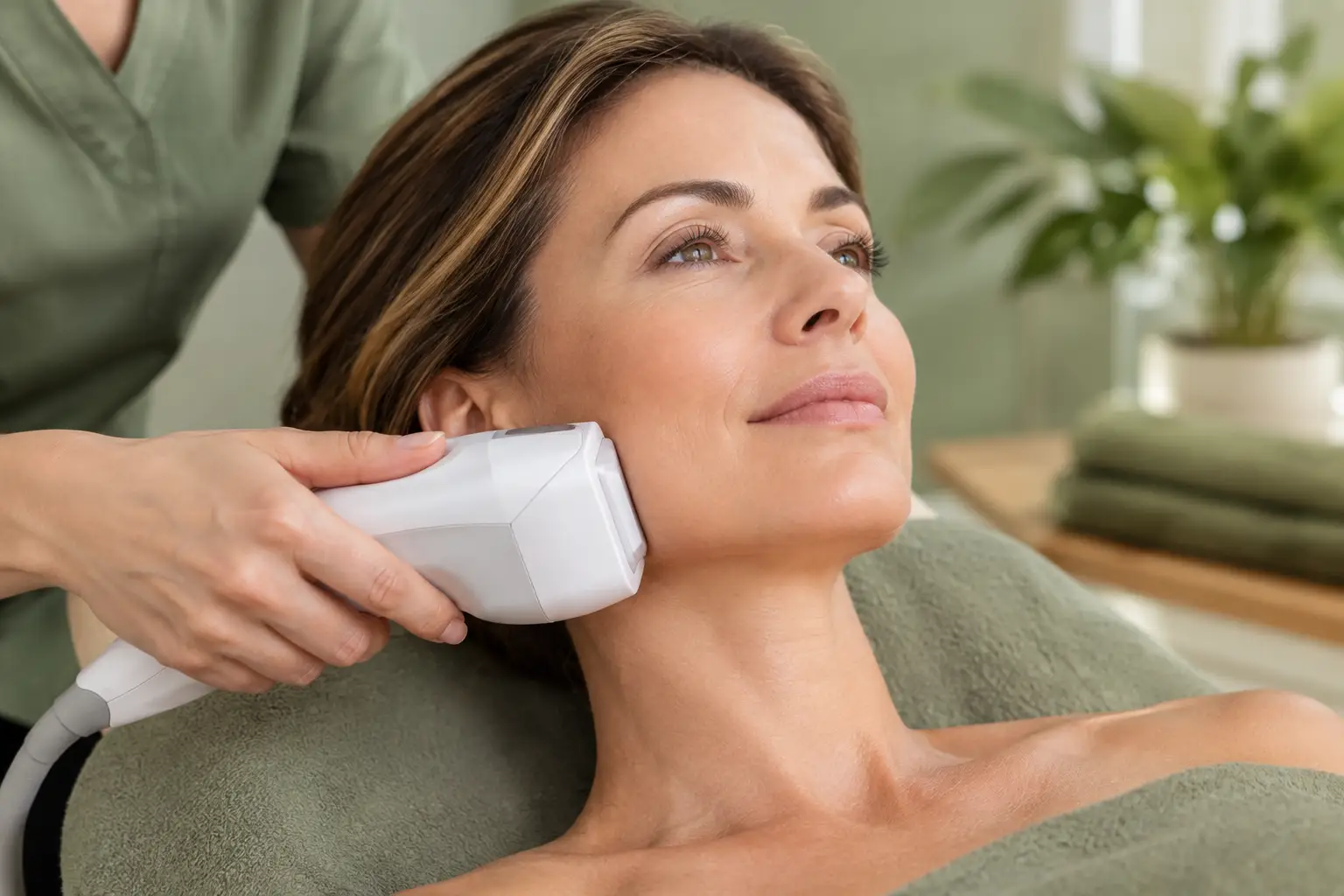
After the skin is cleansed, a gel is applied to help the ultrasound handpiece move smoothly and transmit energy effectively. The practitioner places the device at planned points around the jawline, lower cheeks and sometimes beneath the chin, depending on your personalised treatment plan.
You may feel warmth, tiny pulses or a brief prickling sensation beneath the skin as each ultrasound line is delivered. Most people find it very manageable, although sensitivity varies from person to person and certain points along the jaw can feel more intense. A professional practitioner will adjust the approach where appropriate and check in with you throughout.
An appointment commonly takes between 45 and 90 minutes, depending on the areas being treated. There is usually no need to take time away from your normal routine. The skin may look slightly flushed or feel tender afterwards, but this typically settles quickly. Some people experience mild swelling, tingling or sensitivity for a few days.
When Will You See HIFU Results for Jowls?
This is where patience is part of the treatment. You may notice a subtle feeling of tightness soon after your appointment, but HIFU’s most meaningful changes come from the collagen-building process that follows.
Many clients begin to see a visible improvement from around eight to 12 weeks, with results continuing to develop for up to six months. The timeline differs because every person’s collagen response, skin condition and starting point are unique. Before-and-after photographs taken in consistent lighting can be far more revealing than checking the mirror every day.
Results can last around 12 to 18 months, although this varies. Skin will continue to age naturally, so maintenance treatment may be recommended depending on your goals and the degree of laxity. Looking after your skin between appointments also matters: daily SPF, a thoughtful skincare routine, good hydration and avoiding smoking all support skin quality over the longer term.
How many sessions are needed?
Many people have one full HIFU treatment and then review their progress after the collagen response has had time to develop. Others may benefit from a second session, particularly when laxity is more noticeable or when a more progressive plan is preferred.
More treatment is not automatically better. The correct number of sessions should be based on your skin, not a standard package. A tailored plan protects both your comfort and the natural quality of the result.
HIFU for Jowls: Realistic Expectations Matter
HIFU is best thought of as a skin-tightening treatment, not a substitute for a facelift. It can create a visible improvement in early jowling and jawline definition, but it will not eliminate deep folds, substantial loose skin or major changes in facial volume.
The most beautiful outcomes tend to be those that respect the face rather than chase perfection. You should still look like yourself – simply fresher, firmer and more confident in your profile.
Treatment quality matters, too. The device, treatment settings, facial mapping and practitioner knowledge all influence safety and results. Choosing a trusted setting where clinical care is paired with a calm, luxurious experience can make the process feel reassuring from consultation to aftercare.
At The Beauty Box Pangbourne, personalised guidance is at the heart of advanced skin treatments. A considered consultation can help establish whether HIFU is the right choice for your jawline, or whether another approach would serve your skin and confidence more beautifully.
If jowls are beginning to make you feel less like yourself, you do not need to rush into a dramatic decision. Start with a professional assessment, ask candid questions and choose a treatment plan that feels as considered as the results you hope to see.