A laser patch test is the quiet but essential first step behind a beautifully smooth, confident result. This laser patch test guide explains why a few carefully chosen pulses of light can make such a difference to your treatment plan, comfort and peace of mind.
Laser hair removal is never a one-size-fits-all service. Your skin tone, hair colour, hair density, treatment area, medical history and recent sun exposure can all influence the safest and most effective settings. A professional patch test gives your practitioner the opportunity to assess these details properly before beginning a course.
At The Beauty Box Pangbourne, we believe advanced treatments should feel as reassuring as they are results-led. The patch test is part of that care: a considered consultation process that puts your skin first, rather than rushing straight to the treatment room.
What is a laser patch test?
A laser patch test is a short assessment carried out on a small, discreet area of skin before laser hair removal. Your practitioner uses the laser at carefully selected settings, then observes how your skin responds.
It is not designed to remove all of the hair in that area or to show the full result you can expect from a course. Instead, it helps establish whether the treatment is suitable for you and identifies an appropriate starting level of energy for your skin and hair.
The laser targets pigment in the hair follicle. Because pigment is also present in the skin, the balance needs to be carefully judged. A patch test allows this to be done in a controlled, personalised way, with comfort and skin safety at the centre of the decision.
Why a patch test matters before laser hair removal
The purpose is not simply a box-ticking exercise. A patch test gives your practitioner valuable information that cannot be gathered from a photograph or a general conversation alone.
Immediately after the test, it is common to see mild redness around individual follicles or a little warmth in the area. This can be a normal response. Your practitioner will explain what is expected for you, what aftercare to follow and which changes would mean you should get in touch before proceeding.
The skin response is then reviewed after an appropriate waiting period, often at least 24 to 48 hours, although your practitioner may advise longer depending on the treatment area, your skin type and the laser system used. This time matters. Some reactions can take longer to become apparent, particularly where skin is sensitive or has recently been exposed to UV light.
A good patch test also supports better results. Starting with a setting that is appropriate for your individual skin and hair can help the treatment work effectively while avoiding unnecessary irritation. Stronger is not always better. The right setting is the one chosen thoughtfully for you.
What happens at your appointment?
Your first laser appointment should begin with a detailed consultation. Expect questions about your goals, previous hair-removal methods, skin sensitivity, medication, medical conditions and any history of pigmentation changes or scarring. Be open, even if something seems unrelated. Details such as recent tanning, active skincare ingredients or a new prescription can affect whether treatment should go ahead that day.
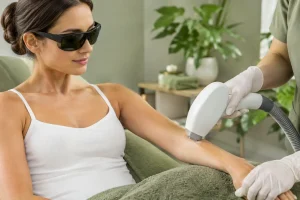
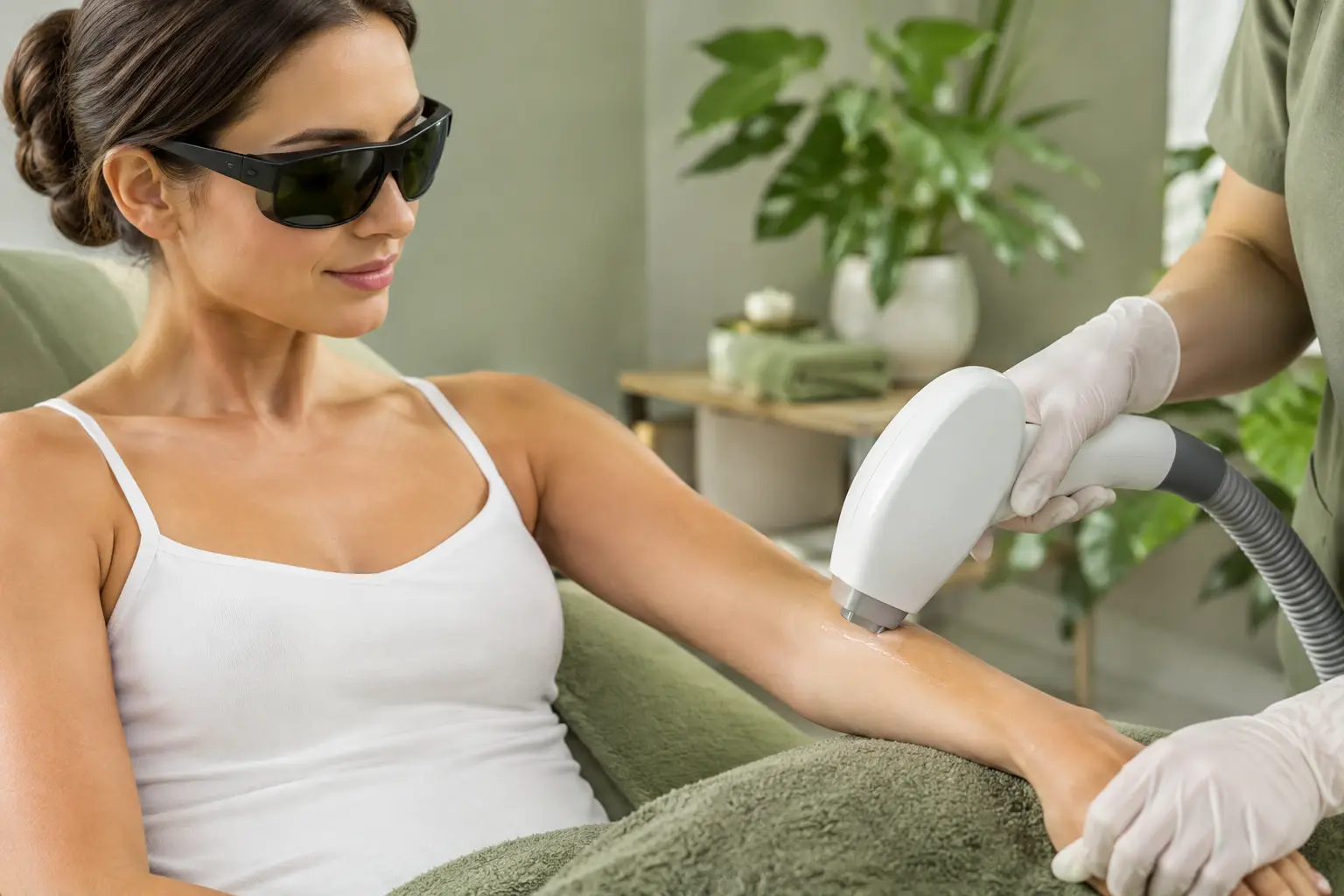
Your practitioner will assess the area and may take photographs for clinical records and progress tracking. The treatment area is usually shaved or trimmed where needed, then cleansed. Protective eyewear is worn by everyone in the room before the laser is used.
A small number of test pulses are delivered to a suitable area. Most clients describe the sensation as a brief warmth or a quick elastic-band flick. The feeling varies by body area and individual sensitivity, but it should remain manageable. Cooling methods may be used to support comfort.
Afterwards, you will receive clear advice on caring for the skin and a timeframe for checking the area before your full session. This is also an ideal moment to ask practical questions about your course, including appointment spacing, shaving between sessions and what kind of reduction is realistic for your hair type.
How to prepare for a laser patch test
Preparation helps your practitioner assess your skin accurately and reduces avoidable risk. Avoid deliberate tanning, sunbeds and self-tanning products on the proposed treatment area before your appointment. Tanned skin can change the way the laser interacts with pigment, so your appointment may need to be postponed if there has been recent sun exposure.
For several weeks before laser treatment, avoid waxing, threading, epilating or plucking the area. These methods remove the hair from the root, whereas laser treatment relies on the follicle being present. Shaving is usually preferred between sessions because it removes hair above the surface while leaving the follicle intact.
Arrive with clean skin that is free from fake tan, body oils, heavy moisturiser, perfume and deodorant on the area being assessed. If you use active skincare, such as retinoids or exfoliating acids, mention this during your consultation. You may be asked to pause certain products before treatment, particularly for facial areas.
Medication matters too. Some prescriptions and over-the-counter products can increase photosensitivity or affect healing. Never stop prescribed medication without medical advice, but do provide an accurate list so your practitioner can decide whether laser treatment is suitable now, should be adjusted or needs to wait.
Who may need to delay treatment?
A patch test is also a chance to identify when waiting is the most sensible choice. Laser hair removal may need to be deferred if you have active irritation, an infection, a cold sore in the proposed facial treatment area, broken skin, recent tanning or a new unexplained skin change.
Pregnancy policies can vary between salons and clinics, and treatment is commonly postponed as a precaution. Similarly, some medical conditions, medications and recent aesthetic procedures require individual assessment. This is not about making your treatment difficult to access. It is about choosing the timing that respects your skin and protects your wellbeing.
If you are prone to cold sores and are considering facial laser treatment, tell your practitioner before your patch test. If you have tattoos, permanent make-up or prominent moles in the treatment area, these should be highlighted too. Lasers are not used over tattooed skin, and particular marks may need to be avoided or protected.
Aftercare following your patch test
Treat the tested skin gently. Keep the area cool and clean, avoid hot baths, saunas, steam rooms and strenuous exercise for the period your practitioner recommends, and do not pick or exfoliate the skin. Avoid fragranced products directly on the area if it feels warm or sensitive.
Protect exposed skin from sunlight and use a broad-spectrum SPF as advised. UV exposure before and after laser treatment is one of the most significant factors in treatment planning, especially for clients who want to treat the face, underarms, legs or bikini area during brighter months.
Contact your practitioner if you experience a response that concerns you, such as increasing discomfort, pronounced swelling, blistering or changes in skin colour. Do not apply harsh products in an attempt to correct it. Prompt professional guidance is always the best next step.
Questions worth asking before you book
The right provider will welcome questions and answer them clearly. Ask whether the laser system is suitable for your skin tone and hair type, how your settings will be selected, how many sessions may be recommended and how your progress will be reviewed during the course.
It is also helpful to ask about treatment intervals. Hair grows in cycles, and laser is most effective when hairs are in the active growth phase. This is why results develop gradually over a course rather than after one appointment. Hormonal areas, such as the face, can be more variable and may need a tailored maintenance approach.
A patch test does not promise a completely sensation-free treatment or guarantee an identical response on every area of the body. What it does offer is something more valuable: a professional starting point, based on your skin rather than assumptions.
Beautiful results begin with considered care. Allow time for your consultation and patch test, follow your personalised guidance, and choose a practitioner who makes you feel listened to from the very first pulse.