A beautifully finished manicure should feel like an extension of your personal style, not a compromise. When considering BIAB versus acrylic extensions, the right choice comes down to more than the look you want on appointment day. Your natural nail condition, preferred length, lifestyle and willingness to maintain your manicure all matter.
Both treatments can create elegant, confidence-boosting nails, whether you love a clean, glossy neutral or something more expressive. Yet they work in very different ways. Understanding those differences helps you choose a finish that looks polished, feels comfortable and suits your routine.
“The most flattering manicure is not necessarily the longest or the boldest.”
What is BIAB?
BIAB, short for Builder in a Bottle, is a strengthening gel applied over the natural nail. It has a thicker consistency than standard gel polish, allowing your nail technician to build a gentle apex for support and create a smooth, refined shape. It is cured under a lamp and can be worn alone in a sheer or coloured finish, or beneath gel colour.
For many clients, BIAB offers the sweet spot between looking naturally polished and feeling noticeably stronger. It is particularly lovely if your nails bend, peel or struggle to grow beyond a certain point. Rather than creating a dramatic artificial extension, it supports the natural nail as it grows.
A BIAB manicure can add a small amount of length using forms in suitable cases, but it is not generally the answer for long, sculpted nails. Think healthy-looking, well-kept nails with a little extra resilience rather than instant, significant length.
What are acrylic extensions?
Acrylic extensions are created by combining liquid monomer with acrylic powder to form a workable bead, which is then sculpted over a tip or nail form. Once set, the material becomes hard and durable. It can be shaped into a wide range of lengths and styles, from a neat short square to a tapered almond or statement stiletto.
This makes acrylic a strong choice for anyone who wants length straight away, has a damaged or uneven natural nail shape, or enjoys a more structured nail look. A skilled application can be tailored precisely to your hands, helping to create a balanced, elegant result even where natural nails are short.
Acrylic does not have to look thick or overly dramatic. The quality of preparation, product control and shaping makes all the difference. A well-applied set should feel secure, comfortable and beautifully proportioned to your lifestyle.
BIAB versus acrylic extensions: the key differences
The most visible difference is length. BIAB is designed primarily to reinforce your own nails, while acrylic extensions are designed to create and hold length beyond them. If you have a wedding, holiday or special occasion approaching and want a longer silhouette immediately, acrylic may be the more practical choice.
Flexibility is another distinction. BIAB has a degree of flexibility that allows it to move slightly with the natural nail. This can feel more natural for clients who prefer shorter lengths and use their hands constantly. Acrylic is harder and more rigid, which gives it excellent structural strength but can feel less forgiving if you catch a long nail.
The appointment experience differs too. BIAB is often a more streamlined service, especially where it is being applied over healthy natural nails. Acrylic extensions require careful sculpting, filing and shaping, particularly at longer lengths, so appointments can take longer depending on the design and starting point.
Neither treatment is automatically ‘better’ for your nails. The health of your natural nails depends far more on correct application, thoughtful removal and how you wear your manicure than on a single product category. Picking, biting or peeling enhancements off at home can remove layers of the natural nail, whatever system you choose.
Which treatment suits your lifestyle?
BIAB can be ideal if you want to grow your natural nails while keeping them looking immaculate. It suits clients who like a refined, low-fuss manicure, work in an environment where very long nails are impractical, or simply want their hands to look consistently well cared for. It is also a lovely choice for first-time enhancement clients who are unsure how they will feel wearing length.
Acrylic extensions may suit you better if you want a more transformative result. They offer dependable length and structure for special events, brides who want a long-lasting, polished finish, or anyone whose natural nails repeatedly break before reaching their desired length. If you are used to extensions and love a particular shape, acrylic can offer a level of customisation that is difficult to achieve with BIAB alone.
Your daily habits deserve an honest mention here. If you type all day, care for young children, play sport, garden or regularly work with your hands, a shorter BIAB manicure may be the most comfortable option. That does not rule out acrylic, but a practical length and shape will be essential. A shorter almond, squoval or soft square can still look luxurious while being easier to live with.
Maintenance, infills and removal
Both BIAB and acrylic require regular professional maintenance. As your natural nail grows, a gap appears near the cuticle area, changing the balance of the enhancement. Most clients benefit from an infill or rebalance every two to three weeks, although the ideal timing depends on nail growth, length and how well the manicure has been wearing.
With BIAB, your technician can usually infill the existing product rather than remove it completely at every appointment. This helps maintain a consistent protective layer while allowing the manicure to evolve with your natural nails. It is a particularly appealing approach for clients committed to a regular nail routine.
Acrylic infills replace product around the regrowth area and rebalance the structure, especially important on longer extensions. As the nails grow, the apex moves forward, so leaving acrylic too long between appointments can make the nail more vulnerable to lifting or breakage.
Removal should always be carried out professionally and patiently. BIAB and acrylic are removed differently, and the process may involve reducing product safely before controlled soaking or filing. For the best chance of keeping your natural nails in good condition, resist the temptation to prise, peel or clip off an old set.
The role of preparation and aftercare
A premium result begins long before colour is applied. Clean, meticulous preparation supports adhesion and reduces the risk of lifting. This includes careful cuticle work, thoughtful shaping and selecting a product system appropriate for the nail’s condition. Hygiene is equally central: properly sanitised tools and a clean treatment space should never be an afterthought.
After your appointment, daily cuticle oil is one of the simplest ways to keep enhancements looking their best. It helps condition the surrounding skin and supports flexibility in the natural nail beneath. Gloves for cleaning, washing up and gardening will also protect your manicure from harsh chemicals and unnecessary knocks.
Try not to use your nails as tools. Opening cans, scraping labels or picking at packaging can put pressure on the free edge and cause lifting, no matter how strong the enhancement initially feels. If you notice a crack, lifting or discomfort, arrange a repair rather than attempting a home fix.
Choosing your finish with confidence
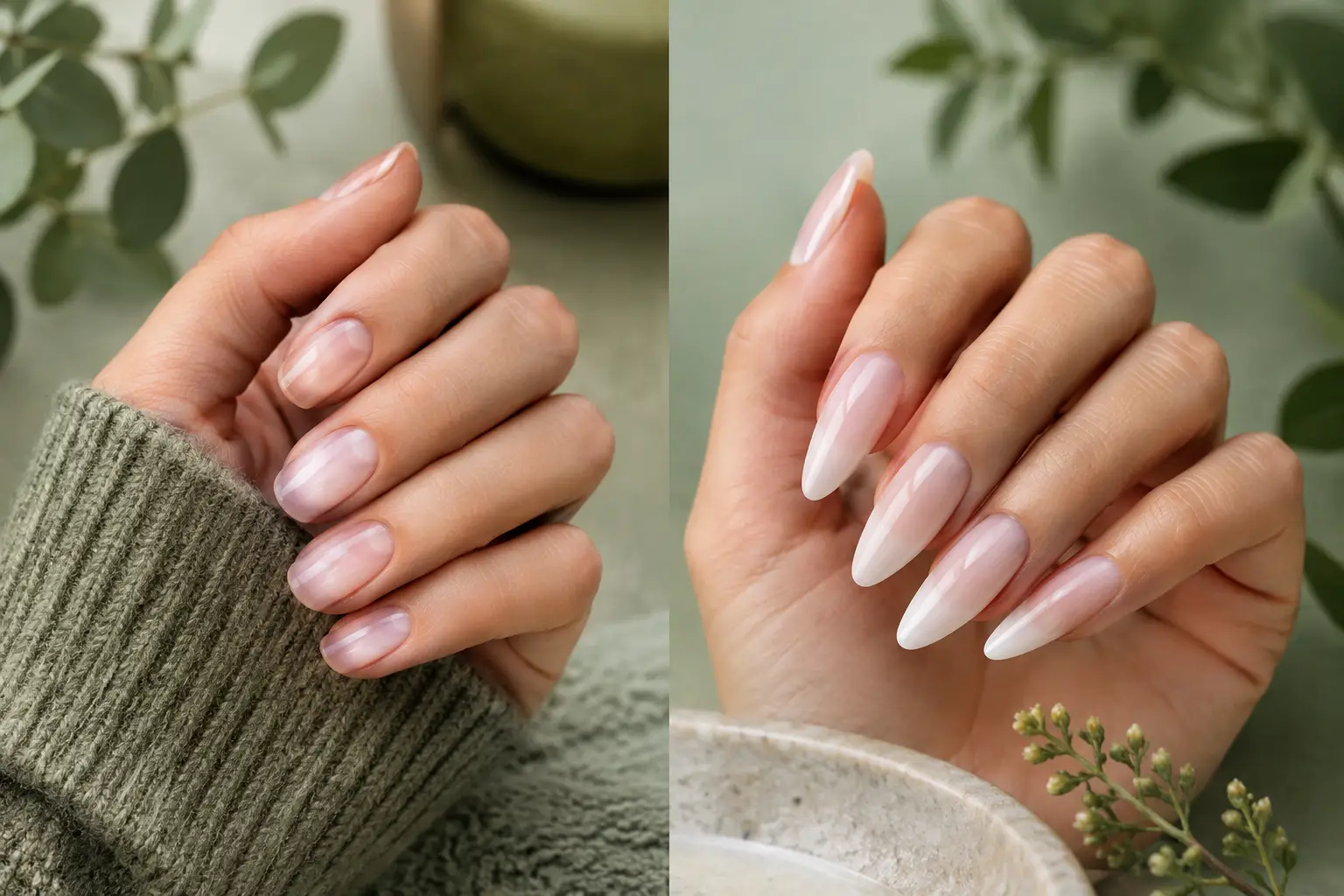
The colour and design you choose can be just as adaptable as the treatment itself. BIAB is beautiful in soft blush, milky nude and understated French finishes, particularly for a fresh, natural look. Acrylic extensions offer a wonderful canvas for crisp French tips, detailed nail art and bolder seasonal colours, especially when you have more length to showcase them.
At The Beauty Box Pangbourne, a tailored consultation can help establish what your nails need now, rather than simply following a trend. Sometimes the best route is to begin with BIAB to strengthen short natural nails, then move to extensions when the occasion calls for it. In other cases, acrylic provides the immediate structure needed while you settle into a consistent maintenance routine.
The most flattering manicure is not necessarily the longest or the boldest. It is the one that fits comfortably into your life, protects the time you invest in yourself and leaves you feeling quietly polished every time you look down at your hands.