A small skin concern can feel surprisingly prominent when it catches on clothing, interrupts your skincare routine or simply draws your eye in the mirror. When comparing cryopen vs freezing spray, the deciding factor is rarely just how cold the treatment feels. Precision, diagnosis, the area being treated and the experience of the practitioner all matter.
Both approaches use controlled cold to destroy unwanted tissue, but they are not interchangeable. For clients seeking a polished, professional approach to benign lesions such as skin tags, cherry angiomas and some warts, understanding the difference helps set realistic expectations before treatment.
“Both approaches use controlled cold to destroy unwanted tissue, but they are not interchangeable.”
What CryoPen treatment does
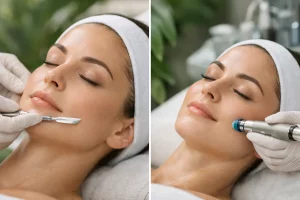
CryoPen is a professional cryotherapy device designed to apply an extremely cold, focused jet of nitrous oxide to a selected area of tissue. The cold causes the water within targeted cells to freeze, damaging the lesion so the body can gradually clear it away during the healing process.
Its greatest advantage is control. A trained practitioner can work with a very fine applicator and tailor the treatment time to the lesion’s size, depth, location and type. That matters around delicate areas, on small individual skin tags, or where preserving the appearance of surrounding skin is a priority.
The treatment itself is usually brief. You may feel an intense cold or stinging sensation while the area is treated, followed by temporary redness, tenderness or mild swelling. Depending on the lesion, a small blister or scab can form. This is a normal part of healing and should be left undisturbed.
Results are not always immediate. Some lesions darken, dry out and fall away over one to three weeks, while others take longer or need a further session. A larger, older or more stubborn lesion may respond differently from a newly appeared one, which is why a personalised assessment is valuable.
What people mean by freezing spray
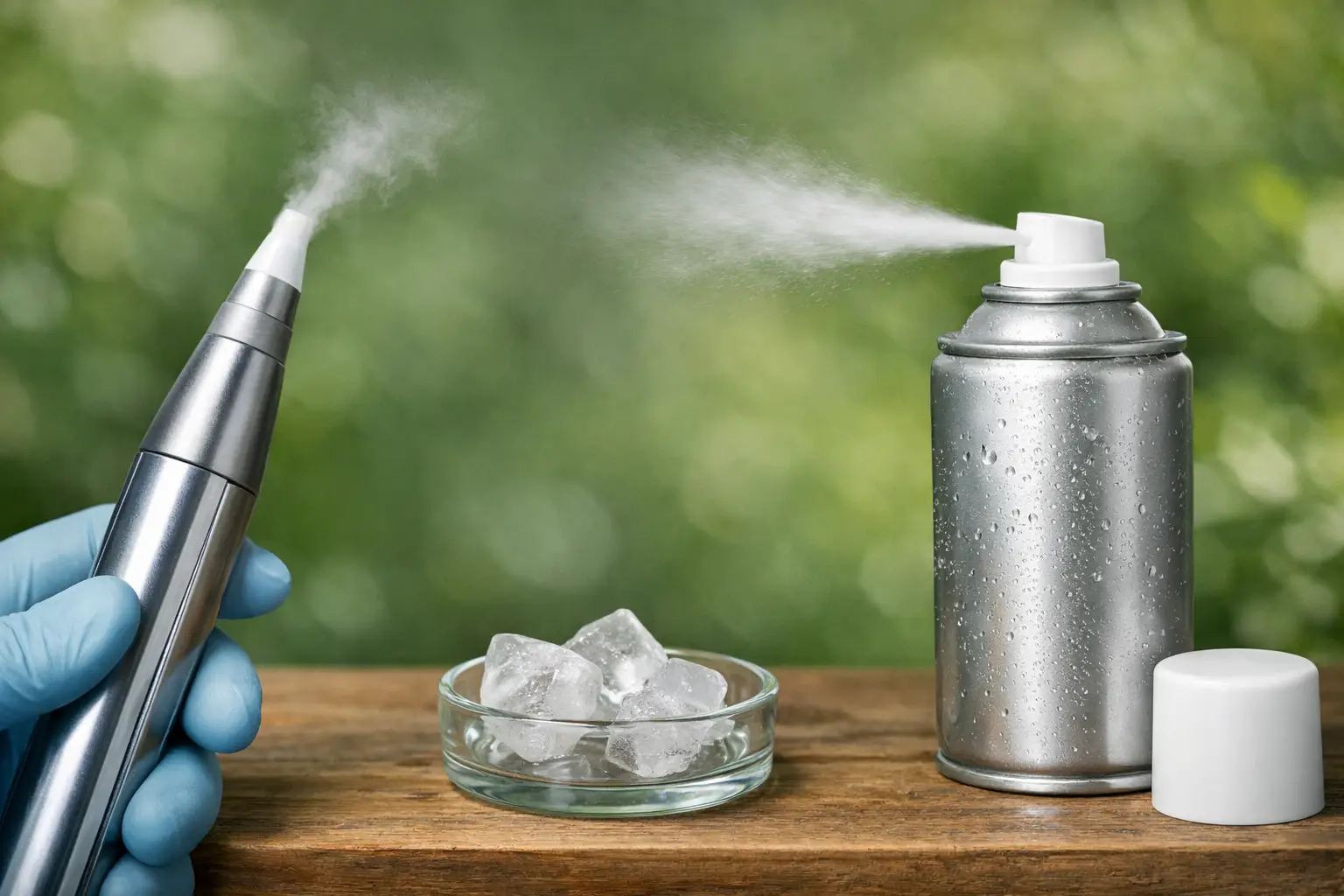
“Freezing spray” can describe two very different things. The first is an at-home wart remover, commonly sold for self-treatment. These products typically use a refrigerant gas and an applicator designed to freeze a wart from the surface. They can be useful for straightforward common warts in suitable areas when used exactly as directed, but they are generally less cold and less precise than professional cryotherapy.
The second is liquid-nitrogen cryospray used in some clinical settings. This is professional cryotherapy too, but it is delivered from a spray canister rather than a pen-style device. It can be highly effective in experienced hands, particularly for certain dermatological concerns, yet the spray can cover a wider area and requires careful technique to avoid unnecessary freezing of nearby healthy tissue.
So the real comparison is not simply professional treatment versus a spray. It is about the device, the treatment setting, the lesion being addressed and, above all, whether it has been correctly identified before anything is frozen.
Cryopen vs freezing spray: the practical differences
For small, clearly defined benign lesions, CryoPen often offers a more refined and targeted experience. The narrow application can make it particularly appealing for clients who are conscious of precision, comfort and downtime. It is not painless, but the cold is applied quickly and only where needed.
At-home freezing sprays offer convenience and a lower upfront cost. The trade-off is that you are responsible for identifying the lesion, selecting an appropriate product and applying it accurately. A wart may look obvious, but skin tags, moles, seborrhoeic keratoses and other raised marks can be mistaken for one another. Treating the wrong thing is not a risk worth taking.
Professional liquid-nitrogen spray remains an established option and may be recommended in some medical contexts. It can be especially useful where a clinician considers it the most appropriate choice. However, for aesthetic treatment of selected superficial lesions, a pen device can give a practitioner more localised control.
Neither method guarantees a single-session result. Depth, position, skin type and the body’s own healing response all influence the outcome. The goal should be safe, considered removal or reduction, rather than rushing a result at the expense of the surrounding skin.
Why a professional assessment comes first
Cryotherapy should only be used once a lesion has been assessed as suitable. A reputable practitioner will ask how long it has been present, whether it has changed, bled, crusted, become painful or grown rapidly, and whether you have a history of skin cancer or immune-related conditions.
A mole should never be treated simply because it is unwanted. Any lesion with an irregular border, changing colour, unusual shape, persistent itching, bleeding or rapid change needs medical assessment rather than cosmetic freezing. The same applies if you are uncertain what the mark is. Reassurance is part of a quality treatment experience, not an optional extra.
Your practitioner should also consider your skin tone, the area of the body and your medical history. Cryotherapy can occasionally lead to temporary lightening or darkening of the skin, particularly in deeper skin tones. There is also a small risk of blistering, infection or scarring, especially if aftercare guidance is not followed or a lesion is treated too aggressively.
Comfort, healing and aftercare
Most clients find CryoPen treatment very manageable, particularly when they know what to expect. The treated area may look red immediately afterwards and can feel warm, tingly or tender for a short time. A blister may appear within the first day or two. It should not be picked, punctured or covered with harsh products.
Keep the area clean and dry, avoid friction where possible, and protect it from sun exposure once it has healed. Sun protection is especially worthwhile on exposed areas, as newly healed skin can be more vulnerable to pigment changes. Your practitioner may give more specific advice based on the location and type of lesion.
With home freezing products, aftercare is equally important, but support is less immediate. If you experience significant pain, spreading redness, discharge, persistent bleeding or any sign of infection, seek advice promptly. Do not keep re-treating an area because it has not responded as quickly as expected.
Which option is likely to suit you?
An at-home freezing spray may be reasonable for a clearly diagnosed, uncomplicated common wart in an appropriate area, provided you follow the product instructions carefully. It is not a general-purpose solution for every bump, tag or mark on the skin.
Professional CryoPen treatment is often the better choice when the lesion is small and precise treatment is desirable, when it is in a visible or delicate area, or when you would value the reassurance of an in-person assessment. It is also a more considered route for clients who prefer their skin concerns to be handled within a calm, hygienic and expertly guided setting.
At The Beauty Box Pangbourne, the focus is never on a one-size-fits-all approach. A consultation allows your practitioner to look closely at the area, discuss what can realistically be treated and explain the expected healing journey before you decide to proceed.
A final word on choosing safely
The best choice is not necessarily the coldest device or the quickest-looking fix. It is the treatment that matches a correctly identified concern, your skin and your expectations. If a lesion is suitable for cosmetic cryotherapy, expert precision can make the experience feel far more reassuring – leaving you free to look forward to skin that feels clearer, smoother and more confidently your own.