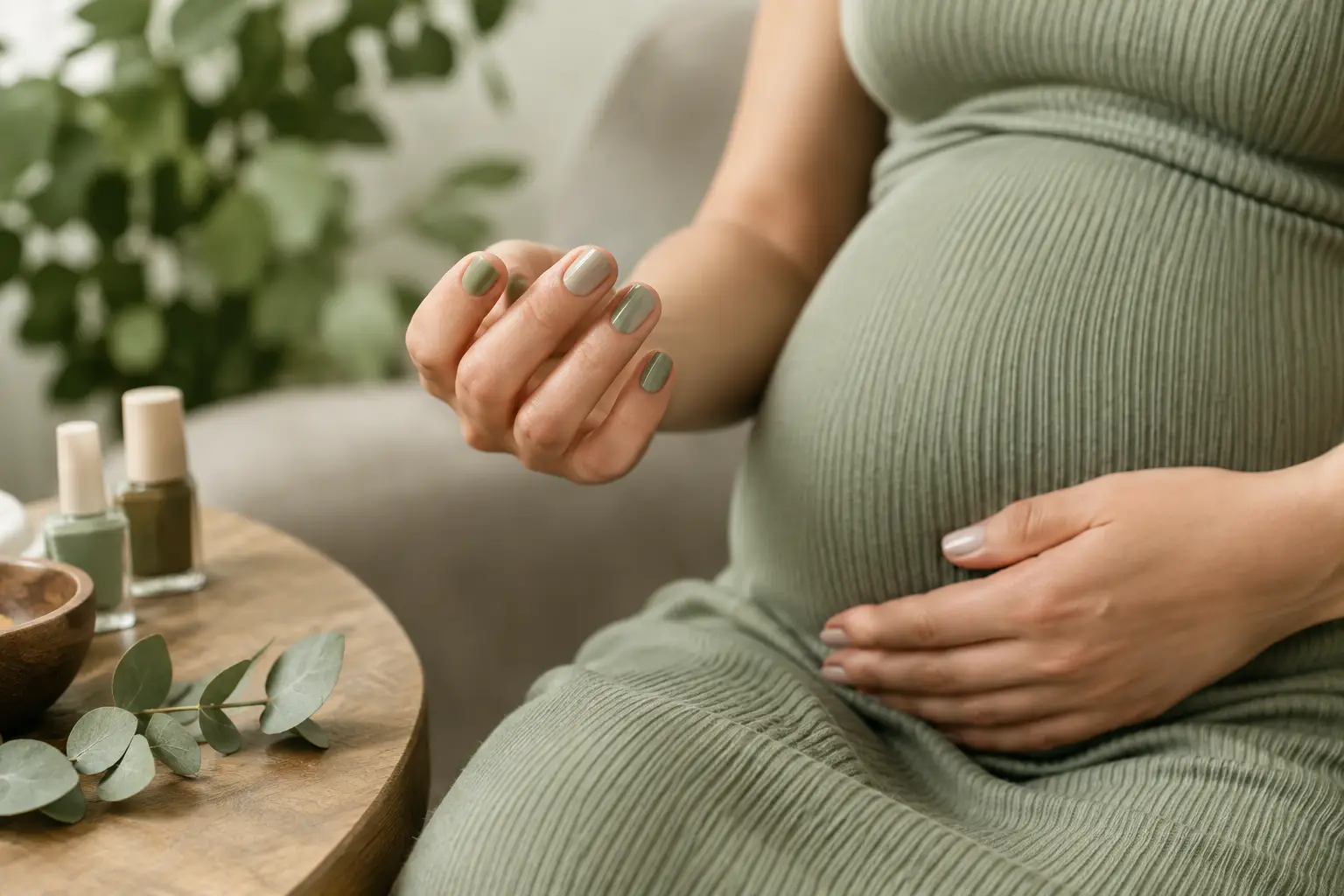
A fresh gel manicure can be one of those small, lovely rituals that helps you feel like yourself during pregnancy. Yet it is completely understandable to pause before booking and ask whether gel polish pregnancy appointments are a sensible choice. The reassuring answer is that many expectant mothers continue to have gel nails, but the quality of the products, ventilation, hygiene and your own comfort all deserve attention.
There is no need for fear or guilt around a manicure. There is also no need to dismiss your questions. Pregnancy is a time to choose treatments thoughtfully, listen to your body and favour a salon that treats care and cleanliness as part of the luxury.
“A fresh gel manicure can be one of those small, lovely rituals that helps you feel like yourself during pregnancy.”
Is gel polish safe during pregnancy?
Gel polish is applied in layers and cured under an LED or UV nail lamp. Once properly cured, the coating is stable on the nail, and exposure from a standard manicure is generally considered low. Research specifically examining every nail product and pregnancy outcome is limited, however, so it is fair to say that there is no absolute, one-size-fits-all guarantee.
The practical concern is less about the finished manicure and more about repeated exposure to product vapours, dust and uncured gel. This is particularly relevant for nail technicians who work with these materials every day. For a client having occasional appointments in a well-managed salon, exposure is far lower.
If you have a high-risk pregnancy, a history of severe allergies, asthma triggered by fragrance or chemicals, or a medical concern that is making you uncertain, speak to your midwife, GP or maternity team before your appointment. Their advice should always take priority over general beauty guidance.
What makes a pregnancy gel manicure more considered?
A professional gel manicure should feel calm, clean and unhurried. During pregnancy, those details matter even more. A good appointment begins with a consultation: tell your therapist that you are pregnant, even if you have been a regular gel client for years. It allows them to tailor your service, check for sensitivities and make sure you are comfortable throughout.
Ventilation is a meaningful part of this. The faint scent of nail products is not automatically a danger, but strong fumes can be unpleasant when pregnancy nausea, headaches or a heightened sense of smell are already in the picture. A fresh, well-ventilated treatment space makes a noticeable difference. If a smell feels overwhelming, say so. You should never feel awkward about moving position, taking a moment outside or deciding not to continue.
Professional application also matters because uncured gel can cause contact allergy. This can happen when gel touches the surrounding skin, when products are poorly cured, or when an allergy develops over time. A trained nail professional uses the correct curing lamp for the product system, applies polish precisely and avoids flooding the cuticle area. At home kits can make that control harder, especially when you are trying to work on your own non-dominant hand.
Hygiene is equally non-negotiable. Your tools should be thoroughly cleaned and sanitised, files should be single-use where appropriate, and your nail plate and surrounding skin should be assessed before treatment. Gel should not be applied over irritated, broken or infected skin.
Choose comfort over a perfect finish
Pregnancy can change the way your hands, nails and skin behave. Some clients notice stronger nails; others experience peeling, splitting or sensitivity. Fluid retention can make rings feel tight, and sitting still for an extended appointment may become less comfortable later in pregnancy.
There is no prize for enduring discomfort for the sake of a perfect manicure. Ask for a supportive chair, change your position when needed and keep the appointment simple if you are tired or queasy. A beautifully shaped, sheer neutral manicure can feel every bit as polished as elaborate nail art when it is done with care.
The UV lamp question
LED and UV lamps are often discussed as though they are entirely different things. In reality, LED lamps emit UV light too, usually curing gel more quickly and efficiently when paired with the correct product. The exposure during a manicure is brief, and the risk from occasional use is generally thought to be low.
For additional peace of mind, you may apply a broad-spectrum SPF 30 or higher to the backs of your hands around 20 minutes before your appointment, avoiding the nails themselves. Alternatively, UV-protective fingerless gloves can leave the nails exposed while covering the hands. This is an optional precaution, not a reason to panic about a single lamp session.
If you use prescribed topical medication on your hands, have a photosensitivity condition, or are taking medication that makes your skin unusually sensitive to light, seek medical advice before using a curing lamp.
When it may be better to skip gel polish
Sometimes the most luxurious choice is to give your nails a break. Avoid or postpone gel if you have a rash, peeling skin, swelling around the nail, unexplained tenderness, a suspected fungal infection or signs of an allergic reaction. Redness, itching, tiny blisters or lifting around the fingers after previous gel appointments should not be covered with another manicure. They need proper assessment.
It can also be worth postponing if you are feeling unwell, especially in the first trimester when nausea and fatigue may make scents and salon time difficult. There is nothing wrong with switching to a regular polish, a tidy file and cuticle care, or simply bare, healthy nails for a few weeks.
For some women, a regular polish is a welcome alternative close to their due date. It removes easily at home and avoids arranging a gel removal appointment while caring for a newborn. That said, gel can also be wonderfully practical if it makes you feel put together during those early, busy weeks. The right choice depends on your routine, nail condition and personal preference.
Gel removal deserves the same care
Do not pick, peel or bite off gel polish. It can take layers from the natural nail with it, leaving nails thin and sore at a time when you may already be managing hormonal changes. Professional removal is gentler and more predictable.
Most gel removal involves careful filing of the top coat followed by acetone wraps, then gentle removal of softened product. Acetone has a strong smell and can feel drying, so good ventilation and nourishing aftercare are welcome. The amount used during a standard removal is limited, but if the scent makes you nauseous or light-headed, tell your therapist straight away and take a break.
A thoughtful technician will never force product from the nail plate. If the gel is not ready to lift, it needs more time rather than more pressure. Finish with cuticle oil and hand cream, and wear gloves for washing up or cleaning to protect newly exposed nails.
Questions worth asking your nail salon
You do not need a chemistry degree to make a confident choice. Before a gel appointment in pregnancy, it is reasonable to ask whether the salon uses professional systems with matching lamps, how tools are sanitised, and whether the space is ventilated. You can also mention any known allergies or reactions to gel, adhesive, acrylic or fragrance.
At The Beauty Box Pangbourne, personalised care means making room for these conversations rather than rushing past them. A premium nail appointment is not only about the shine and colour at the end. It is about feeling listened to, comfortable and properly looked after from the first consultation to the final drop of cuticle oil.
A polished choice, on your terms
Pregnancy brings enough opinions from other people. Your manicure does not need to become another source of pressure. If you feel well, your maternity team has no concerns and you choose a hygienic, professional salon, a gel manicure can remain a relaxing part of your self-care routine. Choose the shade that makes you smile, allow yourself a little stillness, and let comfort lead every decision.