Pigmentation can make otherwise healthy skin feel less even, whether it appears as lingering marks after breakouts, sun spots, or patches that have gradually become more noticeable. Microneedling pigmentation results can be genuinely encouraging, but they are rarely instant. This is a treatment that asks the skin to renew itself gradually, rewarding consistency, careful aftercare and a plan tailored to the cause of your discolouration.
At The Beauty Box Pangbourne, microneedling is approached as a considered skin-health treatment, not a quick fix. Your complexion, lifestyle, history of pigmentation and treatment goals all matter when deciding whether it is the right choice.
“At The Beauty Box Pangbourne, microneedling is approached as a considered skin-health treatment, not a quick fix.”
How microneedling can improve pigmentation
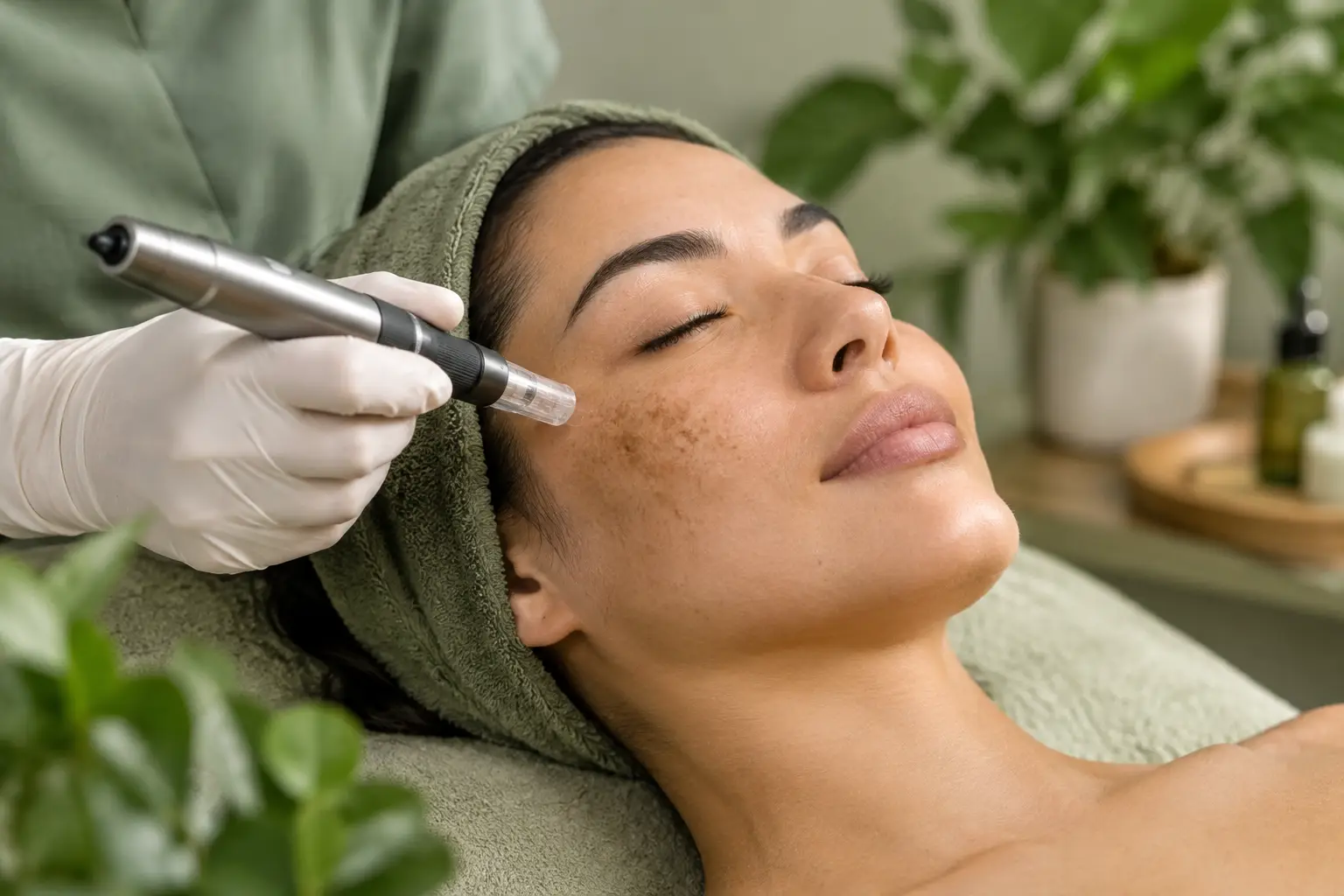
Microneedling uses very fine, controlled needles to create tiny channels in the skin. This starts a natural repair response, encouraging collagen production and skin-cell turnover. As newer, healthier skin cells move towards the surface over time, areas of uneven tone may begin to look softer and more blended with the surrounding complexion.
For many people, the most satisfying change is not that every mark disappears completely. It is that the skin starts to look clearer, smoother and more luminous overall. Post-inflammatory hyperpigmentation, such as brown or grey-brown marks left after blemishes, can respond particularly well when microneedling is performed appropriately and paired with diligent sun protection.
The treatment can also improve the texture that often accompanies old acne marks. When texture and pigmentation are treated together, the complexion can appear more refined, even before every individual mark has faded significantly.
What affects microneedling pigmentation results?
Pigmentation is not one single concern. It has different triggers, sits at different depths within the skin and behaves differently from person to person. This is why a professional consultation matters as much as the treatment itself.
The type of pigmentation
Post-inflammatory pigmentation from spots, ingrown hairs or irritation is different from sun damage and age spots. Melasma, which often presents as symmetrical patches across the cheeks, forehead or upper lip, needs particularly careful management. It can be influenced by hormones, heat, light and inflammation, meaning an overly aggressive treatment may worsen it rather than improve it.
Microneedling may form part of a thoughtful plan for some clients with melasma, but it is not automatically the best first treatment. A qualified practitioner should assess your skin and discuss alternatives or complementary approaches where needed.
Your natural skin tone and sensitivity
Darker skin tones can be more prone to post-inflammatory hyperpigmentation after any treatment that causes unnecessary irritation. That does not rule out microneedling. It means depth, technique, preparation and aftercare must be selected with greater care. The right approach should respect the skin barrier rather than push it beyond what it can comfortably recover from.
If your skin is reactive, you have eczema, rosacea, active acne or a history of keloid scarring, be open about this during your consultation. There may be a reason to delay treatment, adapt the plan or choose another option.
Sun exposure and daily habits
UV exposure is one of the biggest obstacles to clearer pigmentation. Even a beautifully performed treatment can be undermined by skipping SPF, sitting in strong sunshine or allowing the skin to become irritated while it heals. Broad-spectrum SPF 30 or higher should be a non-negotiable part of your routine, including on bright overcast days.
Heat, friction, picking at blemishes and harsh exfoliants can also prolong discolouration. Think of your aftercare as protecting your investment in your skin, rather than an optional extra.
When will you see results?
Immediately after microneedling, the skin usually looks pink or red and may feel warm or tight, much like mild sun exposure. This temporary response is not the final result. Over the following days, you may notice a fresher surface glow as the skin settles.
More meaningful microneedling pigmentation results tend to emerge gradually over four to six weeks, as the natural renewal process gathers pace. Some clients notice a difference after one session, especially in radiance and smoothness, but pigmentation usually calls for a course of treatments. Three to six sessions, commonly spaced around four to six weeks apart, is often recommended depending on your skin concern and how your complexion responds.
Patience is part of the process. Pigment that has developed over months or years cannot be expected to disappear in a fortnight. A realistic goal is progressive improvement: softer contrast, a more balanced tone and skin that looks healthier without relying so heavily on make-up.
Preparing for a safe, polished treatment experience
Your practitioner should take time to understand your skin before beginning. Mention prescription skincare, previous aesthetic treatments, cold sores, allergies, pregnancy or breastfeeding, and any medication that affects healing or sensitivity. Retinoids, acids and exfoliating products may need to be paused before your appointment, but only follow advice that is specific to your routine.
Avoid tanning, waxing the treatment area and strong exfoliation in the days before your session. Arrive with clean skin where possible, and let your practitioner know if you have an active breakout, irritation or broken skin. Rescheduling may feel inconvenient, but treating compromised skin is never worth the risk of prolonged inflammation.
A carefully selected professional serum may be used during treatment to support hydration and recovery. This is not the moment for experimenting with strong active ingredients. The priority is controlled treatment, comfort and calm recovery.
Aftercare that protects your progress
For the first 24 to 48 hours, keep your routine beautifully simple. Use a gentle cleanser, a soothing hydrating product recommended by your practitioner and moisturiser as needed. Avoid make-up until the skin has settled, ideally for at least 24 hours, as well as intense exercise, saunas, steam rooms and swimming pools.
Do not use retinol, exfoliating acids, scrubs, benzoyl peroxide or fragranced products until your practitioner advises that it is safe to restart them. Your skin may look slightly dry or feel textured for a few days. Resist the temptation to pick or exfoliate flakes away. Let the renewal process happen naturally.
Most importantly, apply broad-spectrum sunscreen generously every morning and reapply when you are outdoors. This one habit does more than almost anything else to preserve a brighter, more even-looking result.
When microneedling may not be the answer
A premium treatment should also come with honest guidance. Microneedling is not suitable over active infection, open wounds, sunburn, certain inflammatory skin conditions or active cystic acne. It may also be unsuitable for those taking particular medications or with a recent history of certain clinical procedures.
If your pigmentation is changing rapidly, bleeding, raised, irregular or otherwise concerning, seek advice from a GP or dermatologist before booking a cosmetic treatment. A responsible aesthetic plan starts with knowing what should be assessed medically.
For established sun spots or pigmentation that sits very deeply, microneedling alone may not deliver the level of change you want. A tailored programme might combine professional treatments, targeted homecare and seasonal planning to achieve a more refined result while keeping the skin comfortable and protected.
Clearer skin is rarely created by one dramatic appointment. It comes from choosing the right treatment, allowing your complexion time to respond and giving it the same thoughtful care between visits that you do in the treatment room. When your plan is personal, your expectations are realistic and your SPF is close at hand, microneedling can be a beautiful step towards skin that feels as confident as it looks.