When your skin feels dull, marked or no longer as smooth as it once was, the question often is not whether to have a treatment, but which one will genuinely suit your skin. Microneedling vs chemical peel is a common comparison, and for good reason – both can improve tone, texture and radiance, yet they work in very different ways and suit different concerns.
For some clients, the right answer is obvious once we look closely at their skin. For others, it depends on lifestyle, sensitivity, treatment goals and how much downtime feels realistic. That is why a personalised approach always matters more than chasing the most talked-about treatment.
“That is why a personalised approach always matters more than chasing the most talked-about treatment.”
Microneedling vs chemical peel: the core difference
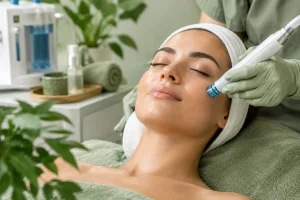
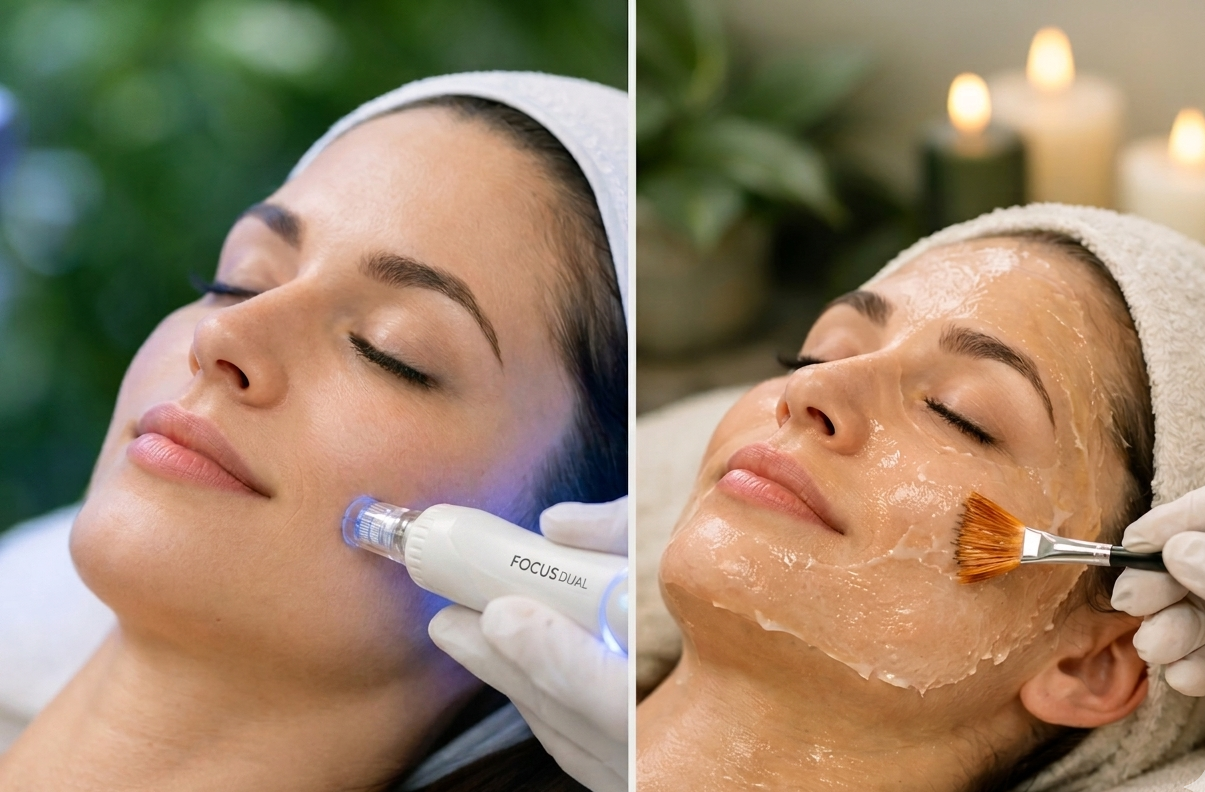
Microneedling works by creating very fine, controlled micro-injuries in the skin using tiny sterile needles. This encourages the skin’s natural repair response and stimulates collagen and elastin production. In simple terms, it prompts the skin to rebuild itself.
A chemical peel works differently. It uses a carefully selected acid solution to exfoliate the outer layers of skin and accelerate cell turnover. Depending on the peel strength, this can be a gentle refresh or a more intensive resurfacing treatment.
So while both treatments aim to reveal fresher, healthier-looking skin, microneedling is more about stimulating repair from within, and chemical peels are more about resurfacing and renewal from the outside in. Neither is automatically better. The best choice depends on what your skin is asking for.
Who tends to suit microneedling best?
Microneedling is often an excellent option when the main goal is improving skin texture, firmness and the appearance of certain types of scarring. It is particularly popular for skin that has started to lose bounce, as well as complexions marked by post-acne texture or enlarged pores.
Because it supports collagen production, microneedling is usually better suited to concerns that sit a little deeper than simple surface dullness. Fine lines, acne scarring and mild laxity often respond well over a course of treatments. Clients who want gradual, natural-looking improvement rather than a strong peel-and-shed effect are often very happy with this route.
It can also be a sensible choice for those who feel nervous about visible peeling. After microneedling, the skin is usually pink for a day or two, rather like mild sun exposure, but you do not necessarily get the obvious flaking that some peels create.
That said, microneedling is not ideal for everyone. If the skin is actively inflamed, very sensitised, or experiencing an acne flare-up, it may be wiser to calm the skin first. A good practitioner will always look at skin health before recommending a collagen-stimulating treatment.
What microneedling can help with
Microneedling is often chosen for acne scarring, enlarged pores, fine lines, uneven texture and skin that feels less firm than it used to. It can also improve overall glow, but that is usually a lovely side effect rather than the main reason people book it.
Results tend to build progressively. You may notice fresher skin quite quickly, but collagen renewal takes time, so the real improvement often appears over several weeks and through a treatment course.
When a chemical peel may be the better choice
If your skin concern sits more on the surface, a chemical peel may be the more elegant option. Peels are often excellent for dullness, congestion, uneven tone, pigmentation and breakouts. They can help the skin look clearer, brighter and more refined without relying on collagen induction alone.
For clients dealing with post-blemish marks, sun damage or a complexion that simply looks tired, the right peel can deliver a beautifully polished result. This is one reason peels remain such a trusted treatment – they can be tailored in strength and formulation to address different skin types and concerns.
A peel may also suit someone who wants a treatment series with a very clear focus on brightness and clarity. If your skin is rough, congested or lacking radiance, resurfacing the top layers can make a noticeable difference.
The trade-off is that some peels involve visible flaking, tightness or shedding afterwards. Not every peel causes this dramatically, but it is a possibility, and timing matters. If you have a wedding, event or holiday close by, your treatment plan should be chosen with care.
What chemical peels can help with
Chemical peels are commonly used for pigmentation, mild acne, uneven skin tone, surface roughness, dull skin and early signs of ageing. They can also support clearer pores and smoother makeup application, which many clients appreciate as much as the skin health benefits.
As with microneedling, one treatment can be helpful, but a course often gives the most refined results.
Downtime, comfort and day-to-day practicality
This is where the decision often becomes more personal.
Microneedling usually involves some redness, warmth and mild tightness for a short period afterwards. Most clients feel presentable again fairly quickly, although the skin does need gentle aftercare and proper sun protection. It is often chosen by people who want results without obvious peeling.
Chemical peels vary more widely. A very light peel may leave the skin just a little pink and fresh-looking, while a stronger peel can cause several days of dryness or flaking. Some people are perfectly comfortable with that. Others would rather avoid anything visible, especially if they are in meetings, school runs or social plans the next day.
Comfort during treatment is slightly different too. Microneedling can feel prickly and active on the skin, though it is usually well tolerated. Peels often create a tingling or warm sensation, with some formulas feeling more intense for a few minutes. Neither treatment should feel careless or uncontrolled when performed properly in a professional setting.
Is microneedling or chemical peel better for ageing skin?
This depends on what ageing looks like on your skin.
If the concern is loss of firmness, crepey texture or fine lines linked to reduced collagen, microneedling often has the edge. It targets the skin’s support structure and can help restore a smoother, firmer appearance over time.
If the concern is sun damage, pigmentation and a tired-looking surface, a chemical peel may be more directly effective. It helps remove the buildup of damaged surface cells and encourages a brighter, more even complexion.
Many clients actually benefit from both at different stages. One may be the better starting point, but the longer-term skin plan may include each treatment for different reasons.
Which treatment is better for acne marks and breakouts?
This is one of the most common areas of confusion.
For active congestion and frequent breakouts, a chemical peel is often the more appropriate first step. Certain peel formulations can help reduce oiliness, keep pores clearer and improve the appearance of post-inflammatory marks.
For acne scarring and uneven texture left behind after spots have settled, microneedling is often the stronger option. It is especially helpful when the skin is no longer breaking out heavily but still has visible textural changes.
The key is distinguishing between active acne and the marks it leaves behind. They are related, but they do not always respond best to the same treatment.
The importance of skin tone and sensitivity
A thoughtful consultation matters because not every treatment suits every skin type in the same way.
Some skins are reactive, easily flushed or prone to barrier disruption. In those cases, a practitioner may recommend a gentler treatment plan or a period of skin preparation first. Equally, certain pigmentation concerns and deeper skin tones require careful treatment selection to reduce the risk of unwanted irritation or post-inflammatory pigmentation.
This is where expertise becomes invaluable. A luxury treatment should still be a clinical decision when we are working with active ingredients or collagen induction. Beautiful results come from precision, not guesswork.
Can you have both?
Yes – but not at the same time, and not without a plan.
Microneedling and chemical peels can complement each other beautifully when spaced correctly and chosen for the right reasons. For example, a client might start with peels to clear congestion and brighten the complexion, then move on to microneedling to address scarring or firmness. In other cases, the order may be reversed.
The point is not to stack treatments for the sake of it. The point is to understand what your skin needs first, what it can tolerate, and how to build results safely.
How to choose with confidence
If your main goal is smoother texture, firmer skin and softening acne scars, microneedling is often the stronger investment. If you want brighter tone, clearer pores and fresher surface radiance, a chemical peel may be the better fit.
But skin is rarely that tidy. You may have pigmentation and scarring. Sensitivity and dullness. Breakouts and early lines. That is why the best treatment is often the one chosen after a proper assessment, not the one that sounds most advanced.
At The Beauty Box Pangbourne, that tailored approach matters because skin treatments should feel both results-driven and reassuring. You should leave feeling cared for, informed and confident that your treatment suits your skin rather than a trend.
If you are weighing up microneedling vs chemical peel, think beyond what is popular and focus on what will leave your skin healthier, stronger and glowing in a way that feels beautifully yours.