That tempting little lifted corner of gel polish can feel impossible to ignore. Yet peeling it away can take delicate layers of your natural nail with it, leaving nails thin, rough and frustratingly prone to splitting. Safe gel polish removal is not simply about taking colour off – it is about protecting the condition of the nails you rely on every day.
A polished manicure should feel like a confidence boost from the first day to the final removal. With the right technique, your nails can look neat afterwards, your cuticles remain cared for, and your next manicure has a smooth, healthy base.
Why safe gel polish removal matters
Gel polish is designed to adhere securely. That long-lasting, glossy finish is what makes it so appealing for busy weeks, special occasions and holidays, but it also means it should never be pulled or picked away. When polish is peeled off, it may remove microscopic layers of keratin from the nail plate along with it.
The result is often nails that feel bendy or sensitive, with white patches, ridges or rough areas that make future polish applications less even. It can also cause small tears around the nail edge, particularly if nails are already dry or have been exposed to frequent handwashing, cleaning products or cold weather.
Professional removal is gentler because it respects the structure of the natural nail. Rather than forcing the product off, your nail technician carefully breaks down the gel and lifts only what is ready to release. This patient approach makes a meaningful difference, especially for clients who enjoy regular gel manicures.
What professional gel removal should look like
A considered appointment begins with an assessment of your nails. Your technician will look for lifting, peeling, breakage, signs of dehydration and the condition of your surrounding skin. This helps them tailor the removal process rather than treating every set of nails in exactly the same way.
The surface shine and top coat are usually gently reduced first. This gives the remover a route into the gel, without unnecessary filing of the natural nail beneath. Acetone-based remover is then applied in a controlled way, often with wraps, allowing time for the product to soften.
Once softened, the gel should ease away with light, careful pressure. There should be no aggressive scraping, sawing or forcing. A little product may need more time, and that is entirely normal. Rushing is where unnecessary damage can happen.
After removal, the nails are refined into shape and any remaining residue is gently smoothed away. The treatment should finish with nourishing cuticle care and hand hydration. This final stage is not an optional extra: oil helps replenish the skin around the nail and supports a more flexible, comfortable nail plate.
At The Beauty Box Pangbourne, the focus is on making each nail appointment feel both polished and protective – so you can enjoy beautiful colour without compromising the condition of your natural nails.
Can you remove gel polish safely at home?
You can, provided you are patient, use suitable products and accept that professional removal is often the better choice when there is significant lifting, damage or an unfamiliar product on the nails. The biggest risk at home is not the remover itself. It is the urge to speed things up by peeling, filing too deeply or scraping with metal tools.
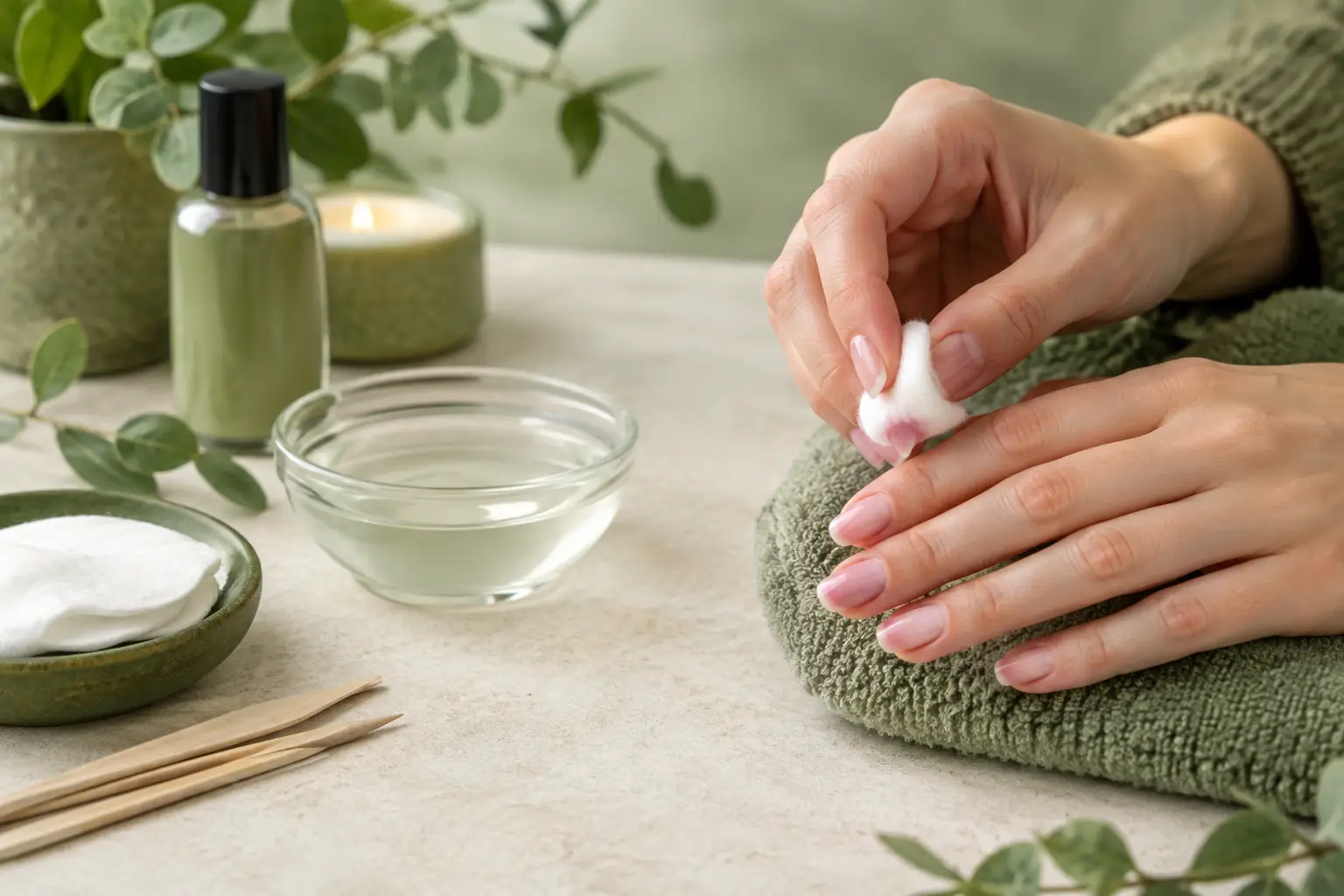
Start by shortening very long nails if needed and gently removing only the surface shine of the gel. Avoid filing until you see natural nail. Apply acetone-based remover to cotton, place it over each nail and secure it with foil wraps. Give it time to work – usually around 10 to 15 minutes, although thicker or layered applications can take longer.
When you unwrap a finger, test the softened gel with a wooden cuticle stick. If it does not glide away easily, rewrap it rather than pushing harder. Work one hand at a time if this helps you stay organised and prevents the wraps from slipping.
Acetone can leave the skin feeling dry, so wash hands afterwards, apply a generous cuticle oil and follow with a rich hand cream. If your nails feel at all tender, avoid immediately filing or buffing them to a high shine. Gentle care is more valuable than a perfectly polished finish at this stage.
The habits that cause the most damage
Picking at lifting gel is the most common culprit. Lifting may be irritating, but it is a signal to arrange removal rather than an invitation to pull. Water can also travel beneath lifted product, which is another reason not to leave it for weeks.
Over-filing is a close second. A nail file is useful for taking away the seal of the top coat, but heavy-handed filing can thin the nail quickly. Similarly, metal cuticle pushers and sharp tools can create scratches that are hard to see at first but show up once the nail grows.
It is also wise not to use gel polish as a repair for nails that are actively splitting, sore or damaged. A short break, regular cuticle oil and a tidy natural manicure may be the kinder choice. Healthy nails do not have to mean bare nails forever; they simply need the right timing and treatment plan.
When to book a professional removal
A salon appointment is particularly worthwhile if you have builder gel, several layers of colour, extensions, glitter finishes or a manicure applied elsewhere. These products can vary in how they are formulated and removed, so a tailored assessment is far safer than guesswork.
Book in sooner if you notice pain, redness, swelling, green or dark discolouration, or a nail that appears to be separating from the nail bed. These are not concerns to cover with fresh colour. A technician can advise on the most appropriate next step, and persistent symptoms should be assessed by a pharmacist, GP or qualified healthcare professional.
Professional removal is also an ideal moment to reset. Perhaps you are preparing for a holiday, taking a short break from colour, or choosing a fresh manicure for an event. A clean removal allows your technician to see the true condition of the nail and recommend what will suit it best, whether that is a nourishing natural nail treatment, a classic manicure or a new gel finish.
Keeping nails healthy between manicures
Cuticle oil is one of the simplest additions to an effective nail routine. Apply it daily, especially before bed, and massage it into the cuticle area and along the sides of each nail. This small ritual supports supple skin and helps nails feel less dry.
Gloves are equally helpful for washing up, gardening and household cleaning. Repeated exposure to water and detergents can dehydrate both the nail plate and the skin around it, making lifting and breakage more likely. Keep nails at a practical length for your lifestyle, and use your fingertips rather than your nails to open cans, scrape labels or lift lids.
If you wear gel continuously, speak to your technician about the condition of your nails at each appointment. There is no universal rule that everyone needs a break after a set number of manicures. It depends on application quality, removal technique, your home care and how your nails are responding. The goal is not to avoid gel polish, but to wear it in a way that keeps your hands feeling beautifully cared for.
Your manicure should never come at the expense of your natural nails. Give removal the same attention as application, and every fresh set of colour can begin with nails that feel comfortable, strong and ready to be pampered again.