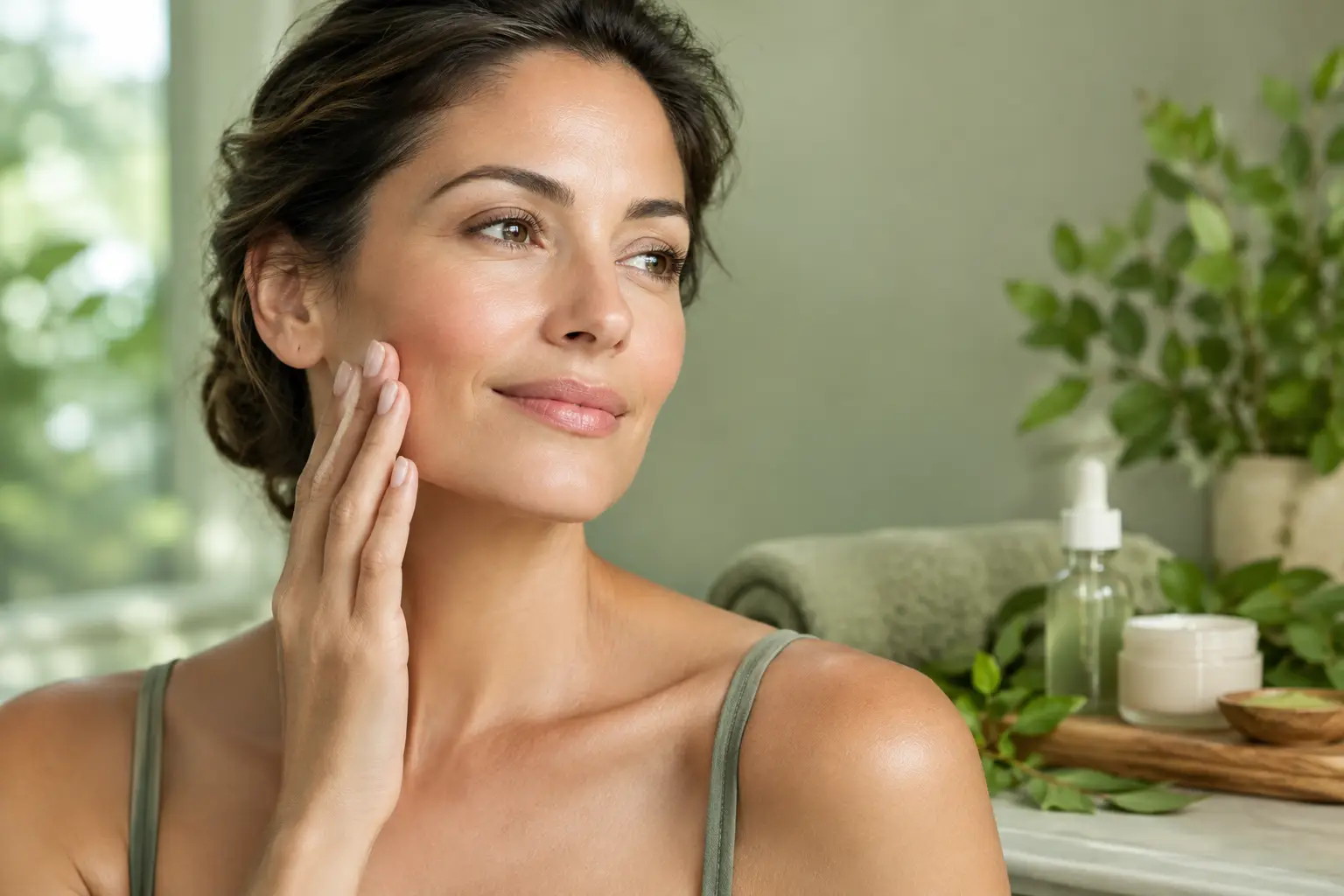
When make-up begins to settle into areas that once looked smooth, or your jawline appears less defined in photographs, it is natural to look for skin tightening that delivers more than a temporary glow. The most satisfying results rarely come from a one-size-fits-all treatment. They come from understanding what has changed in your skin, choosing the right technology and allowing time for your complexion to respond.
At Beauty Box Pangbourne, advanced treatments are approached with the same care as every luxury salon appointment: with comfort, cleanliness and your individual goals at the centre. Whether you would like a fresher-looking lower face, firmer skin at the neck or smoother texture across the cheeks, a thoughtful consultation is where beautiful results begin.
“Skin tightening works best when the goal is to look like yourself on a particularly good day: rested, polished and subtly refreshed.”
What changes as skin loses firmness?
Firm, youthful-looking skin is supported by collagen and elastin, two naturally occurring proteins that give the complexion its structure and spring. From our late twenties onwards, their production gradually slows. Sun exposure, stress, hormonal shifts, weight changes and genetics can all influence how quickly we notice that loss of support.
This may show up as a softer jawline, fine lines, a crepey texture around the eyes or neck, enlarged-looking pores, or skin that feels less bouncy than it once did. Skin laxity is only one part of the picture, however. Dehydration, pigmentation and uneven texture can also make the face appear tired, even when the underlying firmness is good.
That distinction matters. A treatment designed to improve skin texture will not necessarily create a lifted contour, while a treatment focused on deeper support may not be the best first choice for scarring or surface irregularities. The right plan begins with an honest assessment of what you can see and what you would like to feel more confident about.
Skin tightening treatments and how they differ
Advanced aesthetic treatments encourage the skin’s own repair and renewal processes. They are not a substitute for surgery, and results are naturally more gradual, but they can be an elegant option for clients who want visible refinement without surgical downtime.
HIFU for deeper support
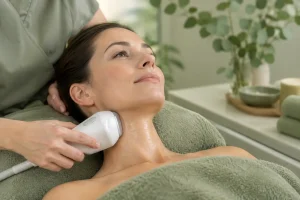
High-Intensity Focused Ultrasound, commonly known as HIFU, uses carefully targeted ultrasound energy at selected depths beneath the skin’s surface. This creates controlled thermal points that stimulate collagen renewal in the deeper layers associated with facial support.
HIFU is often considered for the jawline, cheeks, brow area and neck, particularly where the concern is mild to moderate laxity rather than fine surface texture alone. It can be an excellent choice for someone noticing a gentle softening of their facial contours and seeking a gradual, natural-looking improvement.
Treatment sensations vary, but many clients describe brief warmth, tingling or a small prickling feeling in certain areas. Results develop over time as collagen remodels, often becoming more apparent over several weeks to months. This is a treatment that rewards patience: the aim is refinement, not an overnight transformation.
Radio frequency for warmth and collagen stimulation
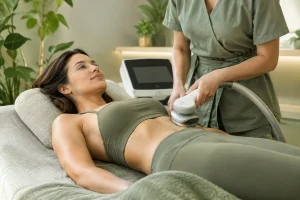
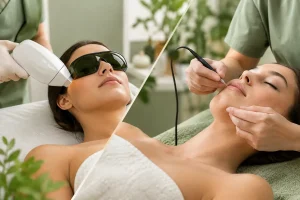
Radio frequency treatments use controlled heat to stimulate collagen and support a smoother, firmer appearance. Depending on the treatment area and device used, radio frequency can be especially suited to clients who want to address early laxity, skin texture or a lack of radiance.
The treatment is generally known for being comfortable and relaxing, with a warming sensation across the skin. A course of appointments is often recommended because collagen-building is a process, not a single event. For many people, radio frequency fits beautifully into a longer-term skin maintenance routine, particularly when consistency matters as much as a pre-event glow.
Microneedling for texture and resilience
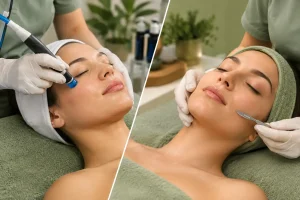
Microneedling creates precisely controlled micro-channels in the skin to trigger its natural repair response. As new collagen is encouraged, the skin may look smoother, more even and more refined. It is frequently chosen for concerns such as enlarged pores, fine lines, acne scarring and uneven texture.
While microneedling can support firmer-looking skin, it is usually selected for its effect on the surface and mid-level quality of the complexion rather than for a pronounced lifting effect. Redness is normal immediately afterwards, and aftercare matters. Your skin needs time, gentle products and diligent SPF while it recovers.
Choosing the right treatment for your skin
The best treatment depends on the concern, the area being treated, your skin condition and the amount of downtime you are comfortable with. HIFU may be more appropriate when contour and support are the priority. Radio frequency can be an appealing route for ongoing firmness and a warm, restorative experience. Microneedling may be the strongest starting point where texture, scarring or pores are the main concern.
In some cases, a combination plan creates the most balanced result. For example, one treatment may focus on the deeper structure of the lower face while another supports smoother, more luminous skin at the surface. Treatments should be carefully spaced and planned rather than simply layered together, so the skin receives the benefit of each approach without being overwhelmed.
A professional consultation should also cover your medical history, skincare routine, recent treatments and any active skin concerns. Treatments may need to be postponed or adapted if you have an active breakout, infection, certain medical conditions, are pregnant or breastfeeding, or are taking medicines that affect healing. This is not a barrier to good care. It is part of protecting your skin and ensuring a treatment is genuinely suitable.
How to get more from your results
Professional treatments can give collagen production a valuable prompt, but daily habits influence how long your skin retains its healthy, supported appearance. Sun protection is non-negotiable. UV exposure is one of the most significant contributors to premature collagen breakdown, even on grey Berkshire days.
A consistent home routine also matters. Gentle cleansing, adequate hydration and professionally selected active ingredients can support the quality of your skin between appointments. There is no need to overload your bathroom shelf. The most effective routine is usually one you enjoy using and can maintain.
Lifestyle factors play a quieter role too. Sleep, stress management, smoking, hydration and nutrition all influence the way skin looks and heals. This is not about perfection. It is about giving your skin the conditions it needs to respond well when you invest in advanced treatments.
Realistic expectations create the loveliest results
Skin tightening works best when the goal is to look like yourself on a particularly good day: rested, polished and subtly refreshed. Non-surgical treatments can improve the appearance of mild to moderate laxity, but they cannot replicate the result of a surgical facelift or completely stop the natural ageing process.
Results vary from person to person. Age, collagen levels, sun exposure, skin quality and the degree of laxity all play a part. Your therapist should be open about what is achievable, how many sessions may be advisable and when you can expect to see changes. Photographs taken in consistent lighting can be useful for tracking gradual progress that is not always obvious from day to day.
The most luxurious approach to skin health is not chasing every new treatment. It is choosing expert care that feels right for you, respecting your skin’s pace and building a plan that leaves you feeling comfortable, cared for and quietly confident each time you look in the mirror.