A forehead that looks lined even when you are relaxed calls for a different approach from cheeks that feel less lifted than they once did. That is why botox vs hifu is not simply a question of which treatment is ‘better’. They work in entirely different ways, and the most flattering choice is the one that respects what your skin is asking for.
For many clients, the most confidence-boosting plan is not about changing how they look. It is about looking rested, polished and beautifully like themselves. Understanding the difference between Botox and HIFU helps make that decision feel clear, considered and personal.
Botox vs HIFU: the key difference
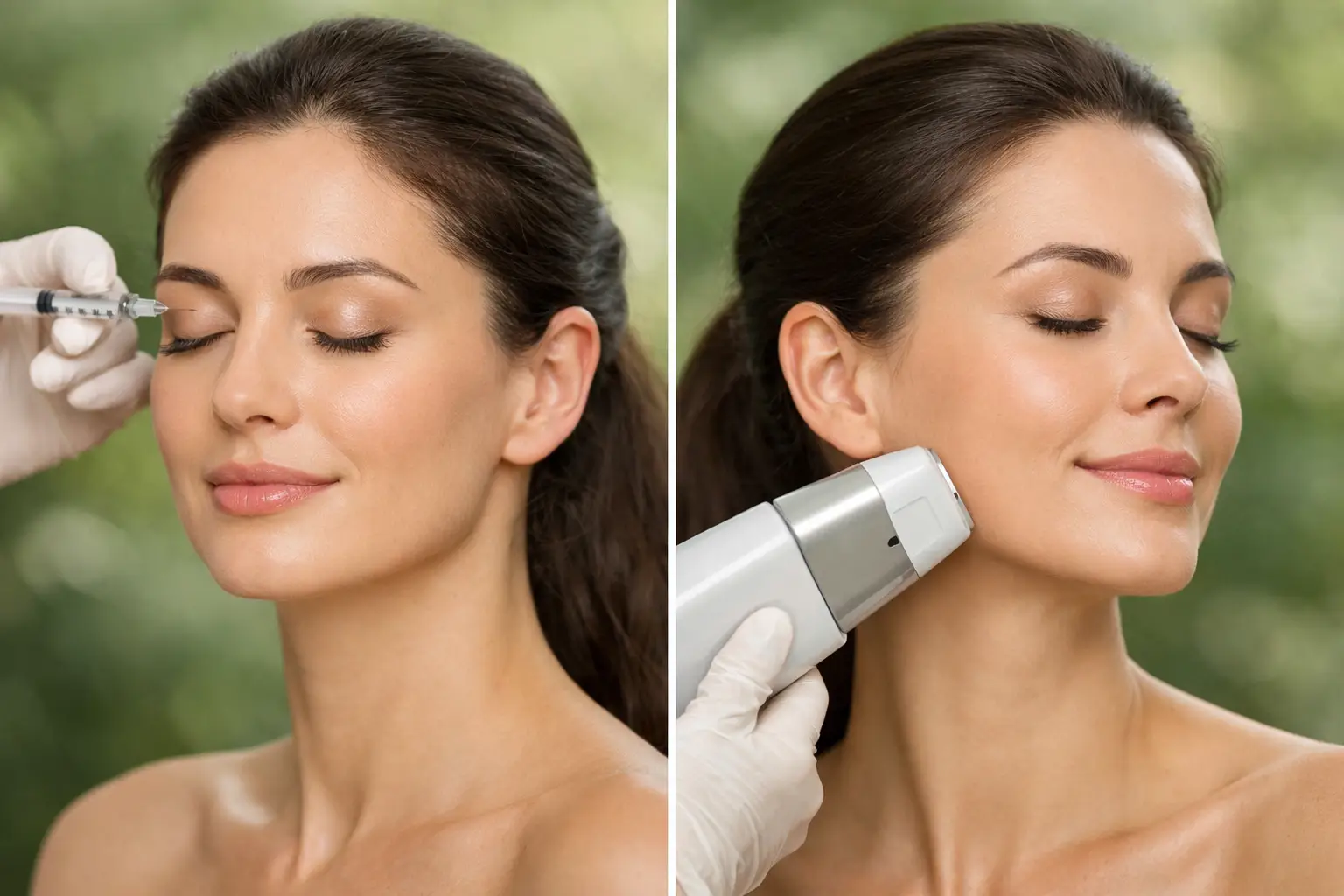
Botox is an injectable prescription medicine used to relax selected facial muscles temporarily. When administered by an appropriately qualified medical professional, it can soften the expression lines created by repeated movement, such as frown lines, forehead lines and crow’s feet.
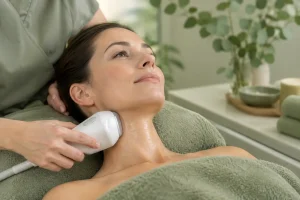
HIFU, short for high-intensity focused ultrasound, is a non-surgical skin-tightening treatment. It directs focused ultrasound energy into deeper layers of the skin, encouraging the body’s collagen-building response. It is typically chosen to improve the appearance of mild skin laxity, enhance facial definition and create a firmer-looking complexion over time.
In simple terms, Botox addresses movement. HIFU addresses support and skin firmness. One relaxes targeted muscles; the other encourages gradual collagen renewal. They are not interchangeable, although they can complement one another beautifully when a practitioner feels both are appropriate.
What Botox can treat best
Expression lines often begin as faint creases that disappear once the face is at rest. Over time, repeated muscle movement can make them more visible. Botox is particularly effective where those movements are the main cause of the line.
Common treatment areas include the horizontal forehead, the vertical lines between the brows and fine lines at the outer corners of the eyes. It may also be used in other carefully assessed areas, but suitability always depends on your facial anatomy, muscle strength and desired result.
Results usually begin to appear within a few days, with the full effect commonly visible at around two weeks. The treatment is quick and requires little to no downtime, though small bumps, redness or bruising can occur. Results are temporary and often last around three to four months, although this varies from person to person.
The best Botox results should not look frozen or generic. A thoughtful, conservative approach can preserve natural expression while softening the lines that make you feel tired, tense or less like yourself. This is where expert assessment matters greatly – the same dose and placement will not suit every face.
What HIFU can treat best
HIFU is often considered when the concern is not a line caused by expression, but a gradual loss of firmness. You may notice that the lower face looks softer, the jawline less defined, the brow subtly lower or the neck less taut than before. These are the areas where HIFU may be particularly valuable.
The treatment works beneath the surface without breaking the skin. Focused ultrasound energy creates precise points of heat at selected depths, stimulating a natural wound-healing response and the production of fresh collagen. Collagen is the protein that gives skin much of its bounce and structure, but its production naturally slows with age.
Unlike the relatively quick change seen with Botox, HIFU rewards patience. Some clients notice an initial tightening effect, but results tend to develop progressively over eight to 12 weeks, with collagen remodelling continuing for several months. The outcome is a subtle, refined lift rather than a dramatic overnight transformation.
There can be temporary redness, sensitivity or mild swelling after HIFU. During treatment, the sensation is often described as warmth, tingling or small pulses beneath the skin. Comfort should always be discussed beforehand, and treatment settings should be selected carefully for your skin and the area being treated.
Which treatment suits your concern?
If your main concern is a forehead crease that appears when you raise your eyebrows, Botox is likely to be the more relevant conversation. If your concern is a softening jawline or a feeling that your face has lost some of its natural contour, HIFU may offer a more suitable route.
There are also moments when neither is the first choice. Fine, crêpey texture, dehydration, pigmentation or acne scarring may respond better to treatments designed specifically for surface renewal and skin quality, such as a tailored facial, microneedling or other professional skin-focused care. A good consultation should never force one treatment to solve every concern.
Age alone is not a reliable guide. Some people in their thirties are excellent candidates for preventive Botox or early collagen support, while others may not seek treatment until much later. Skin condition, genetics, lifestyle, sun exposure and individual facial structure all play a part.
Can Botox and HIFU be combined?
Yes, in many cases they can be used as part of a carefully planned aesthetic journey. Botox can soften the pull of strong expression muscles, while HIFU works more gradually on the skin’s underlying support. Together, they may help create a rested appearance that still feels natural and expressive.
Timing matters. Your practitioner should advise on the best order and spacing for treatments based on the areas involved and your goals. It is especially important not to book treatments simply because they are popular or because a friend had them. Your face deserves a plan built around your proportions, skin quality and comfort level.
At The Beauty Box Pangbourne, the focus is always on tailored recommendations rather than a one-size-fits-all approach. A calm consultation allows time to discuss what you see in the mirror, what result would feel right for you and whether HIFU is the appropriate next step.
Safety, suitability and realistic expectations
Both treatments should begin with a detailed consultation. For Botox, this must include an assessment by an appropriately qualified prescriber and practitioner, as it is a prescription-only medicine. Be open about your medical history, allergies, medications and any previous aesthetic treatments.
HIFU is not suitable for everyone either. Pregnancy, certain medical conditions, active skin infections, some implants or devices and recent treatments in the same area can affect whether it is advisable. A trained practitioner will explain any reasons to postpone or choose an alternative.
It is also worth being realistic about the level of change. Botox does not replace volume that has been lost, and HIFU cannot replicate the result of surgery where significant laxity is present. Their strength lies in refinement: softening, firming and helping you look well cared for without losing the character of your face.
Choosing with confidence
The most useful question is not, ‘Should I have Botox or HIFU?’ It is, ‘What is creating the change I want to address?’ A line formed by movement, a loss of contour and a lack of skin radiance each need different expertise.
Choose a practitioner who listens closely, explains the trade-offs honestly and makes your wellbeing feel as important as your result. When treatment is tailored with skill and restraint, the mirror should not show a different person – just a fresher, more confident version of you.